

Introduction: Why Putter Fitting Matters
Golf is a game where marginal improvements compound into significant performance gains. While most golfers invest considerable effort in swing development and course strategy, one critical element remains overlooked: putter fitting. Yet putting accounts for approximately 40% of every golfer's score. A putter that's precisely fitted to your specifications is one of the highest-impact investments you can make in your golf game.
This comprehensive guide explores everything you need to know about putter fitting—from understanding the fitting process to evaluating whether it's the right investment for your specific goals. Whether you're a competitive player seeking marginal gains or a recreational golfer wanting to improve your consistency, learning how to choose the perfect putter through professional fitting delivers measurable results.
Understanding Putter Fitting: The Fundamentals
Putter fitting is the process of customizing a putter to match your specific physical characteristics, swing mechanics, and playing preferences. Unlike buying an off-the-shelf putter and hoping it fits your swing, professional fitting diagnoses your specific needs and prescribes putter specifications that address those needs precisely.
The core fitting variables are:
- Length: Adjusted based on your height, arm length, and posture at address. Proper length ensures the putter hangs naturally in your hands. Before your session, you can find your ideal putter length using our height-based reference chart.
- Lie Angle: The angle between the putter shaft and ground. Correct lie angle ensures the putter head remains square through impact, directly affecting accuracy.
- Weight and Weight Distribution: Optimized based on your stroke rhythm and preferred feel. Weight distribution affects the putter's balance and how it responds through the stroke.
- Toe Hang: How much the putter head naturally wants to rotate during the swing. Understanding head shapes, weights, and toe hang helps you select specifications matching your stroke characteristics.
- Grip: Grip customization includes material, texture, thickness, and diameter—all affecting feel and control.
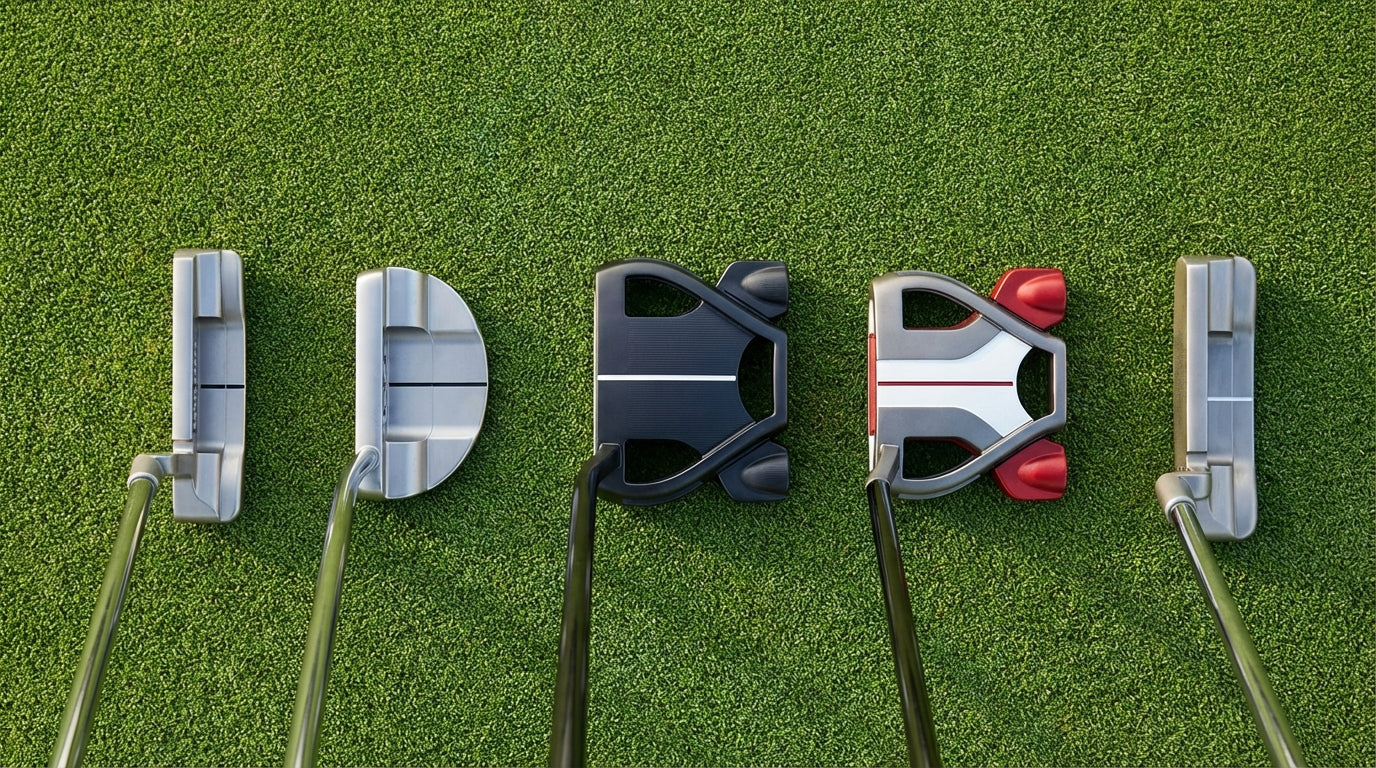
- Head Shape and Design: Different head shapes offer distinct visual and performance characteristics. Blades provide precision feedback, while mallets offer stability and alignment aids.
Benefits of Professional Putter Fitting
Professional fitting delivers multiple interconnected benefits that improve your overall game:
Improved Accuracy
When your putter's lie angle matches your stroke path, the head stays square through impact, and putts start on line. This is perhaps the single greatest benefit of fitting. Many golfers struggle with consistency because their putter's specifications fight against their natural stroke mechanics. Proper fitting eliminates these compensations.
Enhanced Consistency
A putter optimized for your swing characteristics produces consistent results. Your hands and body develop genuine muscle memory with equipment that feels natural. Over time, this consistency compounds into measurable improvements in your three-putt avoidance rate and putting accuracy.
Increased Confidence
Approaching the putting green with a putter you know is engineered specifically for you creates psychological certainty. You're not wondering if equipment limitations are affecting your performance—you know your putter is optimized for your swing. This confidence directly translates to better execution under pressure.
Lower Scores
The direct result of improved accuracy, consistency, and confidence is lower scores. The science of putting demonstrates that equipment specifications directly impact your score. Golfers who undergo professional fitting typically report 15-25% reductions in three-putt frequency within the first few rounds.
The Professional Fitting Process
Understanding what to expect during a fitting session helps you prepare effectively. Here's what a comprehensive putter fitting typically includes:
Initial Assessment
Your fitter begins by gathering information about your background, goals, and current equipment. They ask about your handicap, how long you've played, what putters you've previously owned, and what aspects of your putting game you want to improve. This context helps the fitter understand your specific needs.
Physical Measurements
The fitter measures your height, arm length, posture at address, and eye position relative to the ball. These measurements establish baseline specifications. The fitter also observes your natural putting stance and posture to identify any unique characteristics that affect fitting recommendations.
Swing Mechanics Analysis
Modern fitting centers use launch monitors and motion capture technology to analyze your putting mechanics objectively. These tools measure your stroke path, face rotation, tempo, and other characteristics that directly affect performance. This data-driven approach eliminates guesswork from the fitting process.
Equipment Trials
You'll test multiple putter configurations, trying different head shapes, weights, lengths, and specifications. The fitter observes your response to each variation, noting which configurations feel most natural and perform most consistently in your hands.
Performance Testing
Many fitting sessions include performance tests—making putts from various distances while testing different equipment configurations. This real-world feedback helps identify which specifications actually improve your performance, not just which feel good.
Fitting Recommendations
Based on all this data, your fitter provides specific recommendations for your custom putter. These recommendations include exact specifications for length, lie angle, weight, grip, and head shape. The fitter explains the reasoning behind each recommendation, helping you understand why these specifications will improve your game.
Key Fitting Considerations Before Getting Fitted
Your Playing Level and Goals
Consider what you want to achieve. Are you a serious competitor seeking marginal gains? A weekend golfer wanting more consistency? A high-handicapper trying to reduce the frustration of three-putts? Your goals influence which fitting parameters matter most.
Your Commitment Level
Professional fitting makes sense if you play regularly and are committed to improving your game. If you play only a few times per year, the benefit-to-cost ratio may not justify the investment. Consider how frequently you'll use your custom putter and how serious you are about your golf game.
Your Budget
Custom putters typically range from $300-$500 depending on materials and customization options. Evaluate whether this investment aligns with your golfing priorities. Remember that a quality custom putter remains performance-consistent for years, making it a long-term investment rather than a consumable expense.
Your Current Equipment Situation
If you're using a putter significantly misfit to your swing, fitting will produce dramatic improvements. If you're already using equipment that feels relatively comfortable, improvements may be more incremental—though still meaningful.
Is Putter Fitting Worth the Investment?
The value proposition for putter fitting is compelling when you consider the numbers. Custom putters improve accuracy and increase confidence, typically reducing putts per round by 2-4 for golfers who were previously misfit. Over a season of 40 rounds, that's 80-160 fewer putts.
For most golfers, 2-3 fewer putts per round translates to 1-2 fewer strokes per round. Over a season, that's 40-80 strokes—a dramatic improvement that affects your handicap, competition results, and enjoyment of the game.
Set against these benefits, the $300-$500 investment becomes remarkably cost-effective. You're investing roughly $5-$10 per stroke saved—an excellent return on investment that pays dividends over years of use.
Advanced Fitting Considerations
Alignment and Stroke Path
Advanced fitting analyzes whether your stroke is naturally in-to-square-to-in or straight-back-straight-through. Toe hang is prescribed based on your stroke path, creating a putter that works with your mechanics rather than fighting them. This alignment consideration alone can transform your consistency.
Rhythm and Tempo
Different weight distributions affect your stroke rhythm. Some golfers prefer lighter putters that promote faster strokes; others prefer heavier putters that enforce slower, more controlled rhythms. Advanced fitting identifies your preferred tempo and prescribes weight accordingly.
Feedback Preference
Some golfers prefer putters that provide clear feedback on off-center hits—a blade putter responds noticeably to poor contact. Others prefer putters with high forgiveness—a mallet putter minimizes feedback on imperfect hits. Understanding your feedback preference helps select ideal head shape.
The Fitting Process Timeline
Plan to allocate 60-90 minutes for a comprehensive fitting session. After fitting, allow 4-8 weeks for your custom putter to be manufactured and delivered. Many golfers schedule their fitting during the off-season or before their competitive season begins, ensuring they have time to acclimate to their new equipment before important tournaments.
Selecting a Professional Fitter
Choose a fitter with credentials and experience. Look for fitters who use launch monitors and motion capture technology—objective data produces better results than subjective assessment alone. Essential tips for customizing a putter include selecting an experienced fitter who understands your specific needs.
Many custom putter manufacturers, including Phoenix Putter Co, employ experienced fitters who combine technical expertise with genuine passion for helping golfers optimize their equipment. A quality manufacturer is invested in ensuring your custom putter truly matches your needs.
After Your Fitting: Acclimation and Maintenance
Once you receive your custom putter, allow time for acclimation. Your hands and body need 10-20 rounds to develop genuine muscle memory with new equipment. Don't expect immediate perfection—instead, look for the trend of improving consistency and accuracy over your first month of use.
Proper maintenance ensures your custom putter remains in optimal condition. Simple care—keeping the head clean, protecting the finish, and occasionally regrooming the face—preserves performance for years of use.
Getting Your Professional Putter Fitting
Phoenix Putter Co provides comprehensive putter fitting services combining advanced diagnostics with expert guidance. Our team understands that every golfer's swing is unique and that precise fitting delivers measurable performance improvements. Whether you're optimizing for competitive play or recreational enjoyment, a professionally fitted custom putter transforms your putting game.
Frequently Asked Questions
How quickly will I see improvement after getting a fitted putter?
Most golfers notice improved feel and comfort immediately, as their custom putter is engineered for their specific posture and stroke. Measurable performance improvements typically appear within 5-10 rounds as your hands and body acclimate to the new equipment and you develop muscle memory with your custom putter's specifications.
Can I adjust my custom putter after fitting if my swing changes?
Yes. One advantage of custom putters is that they can be adjusted. If your swing mechanics evolve significantly or your preferences change, most manufacturers can modify specifications like length or weight. This adaptability extends your custom putter's lifespan and ensures it remains optimized for your game as you develop.
What's the difference between amateur and professional-level fitting?
The core fitting principles are identical at all levels—professionals and amateurs are both measured, analyzed, and prescribed equipment matching their swing characteristics. The primary differences are in material selection, manufacturing precision, and the experience level of the fitter. Professional golfers emphasize fitting because it works regardless of skill level.
Should I get fitted before selecting my custom putter?
Absolutely. Professional fitting should precede any custom putter purchase. Your fitting results provide the exact specifications your custom putter should have. Some golfers try to select a custom putter without fitting, but this approach defeats the purpose of customization—you need precise data to ensure your custom putter actually matches your needs.


Leave a comment
This site is protected by hCaptcha and the hCaptcha Privacy Policy and Terms of Service apply.