

Why Your Putter Grip Matters More Than You Think
Your putter grip is the only point of contact between you and your putter—every ounce of feedback, control, and confidence flows through this critical interface. Unlike your driver or irons where speed dominates, your putting grip influences every aspect of green performance. Understanding grip sizes, materials, textures, and shapes, then matching those variables to your hand size, stroke mechanics, and feel preferences, transforms your putting from inconsistent to reliable.
Grip Sizes Explained: Standard, Midsize, and Oversize
Most golfers overlook grip size when selecting a putter, accepting whatever came installed and never considering whether that size represents the optimal choice for their hands. This oversight costs strokes.
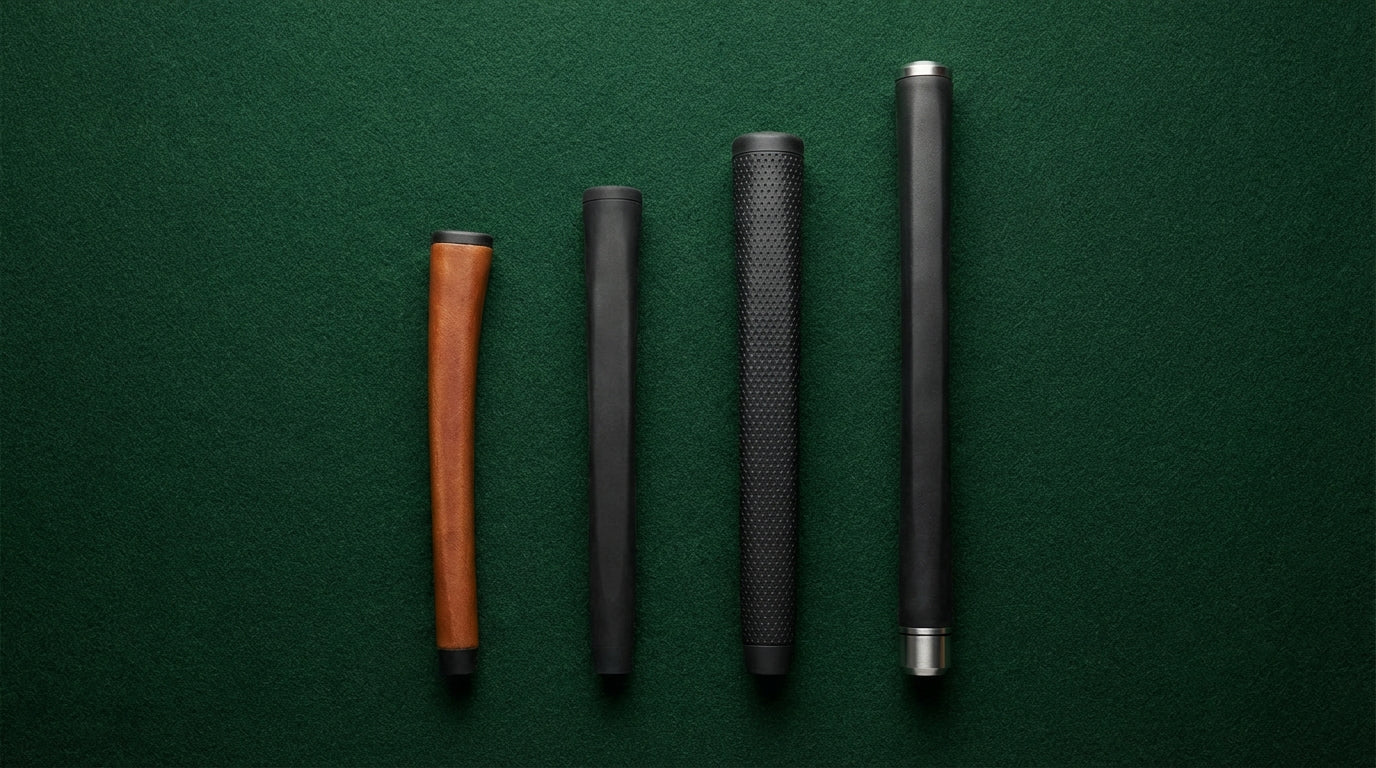
Standard putter grips measure approximately 1.6 inches in diameter. These work well for golfers with small to medium hands and those preferring a lighter feel. Standard grips promote lighter grip pressure, advantageous for golfers prone to tension during their putting stroke. The lighter diameter allows your hands to feel the club directly, transmitting subtle feedback about face angle and path through your fingertips and palms.
Midsize grips increase to approximately 1.75 to 1.85 inches in diameter, representing the most popular choice for average-handed golfers. These offer a comfortable middle ground between direct club feel and maintaining a stable grip. A midsize grip reduces hand movement during the stroke while preserving adequate feedback. This category offers excellent value for golfers seeking balance between responsiveness and stability.
Oversize grips exceed 1.85 inches in diameter and work best for golfers with larger hands or those preferring added stability and dampened vibration. An oversize grip naturally encourages lighter grip pressure because the larger diameter fills your palm more completely. Reduced hand tension often translates to a smoother, more rhythmic stroke. Oversize grips also reduce wrist action during the stroke, benefiting golfers who struggle with excessive wrist break or breakdown.
Materials and Texture: How Grip Composition Affects Performance
Putter grips use various materials, each affecting how the grip feels in your hand and how moisture is managed during play.
Rubber compounds dominate the putter grip market. Rubber provides excellent durability, withstands temperature variation, and offers consistent feel year-round. Premium rubber construction balances responsiveness with comfort, delivering direct feedback while maintaining durability through years of regular use.
Microfiber and specialty composite materials offer unique characteristics. Advanced materials are specifically designed to manage moisture and maintain consistent feel throughout your round. These specialized compositions reduce slipping even in humid conditions or when your palms perspire, allowing you to maintain consistent grip pressure from the first putt to the last.
Texture matters significantly in grip performance. Smooth grips promote a lighter feel and require less grip pressure. Textured grips with raised patterns or cord reinforcement provide traction that prevents hand slipping during the stroke. The texture you choose should match your grip pressure tendencies. Golfers prone to gripping too tightly benefit from smoother grips that naturally relax their hands. Golfers with lighter grip pressure appreciate textured options that prevent hand movement.
Grip Shape: Pistol, Flatso, and Paddle Configurations
Pistol-grip designs represent the most common option, featuring a somewhat cylindrical shape with a slight bulge near the bottom that creates a trigger-like configuration. This shape naturally guides your hands into the proper position and encourages repeatable hand placement, making it ideal for golfers who benefit from hand guidance and prefer traditional putting mechanics.
Flatso grips feature a flattened design with distinct faces on the front, back, and sides. This shape provides superior hand positioning consistency because your hands naturally align with the flat surfaces. Many golfers find that flatso grips immediately improve stroke consistency because hand positioning becomes automatic rather than requiring conscious attention.
Paddle grips combine elements of both styles, offering moderate guidance while preserving feedback. These suit golfers seeking balance between positioning consistency and direct club feel.
Your ideal grip shape depends on your putting fundamentals. If your hand positioning remains consistent and you demonstrate good mechanics, a pistol grip works effectively. If you struggle with hand position drifting during the stroke, transitioning to a flatso or paddle design can immediately improve consistency by providing automatic positioning guidance. Learn more about how all the elements combine to make a good putter from a complete systems perspective.
Top Putter Grip Choices and When to Use Each
Quality rubber construction grips represent the ideal choice for golfers seeking premium feel at accessible price points. The responsive character and balanced texture make them suitable for golfers of all handicap levels. This grip choice becomes your best option if you want proven performance without complexity or excessive premium pricing.
Advanced traction grips serve golfers playing in humid climates or struggling with moisture management. Advanced material composition maintains consistent feel even when your hands perspire, and specialized traction patterns prevent your hands from slipping during the stroke. This grip type becomes particularly valuable if you play frequently in warm weather or find yourself nervous and perspiring during important rounds.
Midsize premium grips appeal to golfers preferring a slightly larger diameter with traditional pistol shape. Premium materials offer a soft feel that provides feedback without harshness, and the midsize diameter accommodates most hand sizes comfortably. This grip represents the best choice if you're uncertain about your ideal grip diameter and want a proven option that works for the widest range of players.
Making Your Putter Grip Selection: A Systematic Approach
The process of selecting a putter grip should be systematic and methodical. Start by identifying your hand size relative to standard sizing. Small hands benefit most from standard grip diameter. Average hands work best with midsize. Large hands typically perform better with midsize or oversize options.
Next, consider your climate and moisture management needs. Do you play in humid conditions or tend to perspire during nervous moments? Emphasize traction and moisture resistance. Play in dry climates with stable hands? Prioritize feel and responsiveness.
Then, assess whether your hand positioning remains consistent or drifts during the stroke. Consistent positioning means a pistol grip works effectively. Drift issues suggest considering flatso or paddle designs for automatic positioning guidance.
When you invest in custom milled putters from Phoenix Putter Co, you have the flexibility to select your preferred grip. Whether you choose rubber construction, advanced traction materials, or premium midsize options, your selection shapes the complete feel of your putting setup. Explore our guide on Putter Grip Fundamentals for deeper technical insights. Consider protecting your investment with a quality putter cover to maintain grip condition and extend equipment life.
Frequently Asked Questions
How often should I replace my putter grip?
Replace your grip when you notice deterioration in texture, reduced traction, or visible wear. Most durable rubber grips last 3–5 years of regular play before feel degrades noticeably. If your grip becomes shiny or slippery, replacement will immediately improve your putting consistency and confidence on the greens.
Can I change my grip without replacing my putter?
Yes. Grip replacement is one of the most cost-effective upgrades you can make. Changing from a worn grip to a fresh one—or experimenting with a different style or size—often improves putting performance more noticeably than major putter head changes. This makes grip selection an excellent place to start when optimizing your equipment.
Does grip size affect distance control or speed?
Grip size primarily affects grip pressure, positioning consistency, and feel rather than directly controlling distance. However, the right grip size reduces unnecessary hand tension, allowing you to execute your intended speed more consistently. This consistency translates into more predictable distance control, making proper grip size selection indirectly important for distance regulation.
What grip do professional golfers prefer?
Professional golfers choose grips based on personal feel preferences and hand size, just like recreational golfers. The difference is professionals experiment extensively to find their ideal combination and remain loyal to proven setups. Premium materials and consistent feel matter more at the professional level, but the fundamental selection process follows identical principles that work for all golfers.


Leave a comment
This site is protected by hCaptcha and the hCaptcha Privacy Policy and Terms of Service apply.