

If you've ever looked closely at a putter face, you've noticed the small channels or lines cut into the surface. But have you wondered why they're there? Grooves on putters serve specific, measurable functions that directly impact your putting performance. Understanding the science behind grooves reveals why they're one of the most important design elements in modern putter manufacturing.
The Science Behind Putter Grooves
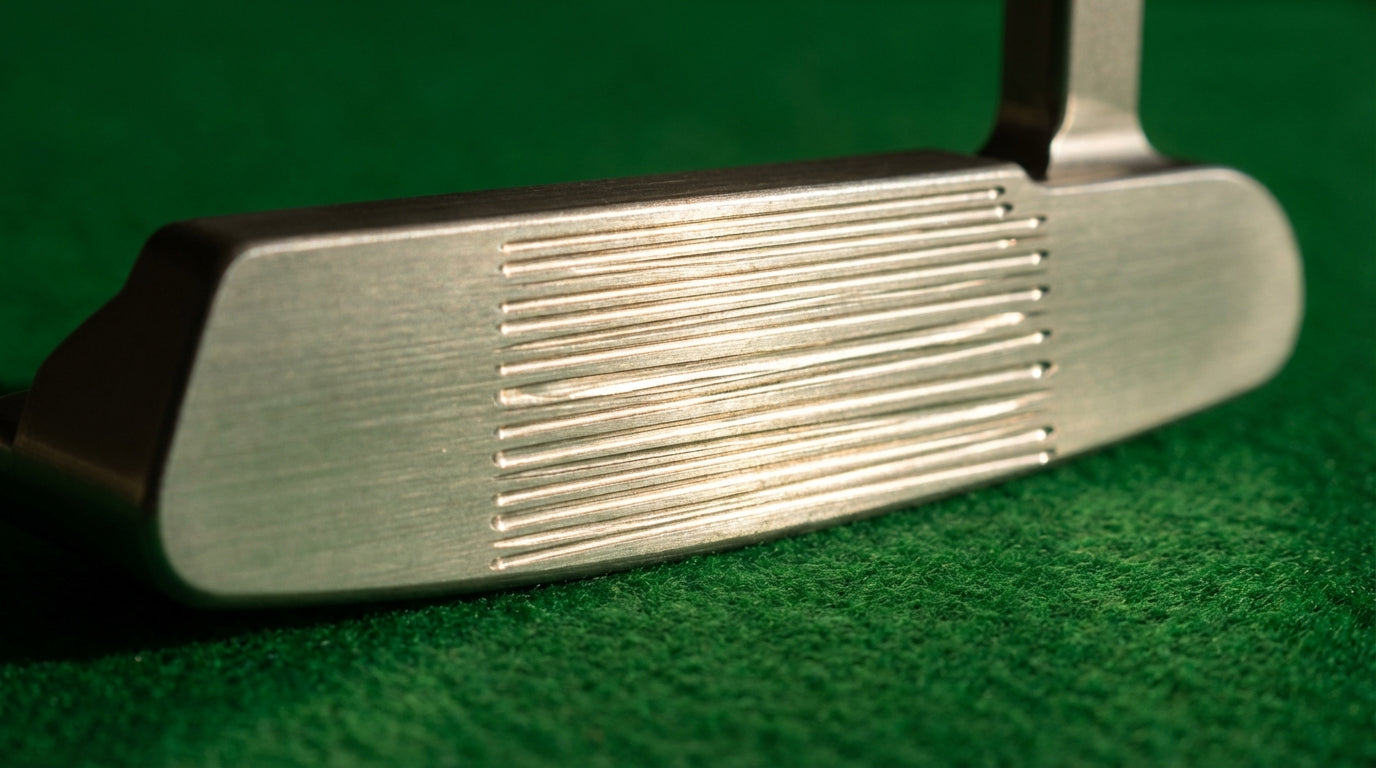
Grooves are precision-milled channels in the putter face that enhance how the ball interacts with the club. They're not decorative—every groove serves a functional purpose rooted in physics and material science.
When the putter face strikes the ball, the grooves:
- Create friction zones: By increasing surface contact area, grooves generate more friction between ball and face, stabilizing contact
- Generate spin: This friction creates the backspin necessary for immediate rolling action and consistency
- Stabilize contact: Grooves help grip the ball and reduce slipping during impact, improving distance control
- Channel moisture: Grooves direct water and debris away from the contact point, maintaining surface integrity in all conditions
The result is a ball that launches cleanly, spins predictably, and rolls consistently down the green.
Grooves and Backspin: Why Spin Matters in Putting
Understanding backspin is critical to appreciating grooves. When a putter strikes a ball without grooves, the ball tends to skid—sliding across the green without rolling. This skidding motion is unpredictable because:
- Different green conditions affect skidding differently and unpredictably
- Ball speed is inconsistent from skidding impacts versus rolling
- Direction control is compromised by the unpredictable skidding motion
Grooves reduce skidding by creating backspin. This spin causes the ball to transition from skidding to rolling faster, establishing true rolling motion within a few feet of the impact point. Once rolling, the ball's movement is far more predictable and controllable.
This distinction between skidding and rolling is fundamental to putting consistency. The science of putting shows that controlled rolling produces better results than uncontrolled skidding every time.
Groove Design Variations Across Different Putter Types
Different putter designs feature different groove patterns optimized for their shape:
Blade Putters
Traditional blade putters often feature simple, parallel grooves running perpendicular to the target line. These classic grooves are effective and offer excellent feedback to the golfer about impact quality and consistency.
Mallet Putters
Modern mallets often feature more sophisticated groove patterns, including radial designs or varying groove depths across the face. Whether blade or mallet, grooves serve the same fundamental purposes of friction and spin generation.
Hybrid and Specialty Designs
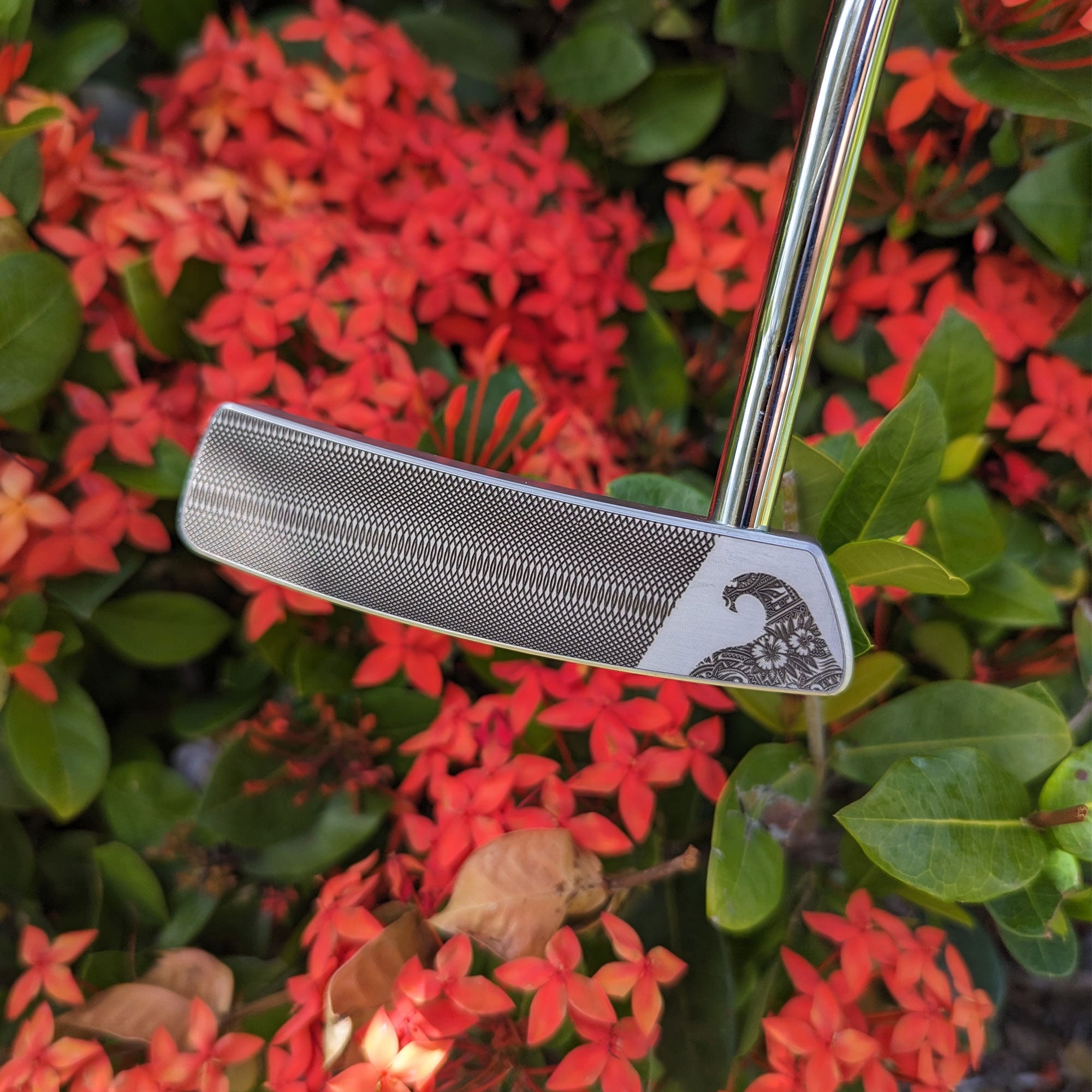
Premium putters sometimes feature multiple groove zones, each optimized for different face areas. Custom milled putters can incorporate sophisticated groove designs that mass-produced clubs cannot achieve efficiently.
How Grooves Prevent Common Putting Problems
Grooves address several issues that affect putting performance significantly:
Inconsistent Distance Control
Without adequate grooves, ball speed varies significantly from putt to putt because contact quality varies. Grooves stabilize contact, making distance control more repeatable and predictable.
Directional Inconsistency
Skidding causes directional drift because the ball isn't rolling cleanly. Spin from grooves establishes rolling immediately, improving directional stability and aim point accuracy.
Moisture and Debris Interference
On humid mornings or wet days, a smooth face collects moisture that reduces friction significantly. Grooves channel this moisture away, maintaining consistent contact quality in all conditions.
Off-Center Hit Forgiveness
A putter with full-face grooves maintains reasonable performance even on toe or heel hits. Putters without grooves show much greater performance variation from off-center impacts.
Understanding groove patterns helps you choose more consistent equipment for all conditions.
Manufacturing Precision and Groove Quality
Not all grooves are equal. The difference between quality and poor grooves often determines putting performance significantly:
Precision Depth and Spacing
Mass-produced putters sometimes cut corners on groove precision. Premium and custom putters use CNC milling to ensure exact groove depth, width, and spacing. This precision matters because:
- Inconsistent depth reduces friction predictability and feel
- Irregular spacing creates inconsistent contact points and spin
- Poor perpendicularity affects spin generation and distance control
Full-Face Coverage
Budget putters sometimes limit grooves to the center of the face. Quality custom putters extend grooves across the entire striking area, ensuring consistent performance regardless of impact location.
Material Compatibility
Different putter materials (steel, aluminum, soft materials) require different groove designs for optimal performance. Quality manufacturers match groove design to material properties precisely.
Maintenance: Keeping Grooves Effective
Over time, grooves can fill with dirt, grass, or corrosion. This reduces their effectiveness significantly. Maintain your grooves by:
- Regular cleaning: Use a soft brush or cloth to remove debris after each round
- Deep cleaning: Periodically use a groove-cleaning tool or soft-bristled brush for thorough maintenance
- Protective storage: Store your putter in a headcover to minimize corrosion and contamination
- Professional maintenance: A clubmaker can professionally clean and restore grooves when needed
Maintaining groove clarity extends your putter's performance life significantly.
The Bottom Line: Why Every Putter Should Have Quality Grooves
Grooves are essential to modern putter design. They improve spinning, reduce skidding, increase consistency, and manage environmental challenges. When combined with proper weight, length, and loft specifications, quality grooves are foundational to excellent putting equipment.
Frequently Asked Questions
When were grooves first added to putters?
Grooves have been part of putter design for over a century. Early manufacturers discovered that grooved faces produced more consistent results than smooth faces, and the design has evolved continuously.
Do I need to be concerned if my putter's grooves are worn?
Some wear is normal, but significant wear reduces groove effectiveness. If grooves are barely visible or filled with corrosion, performance will suffer. Professional cleaning can restore groove effectiveness in many cases.
Are deeper grooves always better?
Not necessarily. Depth must balance with groove spacing and face geometry. An optimal groove design depends on your playing conditions and preferences. Test different putters to find what works best for you.
Can groove pattern affect putting feel?
Absolutely. Groove design influences feedback and vibration characteristics. Some golfers prefer the distinct feedback of prominent grooves; others prefer subtle grooves and a smoother feel. Finding the perfect putter includes matching groove design to your feel preferences.


Leave a comment
This site is protected by hCaptcha and the hCaptcha Privacy Policy and Terms of Service apply.