
Putter length is one of the most underestimated factors in golf equipment selection. Get it right, and your setup, posture, and stroke all click into place seamlessly. Get it wrong, and you're fighting unnecessary compensations every single time you address the ball. In this comprehensive guide, we'll help you understand putter length and find the optimal choice for your game.
What is Putter Length and Why It Matters
Putter length is measured from the sole of the club to the end of the grip. Standard putter lengths typically range from 33 to 35 inches, though custom options extend from 30 to 38+ inches to accommodate diverse player needs. This measurement directly affects your posture, balance, and stroke mechanics on the green—making it foundational to your equipment fit.
The importance of putter length cannot be overstated: incorrect length forces your body into compensatory positions that undermine consistency and repeatability. Too short, and you'll hunch over unnaturally; too long, and you'll extend awkwardly and lose posture. The right length lets your arms hang naturally while maintaining athletic posture—the foundation of a repeatable, confident stroke.
Key Factors That Influence Optimal Putter Length
Finding your ideal putter length requires evaluating several interconnected factors:
Height
Your overall height is the starting point for length estimation. Taller golfers typically need longer putters to maintain proper posture without bending excessively. A general rule: if you're 5'6" or shorter, 33-34" works well; 5'7"-5'10", try 34-35"; 5'11"+, 35-36". However, height alone doesn't tell the whole story of proper fit.
Arm Length
Arm length (sometimes called wingspan) matters as much as height. Two golfers of the same height can have different arm lengths, requiring different putter lengths. When evaluating arm length, consider your reach from shoulder to fingertip while your arm hangs naturally at your side.
Posture Preference
Do you prefer to bend from the hips with a more athletic setup, or stand slightly more upright with an extended posture? Your natural stance preference influences ideal length. The perfect putter accommodates your preferred posture and playing style.
Lie Angle
Lie angle (the angle between shaft and sole) interacts with length. A proper fitting considers both together—sometimes a longer shaft works with a different lie angle to achieve optimal positioning. These specifications must work in harmony.
Personal Preference
Ultimately, comfort drives performance. Some golfers prefer slightly longer putters for added stability and pendulum motion; others prefer slightly shorter for enhanced feel and control. Different putter styles also influence length preferences based on head design and balance.
How to Determine Your Optimal Putter Length
Follow this step-by-step fitting process:
Step 1: Establish Your Natural Stance
Stand in your natural putting posture—shoulders square to the line, feet shoulder-width apart, knees slightly flexed. Let your arms hang naturally at your sides without forcing any position.
Step 2: Measure Your Arm Position
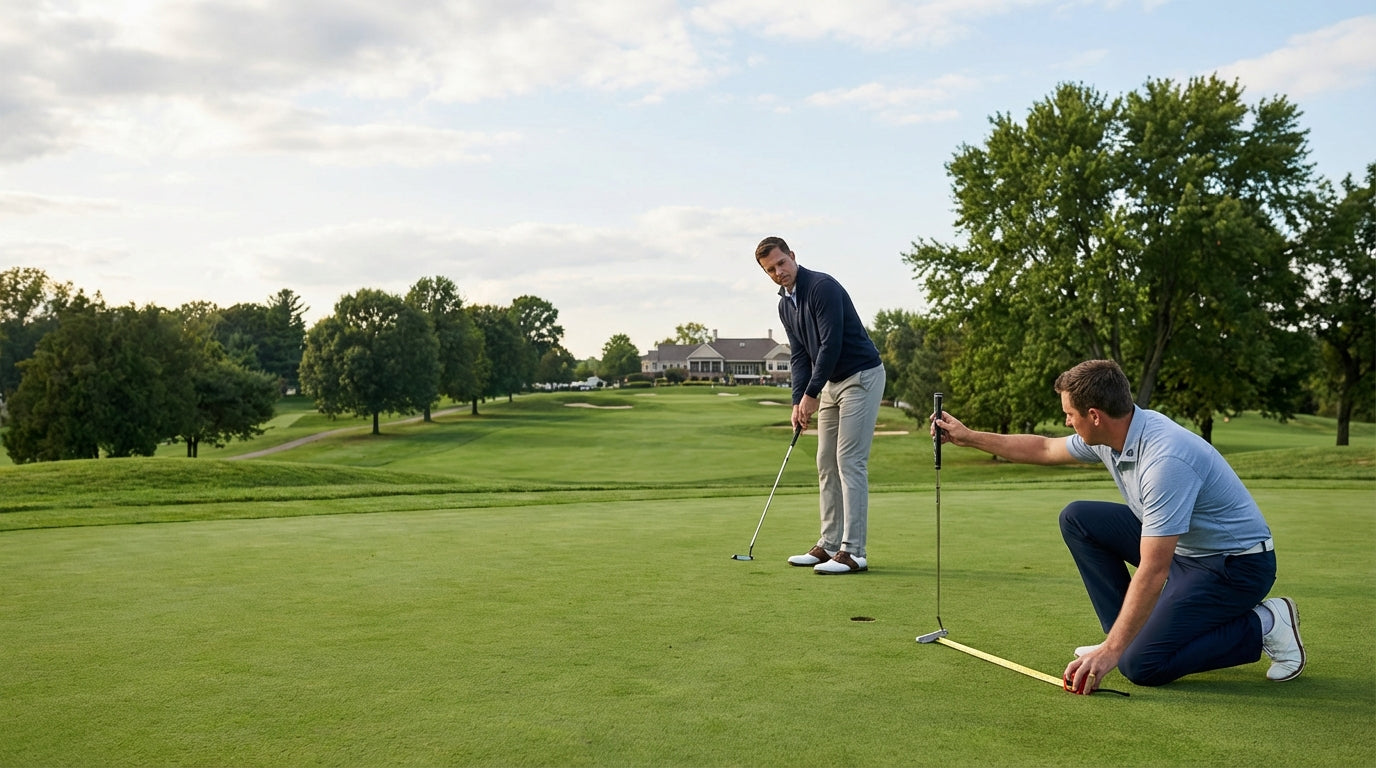
Measure from your wrist crease to the inside of your ankle when standing naturally. This measurement provides a baseline for putter length—your hands should hang roughly 1-2 inches from your inner thighs when addressing the ball in your setup.
Step 3: Test Multiple Lengths
Hit 20-30 putts with putters in half-inch increments above and below your estimated length. Notice carefully:
- Which length feels most balanced and athletic to your body
- Where your shoulders naturally align and aim
- Which promotes the smoothest stroke tempo and rhythm
- Which feels most repeatable across multiple putts
Step 4: Verify Alignment
With your optimal length, verify that:
- Your eyes are directly over the ball (or slightly inside for better view)
- Your shoulders form a line parallel to your target line
- Your arms hang naturally with slight bend at the elbows
- The putter head sole sits flat on the ground at address
Putter Length and Stroke Consistency
Once length is optimized, stroke consistency improves dramatically. Here's why: when your putter length matches your setup, you can focus entirely on tempo and aim. Your body doesn't need to compensate for poor geometry, which means your stroke repeats more consistently putt to putt. This directly translates to better distance control and improved accuracy on the green.
Putter weight also influences how length feels and impacts your tempo, so consider both elements together during fitting for best results and maximum consistency.
Length Adjustments for Different Scenarios
Some serious golfers keep multiple putters of slightly different lengths for specific situations and conditions:
- Longer putters (35-36"+) for high-pressure situations requiring maximum stability and consistent pendulum motion
- Standard length (34-35") for general play and most course conditions
- Slightly shorter putters (33-34") for creative lag putting or when increased feel and responsiveness is beneficial
This approach is particularly popular among tour professionals and serious amateurs who want specialized equipment for different conditions.
Getting a Professional Fitting
While DIY testing helps, a professional putter fitting takes precision to another level. A fitter evaluates length alongside loft, lie angle, and weight, ensuring every specification contributes to your optimal setup and performance. Consider investing in a fitting—it's one of the best returns on investment in your game.
Custom Putter Length Options
Custom milled putters offer the advantage of precise length customization. Rather than compromising with a standard length, you can order a putter manufactured to your exact specifications, ensuring perfect fit from day one.
Conclusion
Putter length is far from a one-size-fits-all specification. By considering your height, arm length, posture, and personal preferences, you can identify the length that sets you up for success. The right putter length removes variables and lets you focus on what truly matters: consistent tempo, solid aim, and confident strokes. Whether you choose standard lengths or explore custom milled putters, prioritize finding your perfect fit—your scorecard will thank you.
Frequently Asked Questions
What is the most common putter length?
34 inches is the industry standard, but this represents an average. Your optimal length depends on your specific height, arm length, and posture, so custom fitting is valuable.
Can I adjust my putter length after purchase?
Yes, most putters can be shortened at a club repair shop, though extending is more limited. Always get accurate fitting before making permanent adjustments.
How does putter length affect my stroke tempo?
Proper length allows a natural pendulum motion. Too short speeds up tempo unnaturally; too long slows it down. The right length supports your natural rhythm.
Should I use the same putter length for all greens speeds?
Generally yes, assuming proper length from fitting. Adjusting loft or reading green speed is more important than length changes between rounds.


Leave a comment
This site is protected by hCaptcha and the hCaptcha Privacy Policy and Terms of Service apply.