

The groove pattern on a putter face is one of the most overlooked—yet measurably important—specifications in putter design. While many golfers focus on head shape or weight, groove pattern directly impacts contact quality, spin characteristics, and rolling consistency. Understanding how grooves work reveals why precision milling matters for your game.
What Are Putter Grooves and Why They Matter
Grooves are the small channels or indentations milled into the putter face. They serve multiple critical functions:
- Create consistent friction between ball and clubface across the entire sweet spot
- Channel moisture and debris away from the face, maintaining surface contact quality
- Stabilize the ball on impact, reducing skidding and promoting immediate rolling
- Improve contact consistency regardless of impact location on the face
In essence, grooves bridge the gap between your stroke (which isn't perfect every time) and the rolling consistency the green demands. They're foundational to reliable performance.
How Groove Pattern Affects Ball Contact and Spin
The design of groove patterns influences how the ball interacts with the clubface:
Groove Geometry
The shape of grooves—width, depth, and spacing—determines how much surface area actually contacts the ball. Deeper, wider-spaced grooves create more friction, while shallow, closely-spaced grooves offer finer feedback and softer feel. The optimal geometry depends on your preferences and playing conditions.
Face Coverage
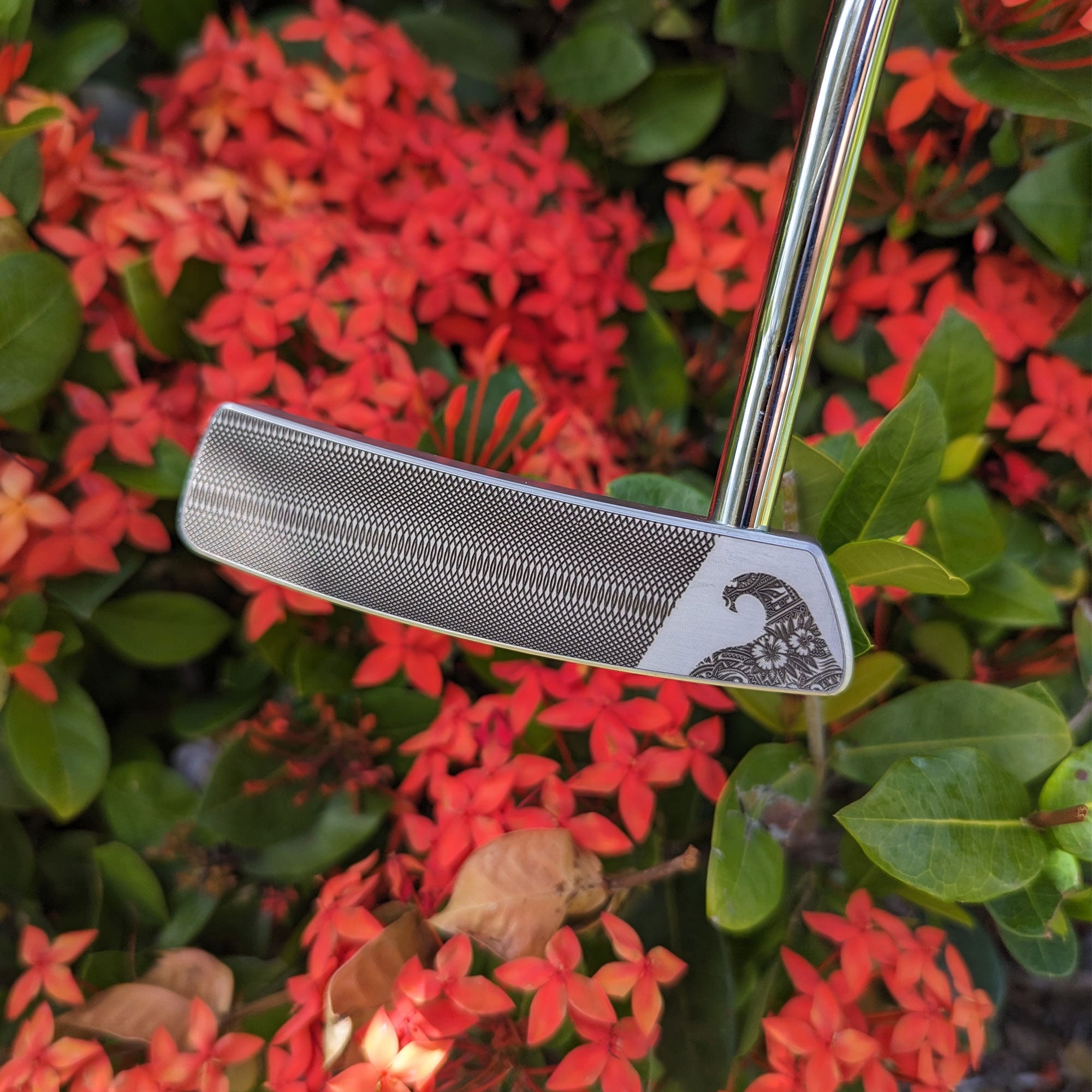
Premium putters feature grooves across the entire hitting area for consistent performance. Budget putters sometimes limit grooves to only the center, leaving the toe and heel without groove benefits. Full-face grooves ensure consistent performance regardless of where you make contact.
Spin Generation
Groove patterns directly influence backspin and rolling action rates. More aggressive grooves create higher spin rates, which can help the ball settle into rolling motion faster. This is particularly valuable on slower greens where ball momentum is critical.
Types of Groove Patterns
Different groove designs serve different purposes and playing styles:
Parallel Grooves
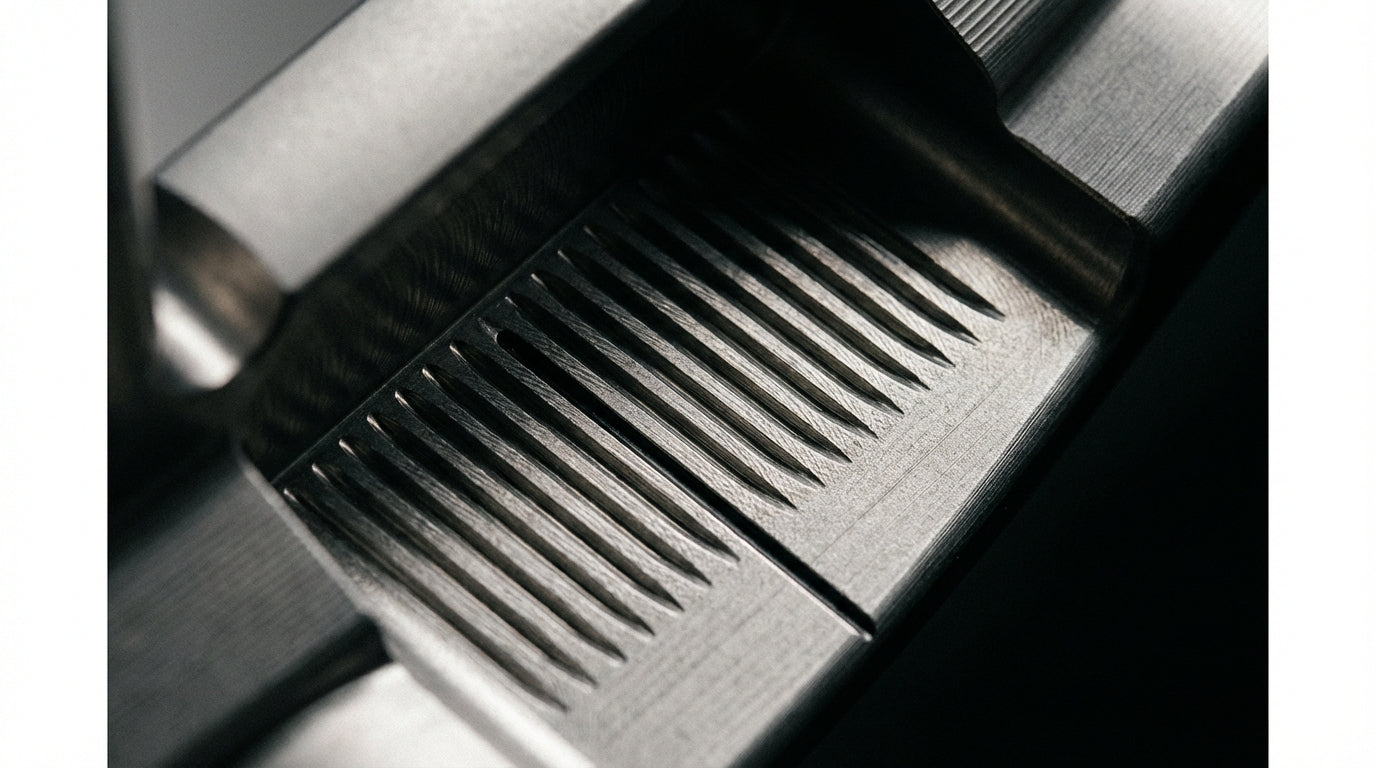
Straight grooves running perpendicular to the target line are the most common design. They provide consistent, predictable spin rates and work well across all greens and playing styles. This traditional pattern remains popular for good reason—it's proven effective.
Radial/Mill Grooves
Grooves radiating from a center point (like spokes on a wheel) are found on some precision-milled putters. Custom milled putters often feature refined radial patterns that optimize contact consistency and spin distribution across the entire face.
Hybrid Groove Patterns
Some modern designs combine multiple groove patterns in different face zones, optimizing each area for specific impact scenarios. These sophisticated patterns represent the cutting edge in advanced putter design.
Groove Pattern and Moisture/Debris Management
One often-overlooked function of grooves is channeling moisture and debris away from the face. On humid days or dewy mornings, grooves prevent water from reducing ball-face friction. They also help move grass clippings and dirt away, maintaining surface contact quality throughout your round.
This is why maintaining groove clarity is important. Clean grooves perform better than grooves filled with dirt or grass. Regular cleaning extends your putter's performance life and consistency significantly.
Groove Pattern Interaction with Other Putter Specs
Groove pattern doesn't work alone. It interacts with:
- Face Texture: The underlying face finish (smooth vs. matte) combines with grooves to affect friction and feel.
- Loft: Putter loft and groove pattern together determine launch angle and spin characteristics.
- Face Material: Different metals (steel, aluminum, brass) interact differently with groove designs and manufacturing processes.
- Overall Head Design: Blade vs. mallet styles often feature different optimal groove patterns for their respective designs.
Professional putter designers balance all these elements for cohesive, integrated performance.
Impact on Distance Control and Consistency
Proper groove pattern design directly improves:
- Distance Consistency: With consistent spin and friction, ball speed varies less from putt to putt, reducing distance dispersion significantly.
- Feel and Feedback: Quality grooves provide immediate tactile feedback about impact quality, helping you learn and adjust your technique.
- Off-Center Hit Forgiveness: A well-designed groove pattern reduces the performance penalty of toe or heel hits, making the putter more forgiving.
Improved consistency is the foundation of better putting, and groove pattern plays a significant role in achieving it.
Premium Putter Manufacturing and Groove Precision
The difference between mass-produced and precision-milled putters often comes down to groove pattern quality. Custom putters achieve groove precision through CNC milling, ensuring:
- Exact groove depth and width across the entire face consistently
- Consistent groove spacing with no variation or deviation
- Perfect perpendicularity to the face surface
- Uniform groove pattern regardless of head size or style
This precision directly translates to better, more consistent putting performance game after game.
Selecting the Right Groove Pattern for Your Game
When evaluating putters, examine:
- Visual Inspection: Look at groove depth and pattern. Premium putters have clear, precisely defined grooves that are uniform across the face.
- Face Coverage: Ensure grooves extend across the entire striking area, not just the center of the face.
- Feel Test: Feel and grooves should work together. Run your thumb across the face—you should sense defined grooves clearly.
- Performance Testing: Hit putts with multiple putter designs and compare distance consistency and feel feedback.
Choosing a putter should involve testing different groove patterns and designs to find what works best for you.
Conclusion
Groove pattern is far more than cosmetic—it's a functional specification that meaningfully impacts your putting performance. The right groove design improves friction, reduces debris interference, and enhances consistency across varied conditions. Whether you prefer traditional parallel grooves or modern milled patterns, prioritize quality and precision. Your putting consistency—and your scorecard—will reflect this choice.
Frequently Asked Questions
Do all putters need grooves?
Effectively yes. While some experimental designs exist without grooves, performance suffers noticeably. Grooves are essential for optimal contact, spin generation, and consistency.
How often should I clean my putter grooves?
Clean grooves after every few rounds, or immediately after play in wet conditions. Use a soft brush or cloth to remove debris. Clean grooves perform better than grooves filled with dirt.
Can groove wear affect my putter's performance?
Yes, over many years of use, grooves can wear down and lose definition. This reduces friction and consistency. Maintaining your putter through groove cleaning extends performance life significantly.
Are expensive groove patterns better than simple designs?
Not always. A well-executed simple groove pattern often outperforms poorly designed complex patterns. Focus on precision and full-face coverage more than pattern complexity.



Leave a comment
This site is protected by hCaptcha and the hCaptcha Privacy Policy and Terms of Service apply.