




The Foundation of Consistency: Why It Matters
As a golfer, you know that putting separates great scores from good ones. Yet many players spend hours on the range perfecting their long game while neglecting the most critical skill of all: putting consistency. The reality is stark—a consistent putting stroke can cut 5-10 strokes from your round, while an inconsistent one will sabotage even the best ballstriking. These six proven techniques will help you build the repeatable, reliable stroke that wins tournaments and lowers handicaps.
1. Perfect Your Posture and Stance
The foundation of any reliable putting stroke begins with your setup. Your feet should be shoulder-width apart with your weight evenly distributed on both feet. Keep your knees slightly bent to promote stability and relaxation, and position your arms so they hang naturally without tension. This athletic posture creates a solid base from which you can execute a smooth, pendulum-like stroke. The key is achieving a position that feels repeatable—one you can return to stroke after stroke without conscious adjustment or realignment. Tour players return to the same setup thousands of times because their foundation is rock-solid.
2. Maintain a Steady Eye Line
Your eyes control where the putter face points at address and during the stroke. Focus on a fixed spot on the back of the ball, and keep your head still throughout the entire stroke until well after impact. This discipline prevents the common mistake of "peeking" at the hole, which disrupts your stroke mechanics and introduces the inconsistency that costs strokes. A steady eye line also ensures you make solid contact with the center of the putter face, translating your intended pace into actual ball speed. Your head position is your anchor—treat it as sacred.
3. Master Your Grip Pressure and Hand Position
How you hold the putter directly influences your control and consistency. Use a neutral grip with light pressure—imagine holding a bird: firm enough to keep it from flying away, but gentle enough not to harm it. Your hands should work as one unit, moving together like a pendulum rather than independently. A light grip reduces tension that travels up your arms and shoulders, promoting the smooth acceleration you need for repeatable results across every putt. Excess grip pressure introduces hand manipulation that sabotages distance control. Explore putter grip fundamentals to find the style and pressure point that works best for your stroke mechanics.
4. Experiment with the Right Putter for Your Stroke
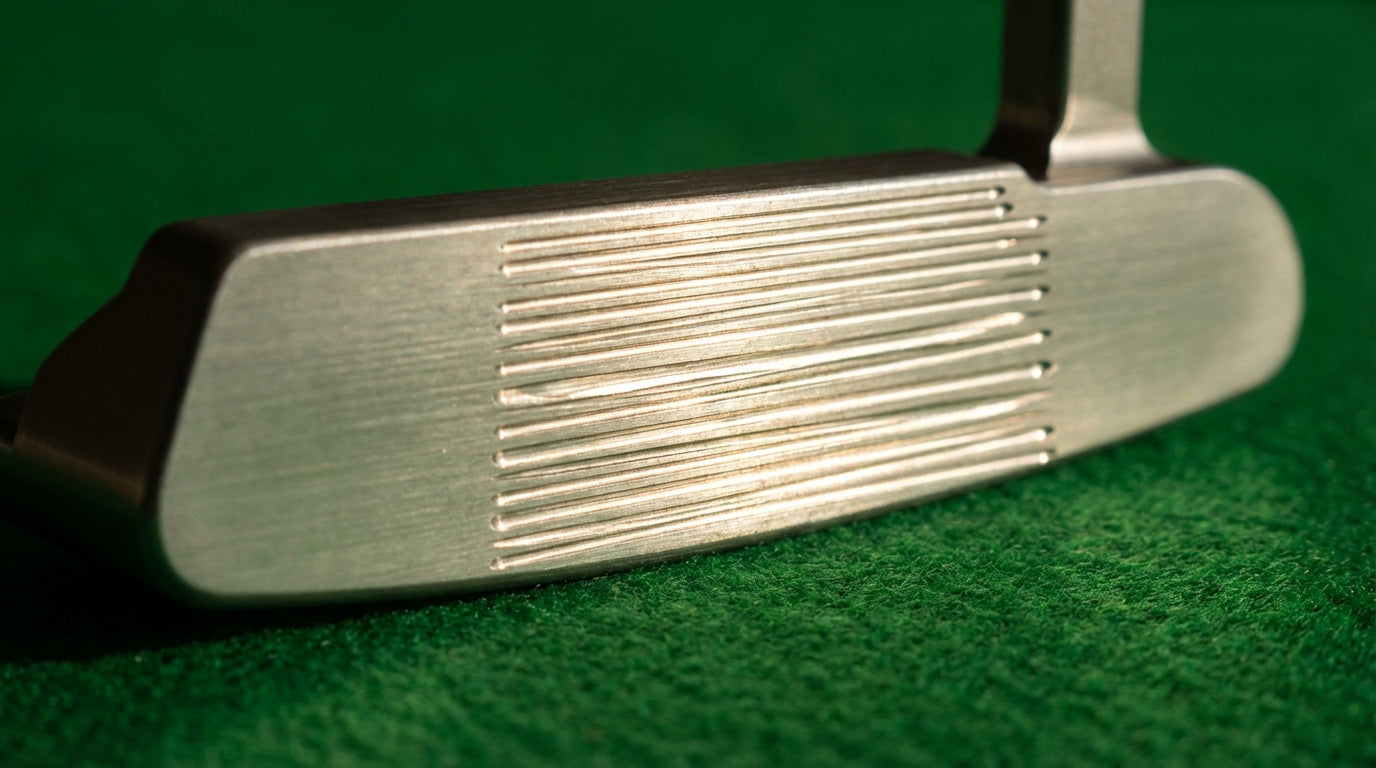
Not every putter suits every golfer. The difference between a blade and a mallet putter, or between different weights and lengths, is far more than cosmetic—it profoundly affects your feel, confidence, and consistency. Try different head shapes, weights, and lengths to discover what gives you the most confidence and control. Once you find the right match, stick with it long enough to build real muscle memory. Understanding blade versus mallet designs can accelerate your decision. Using custom milled putters takes this even further by ensuring your putter is precision-built for your stroke characteristics, hand size, and preferred weight distribution.
5. Read the Greens with Purpose and Confidence
Consistency extends far beyond your stroke mechanics to your green reading. Take deliberate time before each putt to analyze slope, speed, and grain direction. Walk behind and to the sides of your line to gather comprehensive information. A thorough green read removes doubt and helps you commit fully to your intended line—hesitation breeds inconsistency every time. The better your read, the more confident your stroke becomes, and confidence fuels better results. Systems like AimPoint Putting can systematize your reads and eliminate guesswork, giving you a repeatable framework for every green on every course.
6. Practice with Purpose and Structure
Random putting practice builds random results. Instead, dedicate specific sessions to drills that address your weaknesses. Practice distance control from 20-30 feet, short putts from 3-6 feet, and breaking putts from various angles and slopes. Use alignment aids and reference markers to ensure you're building the right habits consistently. The more you practice the fundamentals with focus and intention, the more automatic and consistent your stroke becomes when tournament pressure is on. Quality beats quantity—30 minutes of deliberate practice outperforms three hours of casual ball rolling.
The Integration Principle: It All Works Together
These six tips work best together, not in isolation. A perfect grip means nothing without proper posture. A great green read becomes useless without a consistent stroke. The best putters understand that custom putters combined with fundamental technique create an unstoppable combination. As you work through these elements, think of them not as separate skills but as interconnected pieces of a complete system. Your equipment, setup, mechanics, and mental approach must work in harmony. Also, don't overlook proper putter maintenance to keep your equipment performing at its peak and delivering the results you've worked so hard to achieve.
Frequently Asked Questions
How long does it take to develop a consistent putting stroke?
Most golfers see noticeable improvement within 2-3 weeks of focused practice, but true consistency—the kind that shows up under pressure—typically develops over months of deliberate work. The timeline depends on your starting point, current technique, and practice frequency. Commit to 30 minutes of structured practice three times per week for measurable results within 6-8 weeks.
Should I use the same putter for all putts?
Absolutely. Using one putter allows your body to develop genuine muscle memory and feel. Switching between different putters disrupts this neural pattern and reintroduces variables that undermine consistency. Find your ideal putter and master it until it becomes an extension of your body and intention.
Does putter weight affect consistency?
Yes, significantly. Putter weight influences your consistency and tempo control. A heavier putter provides natural pendulum stability and forgiveness, while a lighter one requires more precise tempo control and technique. Your ideal weight depends on your stroke style, strength, and sensitivity to feel.
Can anyone develop a consistent putting stroke?
Yes. Putting is perhaps the most learnable skill in golf. Unlike the full swing, which involves many moving parts, putting is fundamentally simple—it's just a controlled rocking motion. With the right fundamentals, quality equipment, and practice, any golfer can develop real, measurable consistency that shows up when it counts most.


Leave a comment
This site is protected by hCaptcha and the hCaptcha Privacy Policy and Terms of Service apply.