


The decision between a blade and mallet putter is often treated as a matter of personal preference, but the choice carries real performance implications. Your putter style should complement your natural stroke, stabilize your mechanics, and provide the forgiveness level suited to your consistency. Understanding blade versus mallet putter designs helps you select the equipment that maximizes your putting performance. If you're uncertain whether your current putter is even the right fit, reviewing the signs it's time to upgrade your putter is a useful starting point.
Anatomy of a Blade Putter
A blade putter features a compact head with the weight concentrated in a small, narrow design. The classic blade shape resembles a single blade of a knife, hence the name. The blade head typically measures three to four inches wide and features a relatively thin profile from front to back. This compact design delivers distinctive performance characteristics that appeal to golfers with specific stroke mechanics.
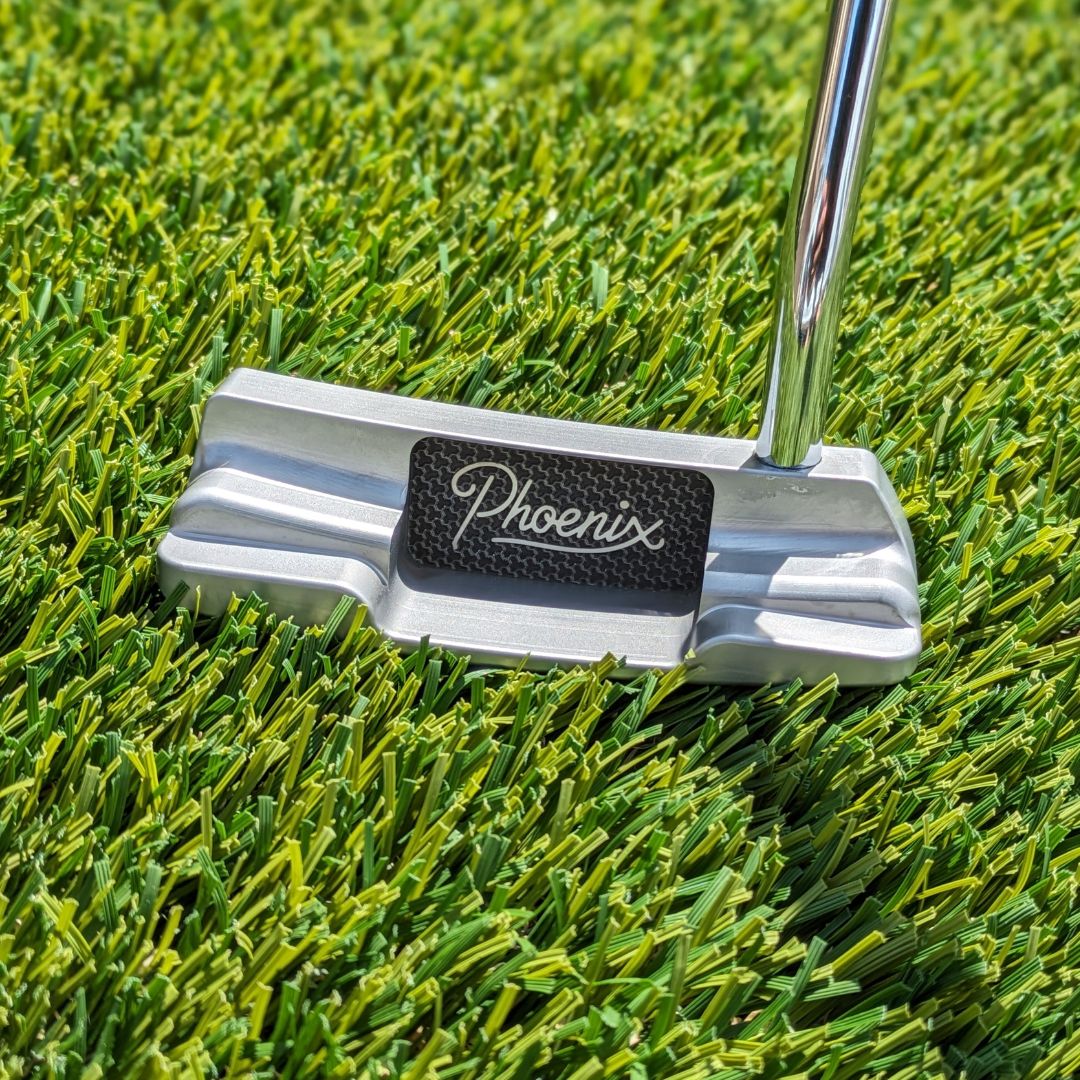
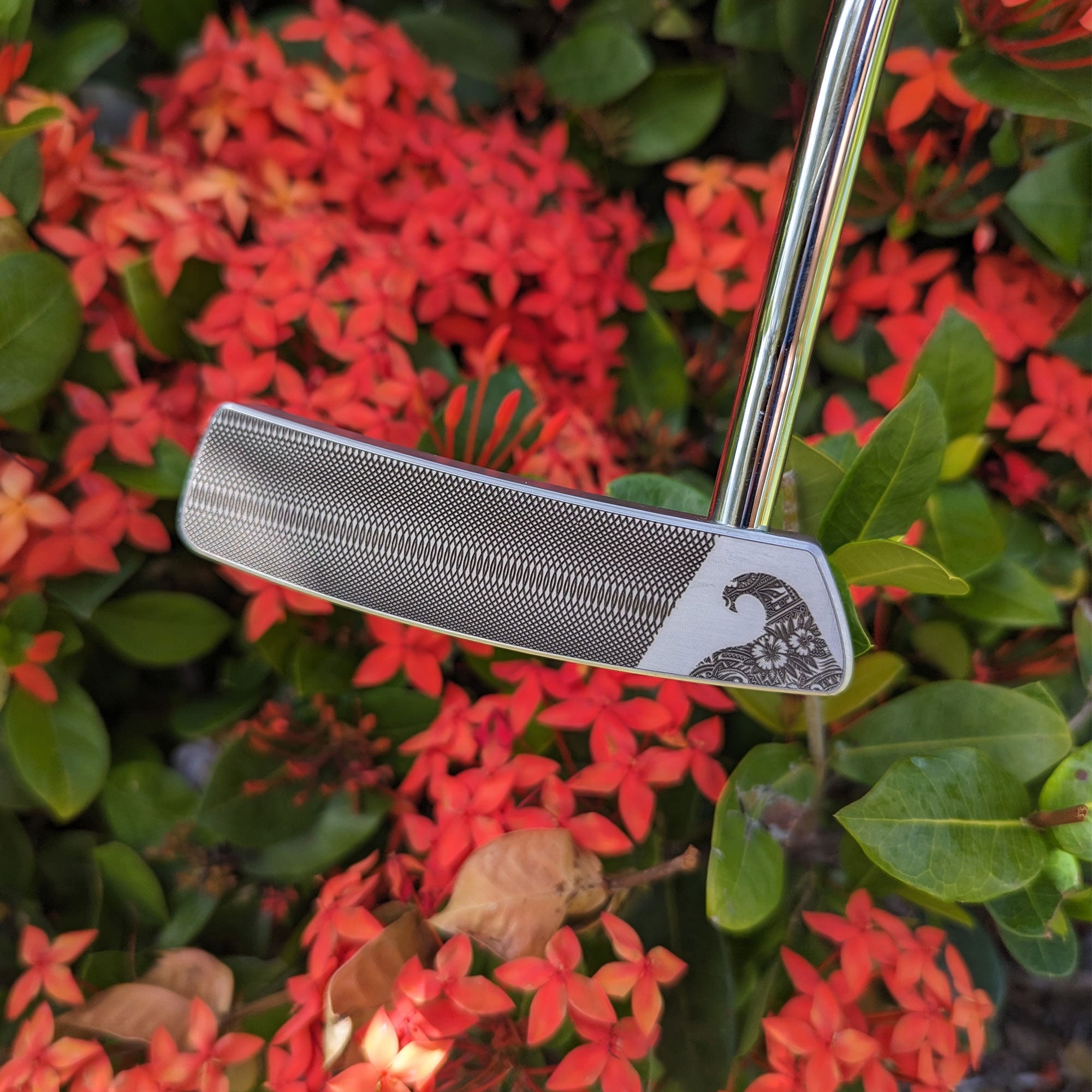
The Origin Putter from Phoenix Putter Co exemplifies modern blade design. CNC milled from 303 stainless steel, the Origin features a sleek blade profile available with two face milling options: horizontal lines or crosshatch pattern. The compact design feels responsive and allows skilled putters to shape putts and make adjustments during their stroke. The light, concentrated weight distribution gives the blade an uncluttered feel that many golfers describe as pure.
Blade putters concentrate their weight directly behind the center of the face. This weight distribution creates an interesting characteristic: blade putters are slightly less forgiving on off-center hits compared to mallet designs. A putt struck on the heel or toe of a blade creates slightly more twisting and less ball speed retention than the same strike on a mallet head. However, this reduced forgiveness comes with enhanced feedback. The blade tells you exactly what happened. A slightly off-center strike produces a different feel and sound than a center-strike, allowing skilled putters to immediately understand their mistake and adjust.
The blade's narrow profile also influences alignment. The compact head naturally points at the target line with minimal visual reference. Some golfers find this alignment ease beneficial, while others struggle with the minimal visual feedback. If you're someone who relies on a broad alignment reference to ensure square face position, a blade might feel unsettling at first.
Anatomy of a Mallet Putter
A mallet putter distributes weight across a larger, heavier head that extends further back from the face. While blade putters are compact and responsive, mallets are substantial and stable. The mallet head typically features a larger footprint, broader alignment aids, and weight positioned further from the putter face. This geometry fundamentally changes how the putter performs.
Mallet putters prioritize stability and forgiveness. The extended head and rearward weight distribution increase moment of inertia, which means the putter head resists twisting on off-center hits. A putt struck on the heel or toe of a mallet produces less face rotation and maintains more ball speed compared to the same strike on a blade. For golfers still developing consistent striking consistency, this forgiveness matters.
The visual footprint of a mallet also provides enhanced alignment assistance. The broader head and extended design give golfers more visual reference points. Many players find that simply looking down at a mallet putter's larger silhouette instills confidence that their alignment is square. This psychological benefit translates into actual performance improvement if alignment confidence leads to smoother, more committed strokes.
Mallet putters appeal to golfers with slower swing speeds or those who struggle with path control. The extra weight provides momentum that carries through the stroke more predictably, and the stability reduces the impact of minor path deviations. To understand the science behind these mechanics in more detail, see how equipment choices impact your score at the biomechanical level.
How to Determine Your Stroke Type
Your natural putting stroke follows one of two patterns: straight-back, straight-through (SBST) or arced stroke.
Straight-back, straight-through putters move the putter head directly away from the target line and directly toward the target line during the stroke. The putter head travels in a straight line extending away from and toward the hole, with the face remaining square throughout. This stroke demands precise path control and face alignment. SBST putters benefit from responsive, feedback-oriented equipment because they rely on feel and consistency to sink putts.
Arced strokes feature the putter head moving away from the target line during the backswing and returning along a similar arced path during the forward stroke. The face naturally opens slightly during the backswing and closes during the forward swing. This stroke is more forgiving of minor path deviations because the arc naturally returns the face to square. Arced stroke putters benefit from more stable equipment that resists the effect of path variations.
To determine your stroke type, record yourself putting from ten feet away. Analyze the footage from behind the ball. Does your putter head travel straight back and straight through? Your stroke is SBST. Does the putter head move away from the target line and return along an arc? Your stroke is arced.
Why Phoenix Built the Origin as a Blade Putter
The decision to build the Origin Putter as a blade design rather than a mallet reflects a commitment to responsive, feedback-rich putting performance. A blade putter rewards the fundamentals that separate good putters from great putters: consistent strike location, precise path control, and true face alignment.
The blade design forces golfers to develop better mechanics because feedback is immediate and unavoidable. A poorly struck putt on the Origin immediately produces feedback through vibration, sound, and touch that tells you something went wrong. This immediate consequence accelerates learning. Golfers practicing with blade putters develop faster because their mistakes create unmistakable signals that demand correction.
The compact profile also suits the CNC milling process that defines Phoenix Putter Co's approach. Milling the blade allows precise control over weight distribution and face geometry. The two face milling options—horizontal lines and crosshatch—provide different ball-striking characteristics while maintaining the blade's essential design. A golfer can customize their feel by selecting the face pattern that suits their preferences.
Choosing Your Putter Style
Select a blade putter if your stroke is SBST, if you develop skills rapidly through feedback, if you're committed to improving your fundamentals, or if you prefer responsive, pure feel in your hands. The Origin Putter ($255) represents the ideal blade choice for serious golfers.
Select a mallet putter if your natural stroke is arced, if you've been consistently successful with mallet-style putters, or if you're still developing consistency and benefit from increased forgiveness. Mallet designs perform exceptionally well and shouldn't be viewed as inferior to blades. Many tour professionals use mallets because they match their stroke mechanics perfectly.
Understand that blade versus mallet is not a quality question. Both designs can be manufactured with extraordinary precision. The Origin Putter uses CNC milling to create a blade that performs with professional-level consistency. Both styles can deliver championship-level performance. The choice is about matching your equipment to your mechanics, allowing your putter to work with your natural stroke rather than against it.
Pairing your chosen putter with complementary accessories enhances performance. The OG Putter Cover ($35) protects your precision-milled Origin whether you choose a blade or mallet. The Putter Vault Case ($44) provides secure storage during travel. A quality grip like the Phoenix Putter Tour Grip ($25), Super Stroke X Traction Grip ($25), or Winn 2020 VSN Midsize Pistol Grip ($28) ensures your hands connect optimally to your putter head. Our complete guide on how to choose the right putter grip walks through every variable so you can finalize a complete setup that works for your game.
Understanding blade versus mallet putter design empowers you to select equipment that matches your mechanics, accelerates your skill development, and maximizes your putting performance. Make your choice based on your stroke characteristics, and you'll be putting with the right tool for years to come.

Leave a comment
This site is protected by hCaptcha and the hCaptcha Privacy Policy and Terms of Service apply.