
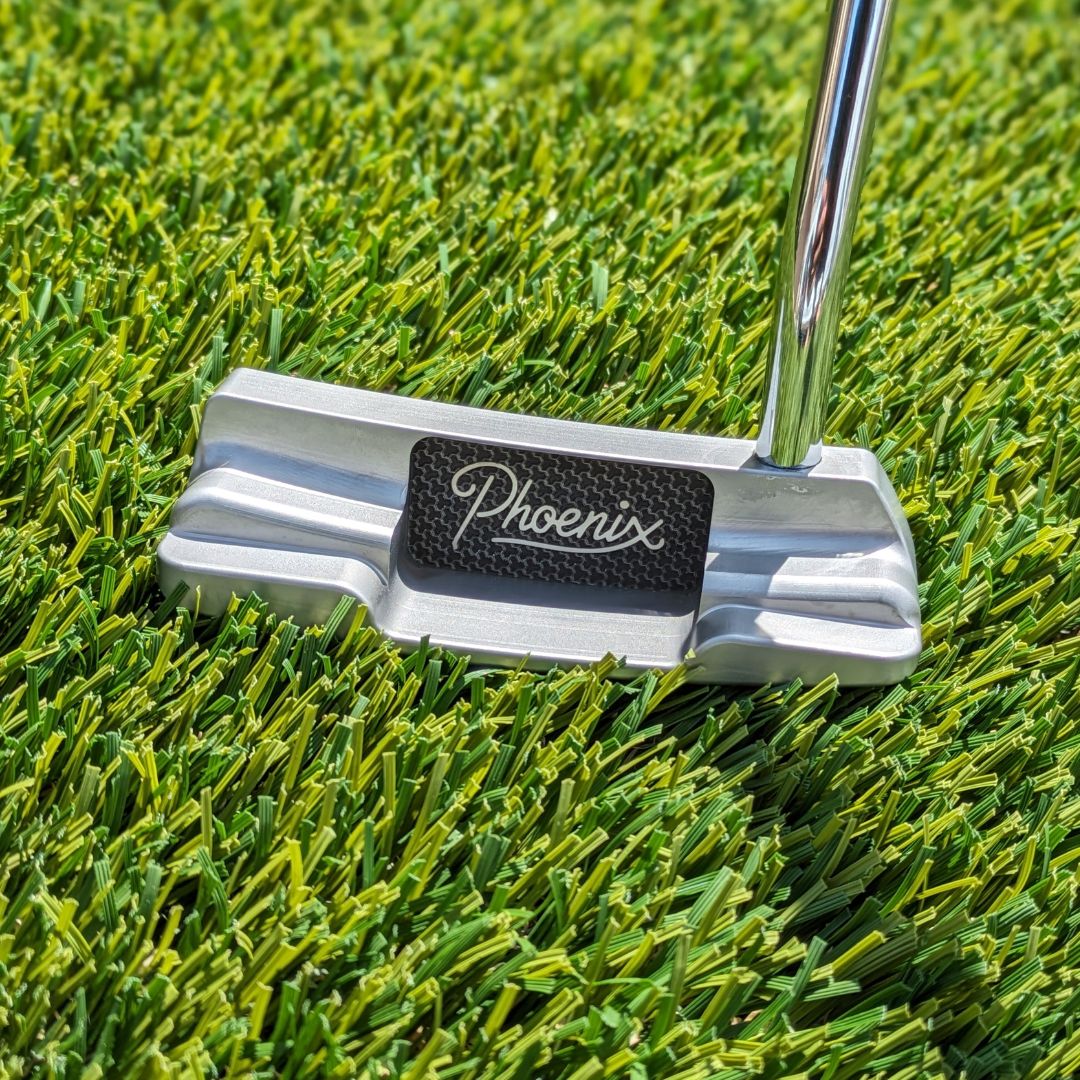

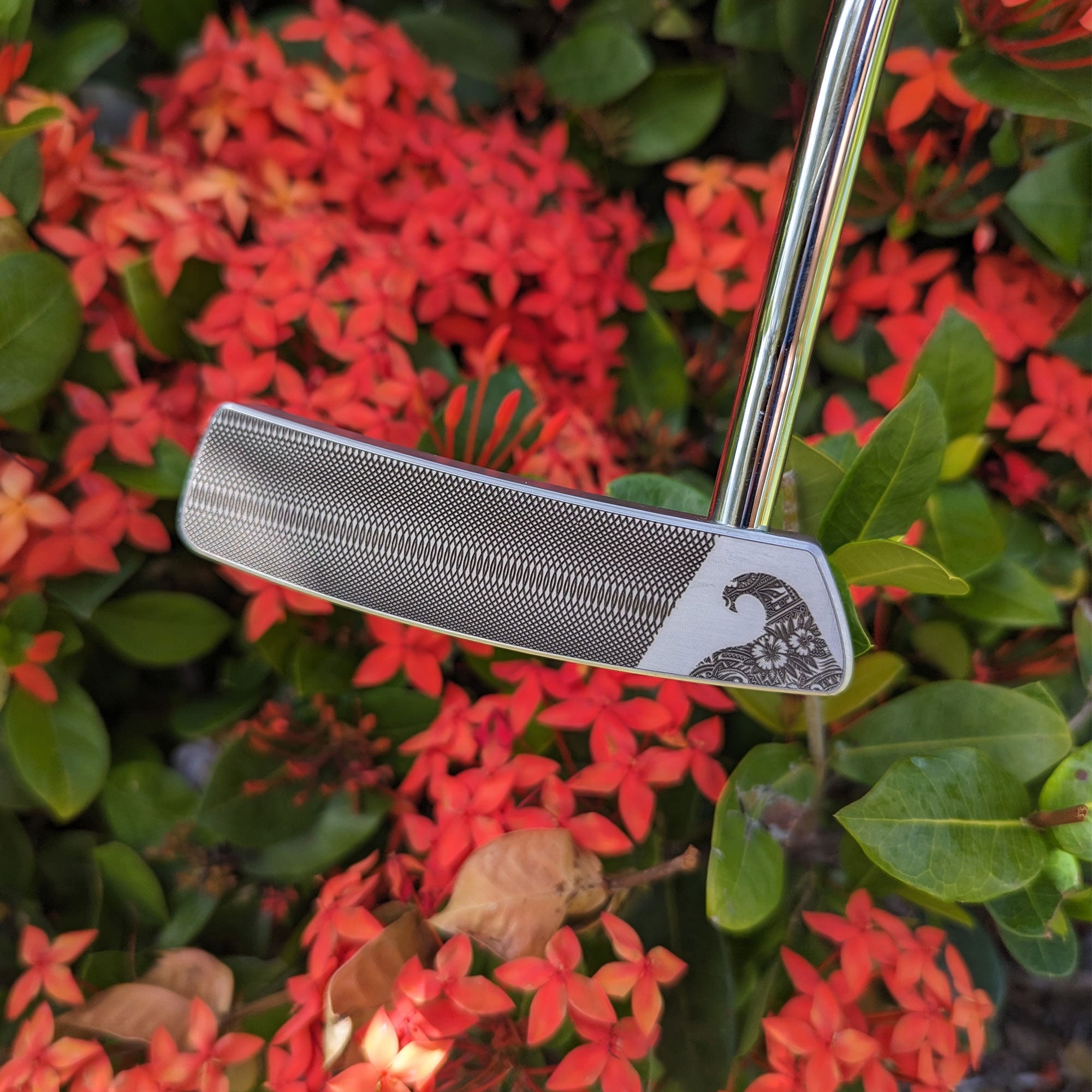
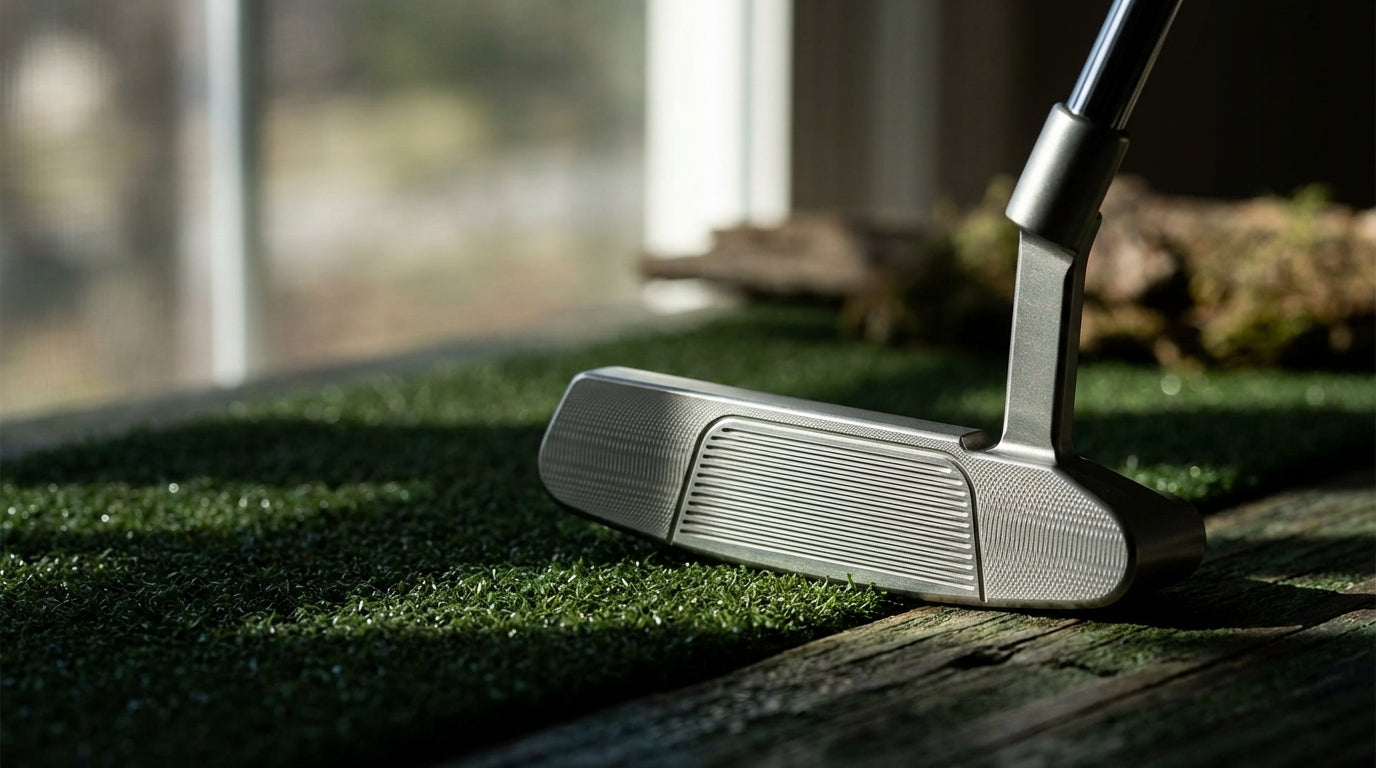
The face of your putter seems like it should be simple: a flat surface that strikes a flat ball. In reality, the microscopic geometry of your putter face influences how the ball responds to impact, how energy transfers from club to ball, and ultimately, how consistently your putt tracks toward the hole. Understanding putter face milling patterns and how they affect performance separates golfers who optimize their equipment from those who accept whatever face design comes standard. For a deeper look at how milling is achieved at the manufacturing level, see inside the Phoenix Putter Co workshop.
What Face Milling Does to the Ball
When your putter face contacts the ball, the interaction is far more complex than it initially appears. The ball doesn't simply respond to the direction your putter is traveling and the velocity you generate. The precise geometry of the putter face, specifically its milling pattern, influences the ball's initial direction, spin characteristics, and behavior during the early rolling phase.
A perfectly smooth putter face would theoretically deliver the most consistent results, but modern putting has evolved beyond this simplistic approach. Instead, manufacturers mill patterns into the putter face to influence ball behavior in specific ways. These patterns serve multiple purposes. First, they increase the frictional contact between putter face and ball. Increased friction at impact helps the ball achieve proper initial direction without slipping. Second, they influence how the ball leaves the putter face, affecting its initial trajectory and spin characteristics. Third, they promote consistent contact quality by maintaining surface texture even as the putter ages and micro-scratching occurs from thousands of impacts.
The milling pattern essentially creates thousands of microscopic contact points between putter face and ball. Rather than the entire face surface contacting the entire ball surface simultaneously, these micro-points create a series of infinitesimal impacts that accumulate to produce the overall effect. This geometry allows the putter face to grip the ball with greater consistency, reducing the variation that occurs when a smooth face meets a dimpled ball at slightly different impact angles. This is a key reason milled putters outperform cast alternatives—the face geometry is exact, not approximate.
Common Milling Patterns and Their Characteristics
Different milling patterns produce distinctly different results. Understanding these options helps you select the face design that matches your preferences and stroke characteristics.
Horizontal-line milling patterns feature parallel lines running from heel to toe across the putter face. These lines run perpendicular to the target line when your putter is in its address position. Horizontal patterns are among the most traditional and popular milling designs. They create reliable contact without excessive spin, allowing the ball to settle into a true roll relatively quickly after impact. The horizontal pattern works exceptionally well for golfers seeking consistency and predictability. The Origin Putter's horizontal lines option exemplifies this approach, delivering a classic feel that professional golfers have relied upon for decades.
Crosshatch patterns feature lines running both horizontally and vertically, creating a grid-like texture across the putter face. This pattern increases the micro-contact surface area compared to simple horizontal lines, promoting even more consistent ball contact. The crosshatch pattern can produce slightly more initial spin compared to horizontal patterns, which some golfers find helpful for controlling ball behavior on slower or firmer greens. The Origin Putter's crosshatch option provides this more aggressive texture for golfers seeking enhanced performance control.
Arc patterns follow the curvature of the putter face, with lines arranged in concentric arcs that mirror the face geometry. These patterns promote consistent contact quality across different striking locations on the face. Arc patterns particularly benefit golfers who occasionally miss the sweet spot, as the arc geometry maintains reasonable contact quality even on heel or toe strikes.
The choice between these patterns should be made based on the greens you play, your personal feel preferences, and your confidence level with your stroke consistency. Fast greens and precision-demanding conditions often favor less aggressive patterns. Slower greens sometimes benefit from crosshatch or more aggressive textures that help the ball achieve consistent movement. This choice also relates to broader equipment decisions—whether you use a blade or mallet putter can further influence which milling pattern performs best for your stroke.
Face Insert Versus Full-Face Milled
Some putter manufacturers insert a specialized material into a recessed face area, while others mill patterns directly into solid steel. Understanding this distinction helps you evaluate different putter options.
Putter face inserts typically consist of composite materials, aluminum, or specialized polymers that fill a recessed face pocket. These inserts provide different feel characteristics compared to milled steel faces. Inserts can be softer, providing more vibration damping, or textured differently to produce distinct feedback. The advantage of inserts is flexibility: manufacturers can change the insert material and characteristics without redesigning the entire putter head. The disadvantage is durability. Insert edges can eventually loosen, and insert material can degrade faster than steel under heavy use.
Full-face milled designs, like the Origin Putter's construction, mill patterns directly into solid 303 stainless steel. There's no separate insert component, no potential for edge separation, and no material that might degrade faster than the surrounding structure. The entire face is unified steel with consistent characteristics throughout its thickness and surface. A full-face milled design delivers consistent feel that remains unchanged throughout your putter's life. The face won't loosen, won't separate, and won't degrade. What you hold when you first purchase your Origin Putter performs identically decades later.
The milled steel face also provides superior energy transfer. The uninterrupted steel from putter face through to the back of the head creates a unified structure that transmits impact energy predictably. There's no insert material with different acoustic properties, no edge where material properties change abruptly. Just pure, milled steel delivering consistent performance. This aligns with how putter weight and material composition work together to shape your feel and distance control.
How to Choose Between Origin's Two Face Options
The Origin Putter offers two face milling options: horizontal lines and crosshatch. Selecting between them requires honest assessment of your putting preferences and the conditions you typically encounter.
Choose horizontal lines if you play faster greens, if you prefer traditional feel, if you seek maximum consistency and minimum variation, or if you're uncertain about your preference. The horizontal pattern is proven, trusted, and delivers the simplest, most direct ball response. This is the safest choice for golfers seeking dependable performance without complexity.
Choose crosshatch if you play slower greens, if you prefer a more aggressive, responsive feel, if you often hit greens with uphill approaches that require consistent pace control, or if you want maximum micro-contact surface for occasional off-center strikes. The crosshatch pattern offers slightly more control and can feel more satisfying on harder impact strikes.
Many golfers find that their preferred face pattern aligns with their greens' typical conditions. Bent grass courses with fast, firm greens often favor horizontal patterns. Bermuda grass courses with slower, softer greens often benefit from crosshatch patterns. Some golfers simply prefer the feel one pattern delivers and accept that preference as the decisive factor.
Your face pattern choice isn't permanent. Many golfers eventually try both options and discover which they prefer through experience rather than theory. The Origin Putter's custom-built approach allows this experimentation without requiring a new purchase. Some golfers even commission multiple putters with different face options to use in different conditions. If you're still developing your preferences, pairing this decision with a thoughtful grip selection ensures your entire putter setup works as a unified system.
Understanding how putter face milling patterns affect your putting performance transforms your approach to equipment selection. Rather than accepting whatever face design a standard putter includes, you're making an informed choice that matches your mechanics, your course conditions, and your feel preferences. The Origin Putter's two face milling options, combined with its precision CNC construction, provide the foundation for a putting tool that performs exactly as you need it to perform.


Leave a comment
This site is protected by hCaptcha and the hCaptcha Privacy Policy and Terms of Service apply.