

The face of your putter is where the game lives. It is the only surface that contacts the ball. Every ounce of feel, every degree of distance control, every subtle bit of spin originates in those first 450 microseconds of impact. And in the modern putter market, the two dominant face technologies, CNC milled faces and insert faces, take fundamentally different approaches to that critical moment.
This is not a trivial equipment debate. The face technology in your putter affects how the ball sounds at impact, how much feedback travels into your hands, how the ball launches and rolls, and how consistently you control distance from varying lengths. Choosing the wrong face type for your preferences and playing conditions can cost you putts in ways you will never notice until you try the alternative.
Let's break down exactly how each technology works, where each one excels, and how to determine which belongs in your bag.
What Are Milled Faces vs Inserts?
CNC Milled Faces
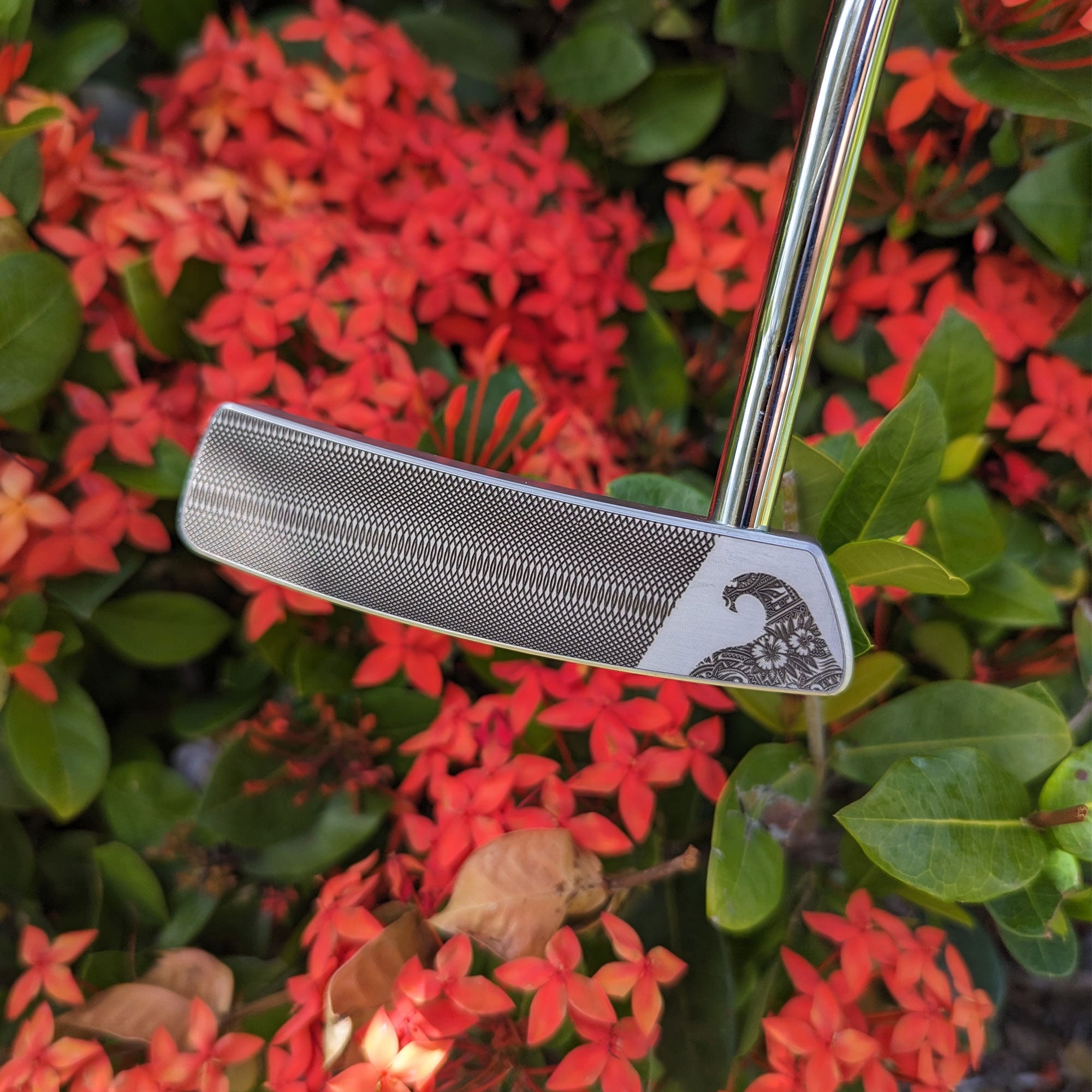
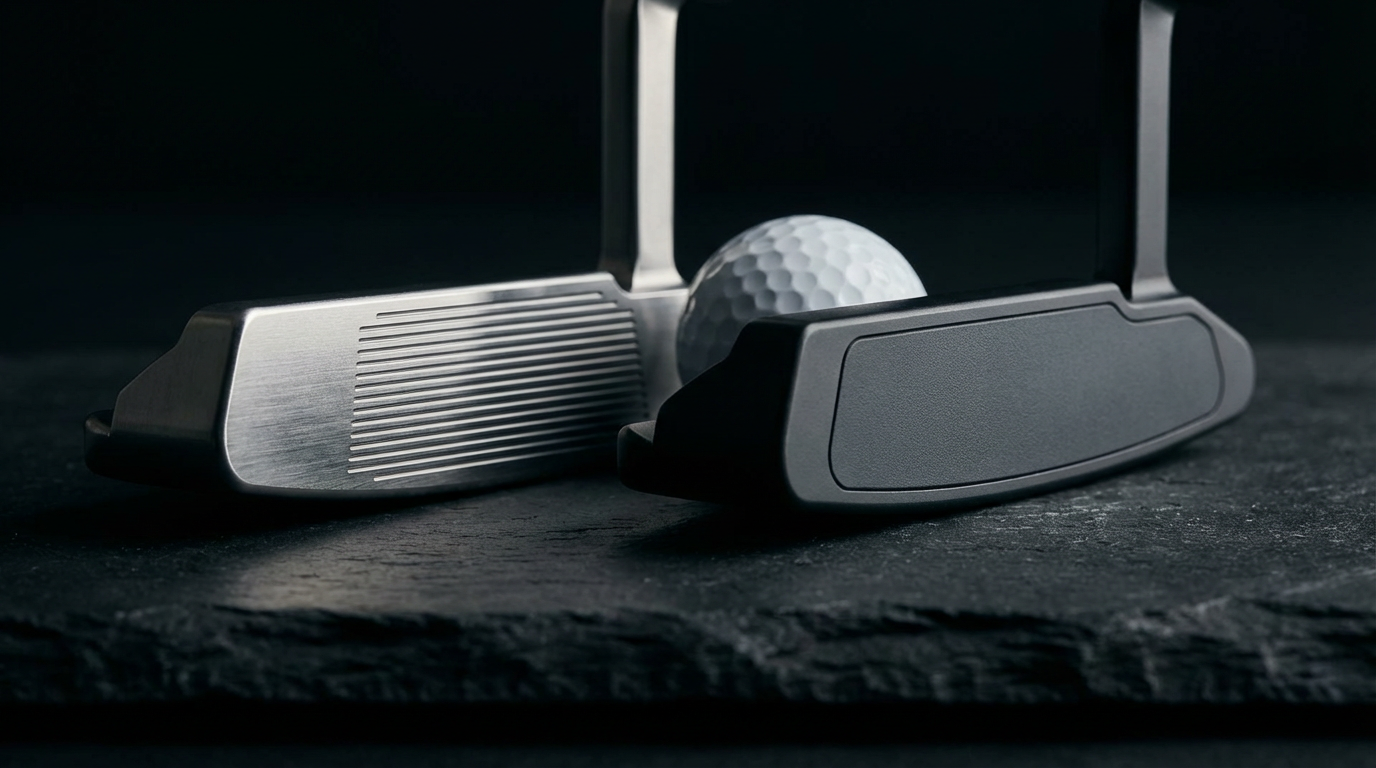
A milled putter face is machined directly into the head material, typically 303 or 304 stainless steel, carbon steel, or occasionally aluminum or German stainless. CNC (Computer Numerical Control) machines use diamond-tipped or carbide cutting tools to carve precise patterns into the face surface. The depth, spacing, and angle of these cuts are controlled to tolerances measured in ten-thousandths of an inch.
The result is a face that is part of the putter head itself, not a separate component attached to it. The ball strikes metal and the vibration from impact travels directly through a single material into the shaft and your hands. There is no dampening layer, no buffer. You feel everything.
Common milling patterns include straight parallel lines (sometimes called "Flycut" milling), concentric arcs, deep diamond crosshatch, and random patterns. Each produces a slightly different sound, feel, and ball interaction. For an in-depth look at how different milling patterns affect performance, our guide on putter face milling patterns covers every major style.
Insert Faces
An insert putter has a face made from a separate material that is bonded, pressed, or mechanically fastened into a cavity in the putter head. The insert is typically softer than the surrounding head material. Common insert materials include:
- Surlyn/Urethane polymers (used in Odyssey White Hot and similar designs)
- Aluminum (used in some TaylorMade and Ping models)
- Elastomer compounds (used in various Japanese putters)
- Thermoplastic elastomer (TPE) (used in Cleveland and Evnroll models)
- Grooved aluminum with polymer backing (hybrid designs)
The insert acts as an intermediary between the steel body and the golf ball. It absorbs some of the impact energy, softens the feel, and modifies the sound. The insert's material properties, thickness, and surface texture all influence how the ball behaves at impact.
How Each Technology Works at Impact
Understanding what happens in those 450 microseconds of ball-to-face contact reveals why milled and insert faces feel so different.
Milled Face Impact Dynamics
When a golf ball strikes a milled stainless steel face, the ball compresses against a relatively rigid surface. The steel face barely deflects. Almost all of the deformation occurs in the ball's cover and core. This means:
- Energy transfer is highly efficient. Very little energy is absorbed by the face.
- The ball rebounds quickly with a relatively high coefficient of restitution (COR) for the impact speed.
- Vibrations from impact are sharp and brief, traveling through the homogeneous metal with minimal damping.
- The milling pattern grips the ball cover during the brief contact window, influencing initial spin and launch.
The subjective experience is a "click" or "tap" at impact: firm, immediate, and highly informative. You can feel the difference between a center strike and one hit half an inch toward the toe. That feedback is what many purists and Tour professionals describe as "true feel."
Insert Face Impact Dynamics
When the ball strikes an insert face, the softer insert material compresses along with the ball. Both surfaces deform. This dual deformation means:
- Some impact energy is absorbed by the insert, resulting in a slightly lower effective COR.
- The ball stays on the face fractionally longer (by roughly 50 to 100 microseconds), which can promote a smoother launch.
- Vibrations are dampened and spread over a longer time window, producing a softer, more muted sensation.
- The insert surface texture interacts differently with the ball cover, often producing less initial backspin.
The subjective experience is a "thud" or "mush" at impact: soft, cushioned, and forgiving-feeling. Off-center strikes feel less harsh, which many golfers interpret as more consistent even when the actual distance variance might be similar.
Feel Comparison: Sound, Feedback, and Responsiveness
Feel is subjective, but we can break it down into measurable components.
Sound
Milled steel faces produce a higher-pitched, crisper sound at impact. The frequency profile has a sharper peak and decays quickly. Many golfers describe it as satisfying and precise, like the click of a well-struck billiard ball.
Insert faces produce a lower-pitched, duller sound. The frequency profile is broader and decays more slowly. Golfers who prefer inserts often describe the sound as "quiet" or "soft," which helps them stay relaxed over the ball.
Sound matters more than most golfers realize. Research from Sheffield Hallam University demonstrated that golfers perceived putts as traveling different distances based solely on the sound at impact, even when the actual distances were identical. A "louder" impact sound made golfers believe the ball traveled farther. This means the sound your putter makes directly influences your perception of distance control.
Tactile Feedback
Milled faces provide more differentiated feedback. You can feel the difference between a perfect center strike and one that is 5mm toward the heel. This high-resolution feedback allows skilled golfers to make micro-adjustments to their stroke in real time, identifying tendencies before they see the result on the green.
Insert faces blur the feedback slightly. A center strike and a near-center strike feel more similar. For golfers who are working on stroke mechanics and need to diagnose impact location, this reduced feedback can mask issues. For golfers who already have a reliable stroke and want a calming, consistent feel, the smoothing effect is a benefit.
Responsiveness
Responsiveness refers to how the putter face communicates the speed and quality of the strike to your hands. A highly responsive face lets you feel instantly whether you hit the putt too hard, too soft, or just right. Milled faces score higher on responsiveness because the direct metal-to-ball contact transmits information with minimal filtering.
Insert faces score higher on what we might call "forgiveness of feel." The putt you hit slightly too hard does not feel as jarring or alarming. This can be calming under pressure but can also allow speed-control errors to go unnoticed during practice.
Performance Comparison Table
| Factor | CNC Milled Face | Insert Face | Edge |
|---|---|---|---|
| Feel at impact | Firm, crisp, high feedback | Soft, muted, dampened | Personal preference |
| Sound | Higher-pitched click | Lower-pitched thud | Personal preference |
| Distance control (center) | Excellent | Excellent | Tie |
| Distance control (off-center) | Moderate — more speed loss on mishits | Good — insert absorbs some mishit penalty | Insert |
| Initial backspin | Higher (varies by milling depth) | Lower (insert absorbs spin energy) | Milled for control |
| Forward roll | Slightly later true roll | Slightly earlier true roll | Insert marginally |
| Durability | Excellent — steel withstands decades of use | Moderate — inserts can wear, delaminate, or harden over years | Milled |
| Consistency over time | Very high — face character does not change | Moderate — polymer properties shift with temperature and age | Milled |
| Price range | Mid to premium ($150-$600+) | Budget to premium ($100-$500+) | Insert (wider range) |
| Customization potential | High — different patterns, depths, finishes | Limited — material choice is primary variable | Milled |
| Tour usage | ~55% of PGA Tour players | ~45% of PGA Tour players | Slight milled edge |
Which Is Better for Different Green Speeds?
Green speed has a meaningful influence on which face technology performs best.
Fast Greens (Stimpmeter 11+)
On fast greens, distance control is paramount. The difference between a 25-foot lag putt that stops 2 feet past and one that rolls 6 feet by is the difference between a tap-in par and a potential three-putt. On fast surfaces, many golfers prefer insert faces because the softer impact dampens the "hot" feeling that a milled steel face can produce on quick greens. The insert absorbs a tiny fraction of impact energy, which can help golfers avoid the sensation of the ball jumping off the face.
However, elite players often prefer milled faces even on fast greens precisely because of the heightened feedback. They want to feel exactly how hard they struck the putt so they can calibrate in real time. Scottie Scheffler's Scotty Cameron (milled face) performs on Augusta's lightning-fast greens because his hands tell him everything he needs to know.
Moderate Greens (Stimpmeter 8.5-10.5)
On moderate-speed greens, which is where most golfers play most of their rounds, both face types perform well. The choice comes down to personal preference in feel and sound. Neither technology has a clear performance advantage at these speeds.
Slow Greens (Stimpmeter Below 8.5)
On slow, heavy greens, you need to strike the ball with more authority to get it to the hole. A milled steel face's firmer response is an advantage here because it transfers energy more efficiently. Insert faces can feel "dead" on slow greens, requiring a longer stroke that introduces timing variables. Many golfers who play regularly on slow municipal courses or early-season northern greens report better distance control with milled faces.
What Tour Pros Choose
PGA Tour putter face preferences have shifted over the decades. In the 1990s, nearly all Tour putters were milled steel. The Odyssey White Hot insert, introduced in the early 2000s, changed the landscape. By 2010, insert putters held roughly 40% of Tour bags.
Today, the split is approximately 55% milled to 45% insert, though this varies by season and by Tour. On the LPGA Tour, insert putters are slightly more popular, possibly because the typically slower swing speeds on shorter putts pair well with the insert's energy-dampening properties. On the PGA Tour Champions, milled faces dominate, perhaps reflecting the preferences players developed during the all-milled era of the 1980s and 1990s.
Notable milled face users include Tiger Woods (Scotty Cameron Newport 2), Jordan Spieth (Scotty Cameron), Justin Thomas (Scotty Cameron), and Collin Morikawa (TaylorMade TP). Notable insert users include Jon Rahm (Odyssey), Nelly Korda (Odyssey), and Hideki Matsuyama (Odyssey, though he has switched between technologies multiple times).
The takeaway: the best putters in the world are split. Neither technology is objectively superior. The right choice is the one that matches your sensory preferences and playing conditions.
The Phoenix Approach to Milled Faces
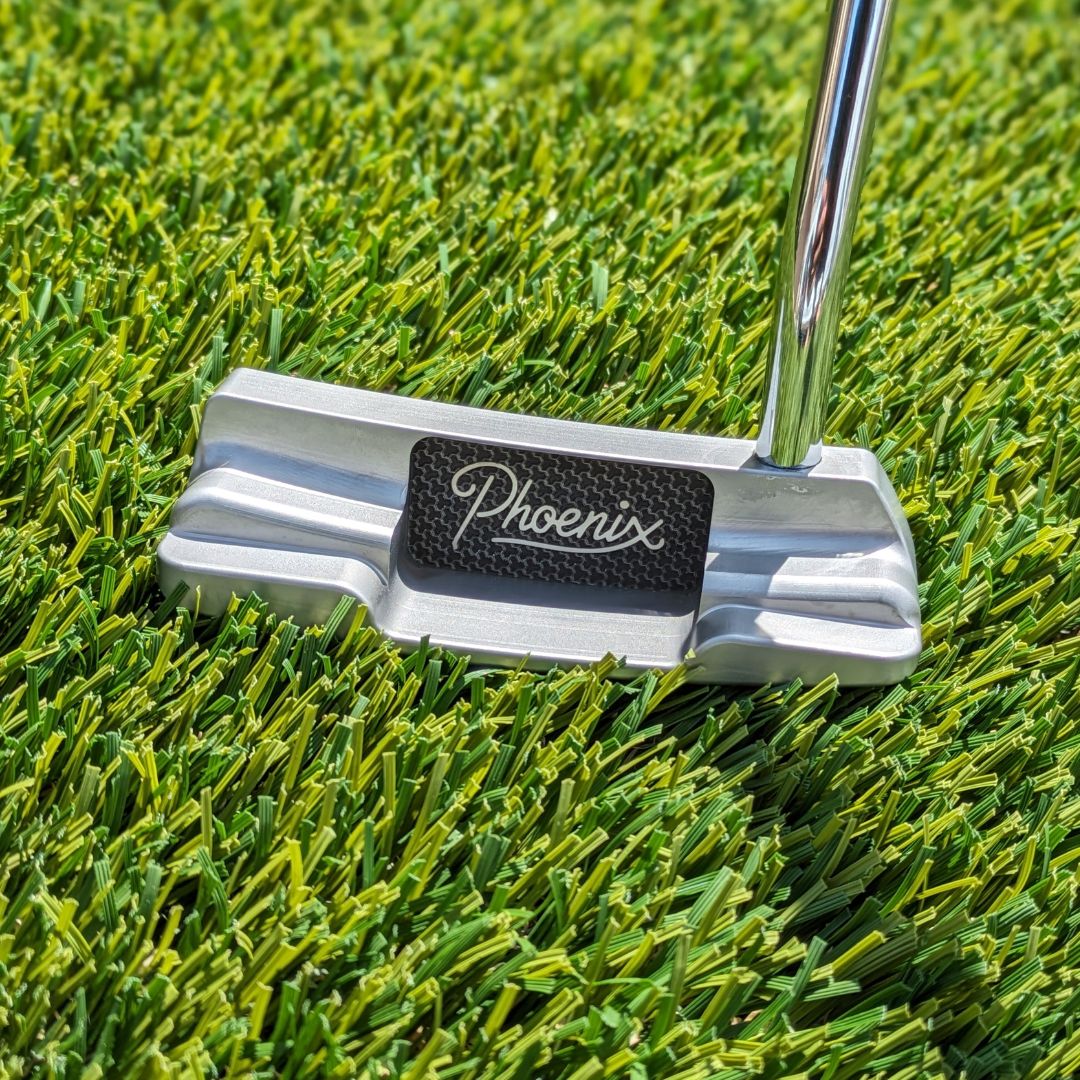
At Phoenix Putter Co, we chose CNC milling as our face technology for specific, deliberate reasons rooted in craftsmanship and performance.
Every Phoenix putter face is machined from a single billet of premium material. There is no separate insert to bond, align, or replace. The face is the head and the head is the face, one continuous piece of precisely shaped metal. This eliminates any possibility of delamination, misalignment, or inconsistency between the insert and the body.
Our milling patterns are selected not for aesthetics (though they are striking) but for their impact on ball behavior. The depth and spacing of the cuts are calibrated to grip the ball cover during impact, promoting a consistent launch angle and spin rate regardless of where on the face the ball strikes. The result is a putter face that feels alive in your hands, giving you the feedback that sharpens your touch on every green you play.
For a deeper understanding of why milled putters represent the pinnacle of putter construction, read our guide on what is a milled putter. And to learn how different materials affect feel and performance beyond the face, our putter material guide covers stainless steel, carbon steel, aluminum, and more.
A well-crafted milled putter is an instrument that improves with time. The face develops a subtle patina that many players find aesthetically appealing, and the performance characteristics remain stable for decades. An insert, by contrast, may need replacement after several years as the polymer hardens or softens with temperature cycles and UV exposure.
Common Mistakes When Choosing Face Technology
Choosing based on marketing rather than feel. "Soft feel" is not inherently better. "Tour feel" is not inherently better. The best feel is the one that gives you confidence and helps you control distance. Test both technologies on a real green, not in a store on carpet.
Ignoring green speed. A golfer who plays fast greens exclusively may love an insert's dampened response. The same golfer playing a municipal course at stimpmeter 7.5 might struggle with distance control because the insert absorbs too much energy on slow surfaces. Consider where you play most often.
Assuming more expensive means better feel. A $150 milled putter from a reputable maker can feel better to you than a $400 insert model. Price does not determine feel preference. It determines material quality, manufacturing precision, and finishing detail.
Not testing with your actual ball. The interaction between face and ball cover matters. A urethane-covered Tour ball (like a Pro V1) behaves differently on a milled face than a surlyn-covered distance ball. Test with the ball you actually play.
Overlooking the grip's role in feel. The grip is the other end of the feedback chain. A thick, heavily cushioned putter grip dampens vibration from a milled face, effectively giving you some of the "softening" effect of an insert while retaining the milled face's other characteristics. A thin, firm grip transmits maximum feedback. Consider the face-grip combination as a system.
Never re-evaluating. Your preferences may change as your game evolves. A beginner who loved the forgiving feel of an insert might graduate to wanting the precise feedback of a milled face as their stroke becomes more consistent. Revisit the question every few years.
Frequently Asked Questions
Do insert putters go dead over time?
They can. Polymer-based inserts are subject to material degradation from UV exposure, temperature cycling, and simple age. Over three to five years of regular use, some golfers report that their insert "lost its pop" or feels different than when new. The effect is gradual and may not be noticeable unless you compare a new insert to your old one side by side. Milled faces do not have this issue because steel does not change its mechanical properties under normal playing conditions.
Which gives better distance control, milled or insert?
On center strikes, both technologies deliver excellent distance control in the hands of a skilled golfer. The difference emerges on off-center hits. Insert faces tend to be slightly more forgiving on mishits because the softer material absorbs some of the energy differential between center and off-center contact. Milled faces punish mishits more, which provides better feedback but can result in greater distance variance for golfers with inconsistent strike patterns. If your strike pattern is tight (consistently within 5mm of center), milled faces offer marginally better distance control because of the more efficient and predictable energy transfer.
Are milled putters more expensive than insert putters?
Not necessarily. Both technologies span a wide price range. Entry-level milled putters (like some Cleveland and Ping models) cost $150 to $200. Premium milled putters (Scotty Cameron, Phoenix Putter Co, Bettinardi) range from $300 to $600+. Insert putters follow a similar spread, from $100 budget models to $400+ premium options. The price difference within each category reflects material quality, manufacturing precision, and brand positioning rather than the face technology itself.
Can I add an insert to a milled putter or remove an insert?
Technically, a skilled club builder can route a cavity into a milled putter and install an aftermarket insert. However, this fundamentally alters the putter's weight distribution, CG location, and swing weight. It is not recommended. Similarly, removing an insert and leaving the cavity empty creates an unplayable club. If you want to switch face technologies, switch putters. Browse the Phoenix Putter Co collection for precision-milled options.
What about grooved face putters? Are those milled or insert?
Grooved face putters (like Evnroll and some Odyssey models) can be either. Some use deep grooves milled directly into a metal face. Others use grooves molded into an insert material. The grooves are designed to normalize ball speed across the face by varying the groove depth from center to edge. Center strikes contact less groove surface (more face surface) and launch at normal speed. Off-center strikes contact more groove surface (less face surface), which paradoxically reduces the speed penalty. Grooved faces are a subset of face technology, not a separate category.
Do Tour pros switch between milled and insert during the season?
Some do. Hideki Matsuyama has gone back and forth between Odyssey insert models and milled Scotty Camerons multiple times. When a player changes, it is usually because they are chasing a specific feel that matches the green conditions they expect in upcoming tournaments. Augusta's fast, undulating greens might call for a softer insert feel. A windy links course with grainy greens might favor the firmer feedback of milled steel. Most Tour pros, however, stick with one technology for extended periods because consistency of feel is paramount to confidence.
The milled face vs insert debate has no universal winner. It has a personal winner: the face technology that makes you trust your stroke, gives you the feedback you need, and helps you control distance on the greens where you play most often.
If you value precision feedback, long-term durability, and the unmistakable feel of ball meeting metal, a CNC milled putter is likely your match. And if you want that craftsmanship at the highest level, with milling patterns designed to optimize ball behavior and a face that will perform identically on its ten-thousandth putt as it did on its first, explore the Phoenix Putter Co collection. Feel the difference that precision makes.



Leave a comment
This site is protected by hCaptcha and the hCaptcha Privacy Policy and Terms of Service apply.