


Most golfers show up to the range, buy a large bucket, and start hammering drivers into the net. An hour later they leave feeling warmed up but no closer to shooting lower scores. The problem is not effort — it is the absence of structure.
A deliberate golf practice routine changes everything. It assigns purpose to every minute, targets the shots that actually determine your score, and builds the kind of repeatable feel that separates a 15-handicap from a single-digit player. Tour professionals understand this instinctively. Recreational golfers can learn it quickly.
This guide lays out a framework you can use today — whether you have 30 minutes before work or three hours on a Saturday morning.
What Is a Structured Golf Practice Routine?
A structured practice routine is a session organized around specific goals, time blocks, and measurable outcomes. Instead of "hit balls until tired," you work through a planned sequence that prioritizes weak areas, reinforces strengths, and always includes pressure situations.
The structure typically follows three phases:
- Technical work — Isolated drills focused on a single mechanical element (grip pressure, takeaway path, face angle at impact).
- Block practice — Repetitions of the same shot to build motor patterns. Think 20 consecutive six-foot putts on the same line.
- Random practice — Simulated on-course situations where every shot is different, forcing your brain to adapt. Hit a draw off the tee, then a wedge to a back pin, then a lag putt — just like a real hole.
Research from the Journal of Sports Sciences confirms that mixing block and random practice produces faster skill retention than either method alone. The key is sequencing them correctly within your available time.
Why Your Practice Routine Matters More Than Your Equipment
Here is a statistic that should reframe every practice session you ever have: PGA Tour players spend roughly 60 to 70 percent of their practice time on shots inside 100 yards. The average amateur spends about 70 percent of practice time hitting full shots.
That imbalance is the single biggest reason handicaps stall. Consider the math. In a round of 90 strokes, approximately 40 to 45 of those are putts and chips. If you drop three putts per round — one fewer three-putt, two more one-putts — you have shaved three strokes without changing your swing.
Scottie Scheffler's warm-up routine before tournament rounds is instructive. He spends roughly 15 minutes on full shots and nearly 25 minutes on the short game area and putting green. Jordan Spieth, one of the finest putters of his generation, routinely dedicates entire practice days to nothing but putting — working on pace, read, and start line until each element is unconscious.
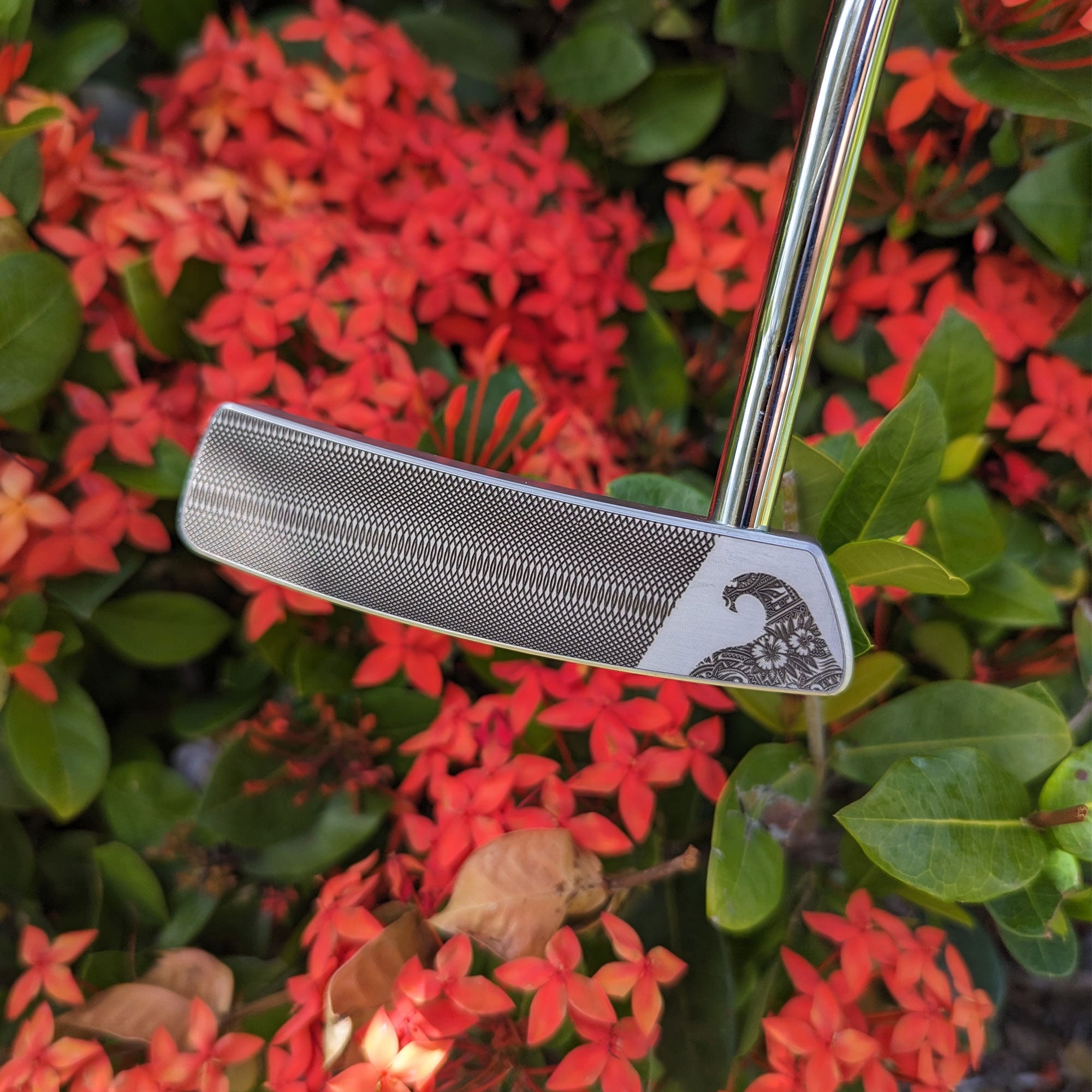
The takeaway is straightforward: a well-fitted putter matters, but even the finest milled instrument underperforms without the reps to support it.
The 30-Minute Golf Practice Plan
Not everyone has Tour-level hours. This 30-minute plan is designed for the golfer who can carve out a half hour before or after work. It prioritizes scoring shots and builds in just enough full-swing work to maintain mechanics.
Minutes 1–5: Dynamic Warm-Up
Skip the static stretching. Start with arm circles, torso rotations, and hip openers. Take three slow-motion practice swings with a mid-iron, gradually increasing speed. The goal is to raise your core temperature and activate the rotational muscles you will use in every shot.
Minutes 6–12: Full Swing Block (7 minutes)
Pick one club — a 7-iron is ideal. Hit 15 balls with a single focus: tempo. Use a metronome app set to 76 BPM (a Tour-average tempo) and match your takeaway to one beat and your downswing to the next. Do not chase distance. Chase rhythm.
Minutes 13–20: Short Game Rotation (8 minutes)
Move to the chipping green. Hit five bump-and-runs with a 9-iron, five pitch shots with a 52-degree wedge, and five lob shots with a 58-degree wedge. After each set of five, switch targets. This block-to-random transition forces adaptation.
Minutes 21–28: Putting Pressure Drill (8 minutes)
Place four balls at 3, 5, 7, and 10 feet from the hole, all on the same line. You must make all four in sequence. If you miss, start over. This drill teaches focus under mild pressure and ingrains the stroke for the distances that statistically matter most.
If you are working on putting alignment specifically, add a gate drill: set two tees just wider than your putter head and stroke through the gate from four feet. When you can make ten consecutive putts through the gate, widen the distance to six feet.
Minutes 28–30: Visualization Cool-Down
Stand over a 15-foot putt. Read the break. Visualize the ball's entire path — the initial line, the apex, the curve toward the hole, the last rotation as it drops. Stroke the putt. Whether it falls or not, this two-minute exercise trains the mental side of putting that most amateurs never practice.
Putting Practice Drills You Can Do at Home
You do not need a putting green to sharpen your stroke. A flat section of carpet or hardwood floor, your putter, and three balls are enough to build real improvement.
The Coin Drill
Place a coin on the floor eight feet away. Putt to the coin, trying to roll the ball directly over it. Because there is no hole to aim at, this drill isolates your start line — the single most important variable in making putts. Tour putting coach Phil Kenyon uses a version of this drill with every player he coaches.
The Ruler Drill
Balance a ball on a 12-inch ruler laid flat on the floor. Stroke the ball down the ruler without it falling off the edge. If your putter face is even one degree open or closed at impact, the ball will tumble off. This is brutal, honest feedback.
The Lag Putting Distance Ladder
Set targets at 10, 20, 30, and 40 feet (use tape strips on the floor). Putt one ball to each distance, trying to stop the ball within a putter-length of the target. Lag putting is about pace control, and pace control is about consistent stroke length — something you build through repetition, not theory.
If you are serious about improving your putting consistency, these at-home drills done for 15 minutes daily will outperform an hour of aimless practice on the course putting green.
The Gate Drill (Home Version)
Set two objects (books, tees, or dice) on the floor just wider than your putter face, about 18 inches in front of your ball. Stroke putts through the gate. This trains a square face at impact and a straight-back-straight-through path. Pair it with a premium putter grip that promotes consistent hand placement, and you will feel the difference within a week.
Golf Warm-Up Routine Before a Round
The pre-round warm-up is not practice. It is calibration. You are finding your feel for the day — not rebuilding your swing.
20 Minutes Before Tee Time: Range Warm-Up
Start with a sand wedge. Hit five half-swings, feeling the clubhead. Progress to a 7-iron (ten balls), then a hybrid or fairway wood (five balls), then driver (five balls). Finish with two wedge shots to a specific yardage. You should hit no more than 25 to 30 balls total.
10 Minutes Before Tee Time: Putting Green Calibration
This is the most important part of your warm-up, and most golfers rush through it or skip it entirely.
- Pace calibration (4 minutes): Hit five lag putts from 30 feet to the fringe — not to a hole. You are calibrating speed, not aiming. Note how far the ball rolls past your target. Adjust. Repeat.
- Break reading (3 minutes): Find a putt with visible break. Hit three balls on the same line, watching how they curve. This tells you how the greens are rolling today — fast, slow, breaking more or less than expected.
- Confidence putts (3 minutes): Make five three-footers in a row. End your warm-up by seeing the ball go in the hole. Your last memory before the first tee should be the sound of a ball hitting the bottom of the cup.
This warm-up sequence works with any putter, but it reveals itself most clearly with a precision-milled putter that delivers consistent feedback. When the tool is right, calibration becomes faster and your feel carries deeper into the round.
Practice Routine Comparison: Amateur vs. Tour Pro
| Category | Average Amateur | Tour Professional |
|---|---|---|
| Full swing practice | 70% of session | 30–35% of session |
| Short game (chips, pitches) | 15% of session | 25–30% of session |
| Putting | 10% of session | 30–40% of session |
| Mental/visualization | 5% of session | 10–15% of session |
| Session structure | Unplanned | Fully scripted with goals |
| Putting distance focus | Random | Emphasis on 3–10 feet |
| Practice frequency (putting) | 1–2x per week | Daily, 45–90 minutes |
| Pressure drills included | Rarely | Every session |
| Equipment check (lie angle, grip condition) | Annual at best | Weekly |
The gap is not talent. It is allocation. Shift your practice ratio closer to the Tour column and your scores will follow.
Common Mistakes That Sabotage Your Practice
Mistake 1: Practicing without a target. Every shot — every single one — needs a target. A putt needs a line. A chip needs a landing spot. A drive needs a window. Hitting balls without a target builds sloppy motor patterns.
Mistake 2: Ignoring equipment condition. A worn putter grip changes your hand pressure, which changes your stroke, which changes your results. If your grip is glossy or hard, replace it. Fresh putter grips restore the tactile feedback your hands need to repeat a consistent stroke.
Mistake 3: Only practicing what you are good at. It feels great to drain 15 straight three-footers. It does not improve your game if your weakness is lag putting from 35 feet. Identify your highest-cost miss and dedicate 40 percent of your session to it.
Mistake 4: Skipping the short game when time is limited. If you only have 20 minutes, spend all of it putting and chipping. You will save more strokes per minute of practice than any other allocation.
Mistake 5: Never simulating pressure. Practice without consequences builds comfort, not performance. Add stakes: "If I miss this putt, I start the drill over." That mild anxiety is the closest you can get to standing over a five-footer to break 80.
Frequently Asked Questions
How long should a golf practice session be?
Quality matters more than duration. A focused 30-minute session with specific goals will produce more improvement than a two-hour session of aimless ball-hitting. If you have longer, structure it in 30-minute blocks with different focus areas and short breaks between them.
What percentage of practice should be putting?
At minimum, 30 percent. If your handicap is above 15, consider pushing that to 40 or even 50 percent. The majority of strokes in any round happen on or around the green, and putting improvement yields the fastest score reduction per hour of practice.
Can I improve my putting by practicing at home?
Absolutely. Home putting drills on carpet develop stroke mechanics, face control, and pace sensitivity. You will not learn to read break on carpet, but you will build the mechanical consistency that makes your green-reading useful. Fifteen minutes a day at home is worth more than one long weekly session on the practice green. Explore lag putting drills for specific distance-control exercises.
How often should Tour-level amateurs practice?
Competitive amateurs who want to reach scratch typically practice five to six days per week, with at least three of those sessions heavily weighted toward short game. Two sessions per week should be on-course play to practice course management and pressure situations.
What is the best warm-up routine before a round?
Arrive 30 minutes before your tee time. Spend 20 minutes on the range hitting 25 to 30 balls in ascending club order (wedge to driver), then spend 10 minutes on the putting green calibrating pace and building confidence with short makes. Never introduce swing changes during a warm-up — save those for the practice range.
Does the type of putter I use affect my practice results?
Yes. A putter with consistent face milling and proper weight distribution delivers reliable feedback during practice, which accelerates learning. If your putter gives inconsistent feel — dead spots, uneven sound — your brain cannot accurately calibrate stroke length to distance. A precision-milled putter provides the repeatability that makes practice stick.
Build the Routine, Lower the Scores
The difference between a golfer who improves and one who plateaus is not talent, athleticism, or the number of hours spent at the range. It is structure. A deliberate golf practice routine — one that prioritizes putting and short game, includes pressure, and adapts to your weaknesses — is the fastest path to lower scores.
Start with the 30-minute plan above. Run it three times this week. Track your putts per round before and after. The numbers will speak for themselves.
And when your practice reveals that your equipment needs to match your commitment, explore the full collection of custom milled putters and accessories at Phoenix Putter Co. — built for golfers who take their game seriously enough to practice it right.


Leave a comment
This site is protected by hCaptcha and the hCaptcha Privacy Policy and Terms of Service apply.