

Golf etiquette is the invisible architecture that holds the game together. There is no referee following your foursome. No umpire calling violations. The entire sport rests on the assumption that every player understands and respects the code of conduct, and nowhere is that code more important, or more frequently violated, than on the putting green.
The putting green is the most sensitive surface on the golf course. A single footprint in the wrong spot can deflect a putt. A shadow at the wrong moment can break a player's concentration. An unrepaired ball mark can cost someone a birdie they earned with two brilliant shots. The stakes are higher on the green because the margins are smaller. A putt that misses by half an inch is still a miss, and etiquette violations that introduce even tiny disturbances can be the difference.
Whether you are a seasoned single-digit handicapper or someone who just picked up the game last spring, this guide covers every etiquette essential for the putting green. Know these rules, practice them without thinking, and you will be the playing partner everyone wants in their group.
Why Putting Green Etiquette Matters
Etiquette on the green serves three purposes.
Fairness. Every player deserves a smooth, undamaged surface and an environment free from distraction. When you step on someone's line, fail to repair your ball mark, or move around during their stroke, you are introducing variables that have nothing to do with their skill. Good etiquette ensures the competition is between the player and the course, not the player and their companions' carelessness.
Course preservation. Putting greens are the most expensive and labor-intensive surfaces on a golf course. Superintendents spend more time, water, chemicals, and money per square foot on greens than on any other area. A single unrepaired ball mark can kill the grass in that spot for weeks. Spike damage, dragged feet, and dropped flagsticks all leave scars. Treating the green with care is a matter of respect for the course and the people who maintain it.
Pace of play. Many etiquette conventions exist specifically to keep the game moving. Reading your putt while others are putting, being ready when it is your turn, and efficiently marking and replacing your ball all prevent the kind of glacial pace that ruins the experience for everyone on the course.
Marking Your Ball Correctly
When your ball is on the putting green, you have the right to mark it, lift it, and clean it. You also have the obligation to mark it when it might interfere with another player's line or stroke. Here is how to do it properly.
The Basics
Place a small, flat marker (a coin, a flat ball marker, or a poker chip-style marker) directly behind the ball, on the side farthest from the hole. "Behind" means on the line extending from the hole through the ball and beyond. Use your thumb and forefinger to set the marker down while simultaneously lifting the ball with your other hand.
When replacing, reverse the process: set the ball in front of the marker, then pick up the marker. Always replace before you putt. It sounds obvious, but in the heat of competition, golfers have putted from the wrong spot because they forgot to replace the ball in front of the marker.
When to Mark Without Being Asked
Mark your ball whenever it is within a putter-length of another player's line or close enough to the hole that it could serve as a backstop. Do not wait to be asked. In stroke play, using another player's ball as a backstop is penalized, so marking proactively protects everyone.
Moving Your Mark
If your marker is on another player's line, they can ask you to move it. The standard procedure: pick a fixed reference point (a tree, a sprinkler head, a bunker edge) to the side of your marker. Place your putter head next to the marker, aligned toward that reference point, and move the marker to the other end of the putter head. Repeat if needed for a second putter-head length. When it is your turn to putt, reverse the process exactly. If you forget to move the marker back, you incur a penalty and are putting from a wrong place.
Choosing a Good Ball Marker
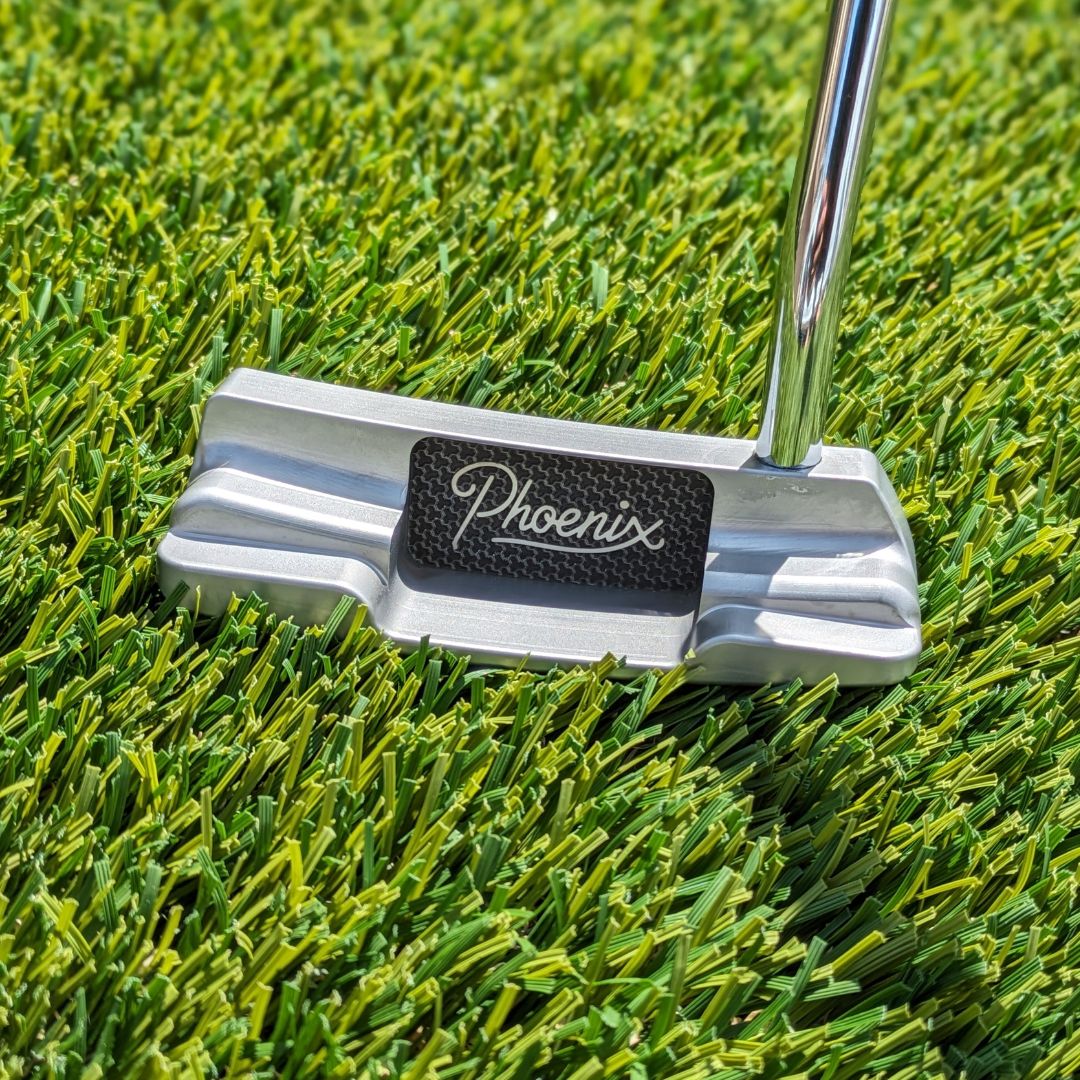
A flat, low-profile marker is ideal. Tall or heavy markers can indent the green or create a bump that affects other players' putts. Custom ball markers from Phoenix Putter Co are designed to sit flush against the putting surface while being easy to spot and handle. Avoid using tees (they poke holes) or large, domed markers that stand above the surface.
Tending the Flagstick: 2019 Rule Changes and Current Practice
The 2019 Rules of Golf revision dramatically changed flagstick etiquette. Before 2019, if your ball struck the flagstick while putting from the green, you incurred a two-stroke penalty (or loss of hole in match play). This meant someone always had to tend the flag or remove it before you putted.
The Current Rules
Since January 1, 2019 (Rule 13.2a), there is no penalty for striking the flagstick with a putt from the putting green, whether the flag is attended, removed, or left in the hole unattended. You can leave the flag in for every putt if you want.
What Most Golfers Do Now
Tour practice has shifted heavily toward leaving the flagstick in, particularly on putts outside 10 feet. Bryson DeChambeau was an early adopter, citing physics research suggesting the flagstick can act as a backstop on firm putts. Most recreational golfers now leave the flag in for longer putts and remove it for short ones where the visual of the open cup is preferred.
Etiquette When the Flag Is In
If the flag is leaning toward you, which could deflect your ball away from the hole, you are entitled to have it centered or removed. Ask your playing partners before they putt whether they want the flag in or out. If there is a disagreement in the group, each player's preference for their own putt takes priority. Be ready to pull the flag if someone requests it.
Etiquette When Tending the Flag
If you are tending the flag for another player, stand to the side of the hole (not behind it, where your shadow might cross their line). Hold the flag at arm's length so it does not flap in the wind. Pull the flag smoothly as the ball approaches. Lay the flag down gently off the green or on the fringe, never drop it on the putting surface where it could create an indentation.
Repairing Ball Marks and Spike Marks
Ball Marks
Every approach shot that lands on the green leaves a ball mark (also called a pitch mark). An unrepaired ball mark takes two to three weeks to heal naturally and creates a discolored, dead patch in the interim. A properly repaired ball mark heals in 24 to 48 hours.
How to repair correctly: Insert your repair tool (or a tee) at the edges of the mark, angling the tool toward the center. Push the grass inward from all sides toward the center of the depression. Do not lift the bottom of the mark upward, as this tears the roots and causes more damage than leaving it alone. Once you have pushed the edges inward and the mark is roughly level, tap the surface gently with your putter to smooth it.
How many to repair: The etiquette standard is to repair your own ball mark plus at least one other mark you find on the green. If every golfer did this, every green would be pristine. In practice, the golfers who repair multiple marks are the ones course staff and playing partners respect most.
Spike Marks
Under the current Rules of Golf (Rule 13.1c, modified in 2019), you are permitted to repair spike damage and other damage on the putting green caused by people or equipment. This includes spike marks, shoe scuffs, and indentations from flagstick dropping. You may repair these on your line of putt before putting. Before 2019, repairing spike marks on your line was a penalty. Many experienced golfers still operate under the old habit of not touching spike marks. You can update them.
Reading the Green Without Slowing Play
Green reading is essential. Slow green reading is unacceptable. Here is how to do both.
Read While Others Are Playing
Begin reading your putt the moment you reach the green, not when it is your turn. While your playing partners are putting, you should be quietly studying your line from behind the ball, from behind the hole, and from the low side. By the time it is your turn, you should already know your line and speed. All that remains is the pre-putt routine and the stroke itself.
Avoid Excessive Plumb Bobbing
Plumb bobbing once from behind the ball is fine. Plumb bobbing from behind the ball, beside the ball, behind the hole, and from the side while your group waits is not. One plumb bob, one confirmation look, then commit and putt.
Read the Green As You Walk Onto It
The best view of the overall green slope is often from the fairway as you approach. Note the general tilt, the highest and lowest points, and the drainage patterns. This big-picture read takes zero extra time because you are walking toward the green anyway.
Limit Your Reads on Short Putts
Inside three feet, you should already know the line from watching your approach putt. Spending 30 seconds reading a two-footer tells your playing partners you are not paying attention or not confident. Step up, confirm the line with a glance, and roll it in.
For more on building a fast, effective green-reading process, our guide on putting alignment covers the pre-putt routine Tour players use to stay accurate without slowing play.
Order of Play on the Green
Traditional Rule: Farthest From the Hole Putts First
The player whose ball is farthest from the hole putts first. This is the standard rule and applies in both stroke play and match play. After that player putts, the next farthest player goes, and so on. The player closest to the hole typically marks and waits.
Ready Golf Exception
In casual rounds, most groups now play "ready golf" on the green. If you are ready and no one else is, go ahead and putt, regardless of distance, as long as you are not in another player's line and your putting does not distract them. Ready golf is the single best pace-of-play accelerator in recreational golf.
Finishing Out
In casual play, if your ball is "inside the leather" (within the length of the putter grip from the hole, roughly 18 to 24 inches), you may ask to finish out rather than mark, wait, and putt later. This is not allowed in strict tournament play but is standard in friendly rounds and significantly speeds up the game.
Concessions in Match Play
In match play, your opponent can concede a putt by saying "that's good" or "pick it up." You are not required to accept a concession, but refusing one is considered rude and is almost never done. In stroke play, concessions are not permitted; every putt must be holed.
Practice Putting Green Etiquette
The practice green before your round has its own etiquette standards, and many golfers violate them without realizing it.
Do Not Chip Onto the Practice Putting Green
Unless there is a sign explicitly permitting it, never hit chip shots onto the practice putting green. Wedge strikes damage the surface, and incoming chip shots are a safety hazard for golfers who are putting.
Respect Other Players' Lines
On a crowded practice green, be aware of where others are putting. Do not stand on or walk across their line. Do not putt across someone else's line. If the green is busy, keep your practice confined to a small area and putt back and forth to a single hole.
Do Not Hog Holes
If the practice green has limited holes and other golfers are waiting, rotate. Use one or two holes for 5 to 10 minutes, then move to a different area or let others in.
Keep Your Bag Off the Green
Do not set your golf bag, push cart, or any equipment on the putting green surface. Bags go on the fringe or on a bag rack.
Warm Up, Do Not Overhaul
The practice green before a round is for warming up your stroke and getting a feel for the green speed. It is not the place for a 45-minute putting overhaul. If you need extensive practice, come earlier or visit after your round.
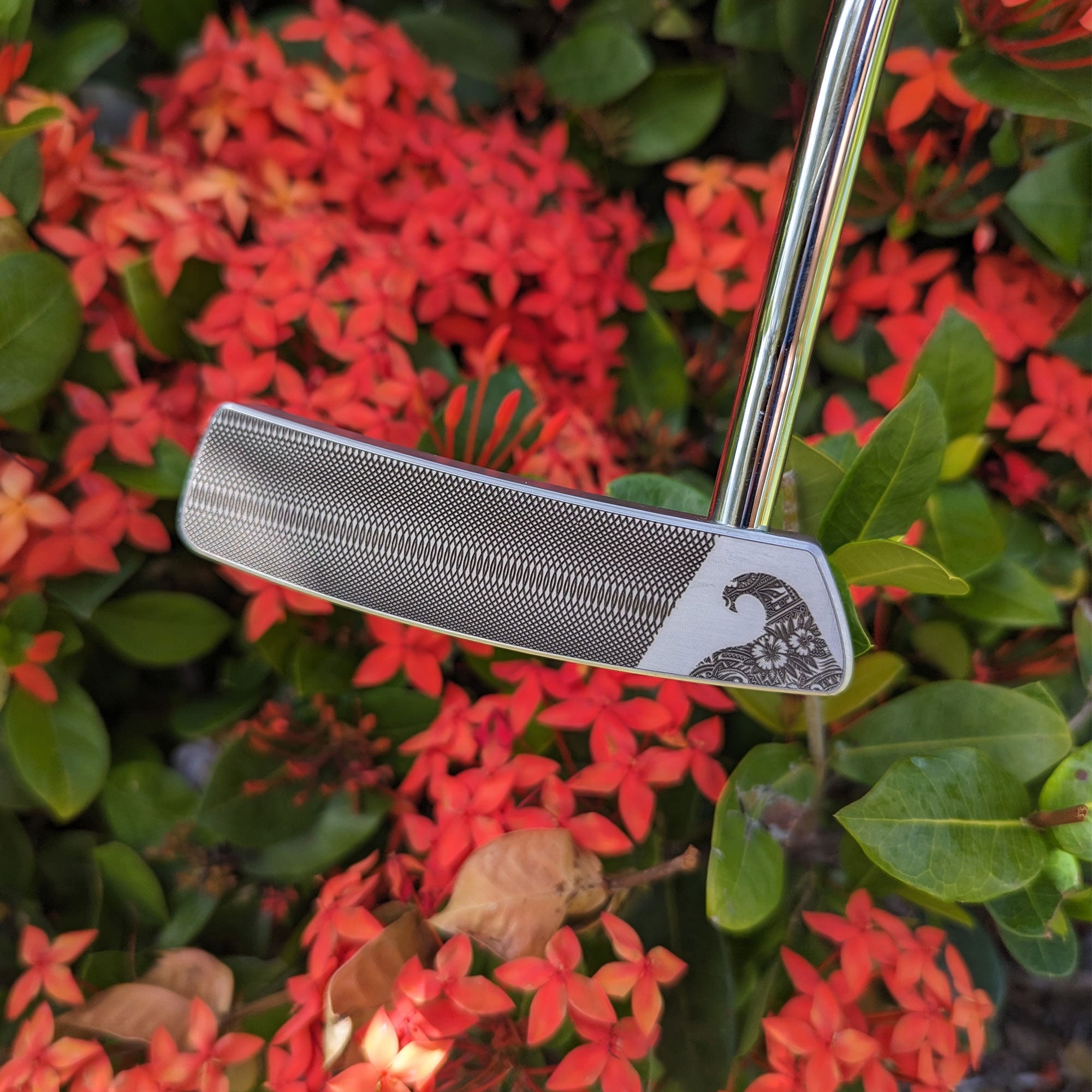
Having the right tools for your warmup makes a difference. A quality putter cover protects your putter's face and finish in transit so that when you pull it out on the practice green, the milling pattern is pristine and the feel is exactly what you expect.
Pace of Play Tips for the Putting Green
The putting green is where pace of play most often breaks down. Here are the habits that keep your group moving.
Start reading before it is your turn. We said it before and we will say it again because it is the single biggest time-saver on the green.
Have your marker and ball ready. Do not reach the green and then start rummaging through your pockets for a marker. Keep a marker in your front pocket or clipped to your glove at all times. Phoenix Putter Co's putter accessories include magnetic markers and clips designed for quick, one-handed use.
Do not linger after holing out. Once all players have finished the hole, record your scores as you walk to the next tee, not while standing on the green. The group behind you is waiting.
Tend the flagstick for the last putter. If you have finished and only one player remains, tend the flag or stand near it so you can replace it immediately after they finish. This prevents the last player from having to re-insert the flagstick while the group waits.
Walk with purpose. Do not stroll across the green. Move efficiently between your ball, the hole, and the edge of the green. You do not need to sprint, but you should not be the person who saunters 40 yards to read a putt from behind the hole when you already know the line.
Building these habits into your golf routine transforms you from a golfer people tolerate to one they request. For a complete framework on building efficient practice and play habits, our guide on building a golf practice routine covers the full picture.
Common Putting Green Etiquette Mistakes
| Mistake | Why It Matters | The Fix |
|---|---|---|
| Walking on someone's line | Footprints can deflect putts | Walk around all putting lines, even if it means extra steps |
| Standing in a player's peripheral vision | Movement distracts during the stroke | Stand behind or well to the side, outside their eye line |
| Talking during someone's stroke | Noise breaks concentration | Stay silent from the moment a player addresses the ball until the putt is struck |
| Casting a shadow across the hole or line | Shadows can obscure break reads | Check your shadow position and move if necessary |
| Not repairing ball marks | Damaged greens affect everyone | Repair yours plus one more, every single time |
| Dropping the flagstick on the green | Creates indentations in the surface | Lay it down gently on the fringe |
| Standing over your putt too long | Slows pace for everyone | Commit to a maximum 15-second pre-putt routine |
| Celebrating loudly on the green | Disrespects other players putting nearby | Celebrate after leaving the green or keep it brief and quiet |
Frequently Asked Questions
Can I stand behind someone while they putt?
No. Standing directly behind a player (on the extension of their target line behind them) while they are making a stroke is a violation of Rule 10.2b(4) in stroke play. In match play, it is considered poor etiquette even though the rule technically only applies in certain circumstances. Stand to the side, at a 90-degree angle or greater from their line, well outside their peripheral vision.
Do I have to let someone tend the flagstick?
No. Since 2019, you can leave the flagstick in unattended for every putt. However, if you want the flag tended (held and removed as the ball approaches), you should ask a playing partner to do so. If someone asks you to tend the flag, it is an etiquette obligation to agree.
What if someone accidentally steps on my line?
It happens. Do not make a scene. If the footprint left a visible indentation on your line, under Rule 13.1c you are entitled to repair damage caused by a person on the putting green. Calmly repair it with your ball-mark tool and move on. If the damage is not visible, it almost certainly will not affect your putt. Treating it as a major offense creates tension that hurts everyone's game.
Is it OK to putt with my glove on?
There is no rule against it. Many recreational golfers putt with their glove on for convenience. However, most serious golfers remove their glove for putting because bare skin provides better feel and feedback through the grip. If you play with a premium putter and a fitted putter grip, you will notice significantly more tactile information without the glove.
What is the rule about gimme putts?
"Gimmes" are informal concessions in casual stroke play. There is technically no provision for them in the Rules of Golf under stroke play; every putt must be holed. In match play, concessions are a formal part of the rules and cannot be refused once given. In casual rounds, most groups agree on a gimme distance (typically inside the leather, or within 18 to 24 inches) at the start of the round. If you are keeping a handicap index, you should hole everything out to maintain an accurate score.
How do I learn proper etiquette if no one taught me?
You are doing it right now by reading this guide. Beyond that, play with experienced golfers and watch what they do on the green. Most golf etiquette is learned by observation and gentle correction. Do not be embarrassed to ask a more experienced player about proper protocol. Every golfer was new once, and most are happy to share what they know.
Can I test the green surface by rubbing or scraping it?
No. Rule 13.1e prohibits you from testing the surface of the putting green by rubbing it or rolling a ball on it to gauge speed or break during the play of a hole. You can test the practice green before your round. You can also test any practice green between holes if one is accessible. But you cannot test the green of the hole you are playing.
Etiquette on the putting green is not a set of arbitrary rules designed to make golf feel stuffy. It is a code that protects the playing surface, respects your fellow competitors, and keeps the game moving at a pace that everyone can enjoy. The golfers who internalize these habits are not just better playing partners. They are better golfers, because attention to etiquette reflects an attention to detail that carries over into every aspect of the game.
Next time you step onto the green, let your etiquette match your equipment. If you are playing with a precision-crafted putter that represents the best in modern club making, bring that same standard of care to how you conduct yourself on the most sacred surface on the course. Explore the full Phoenix Putter Co collection and bring craftsmanship to every part of your putting game.


Leave a comment
This site is protected by hCaptcha and the hCaptcha Privacy Policy and Terms of Service apply.