

When golfers talk about putters, the conversation usually starts with head shape — blade or mallet, toe hang or face balanced, high MOI or traditional. But the material the putter is made from influences your experience on every single stroke: the sound at impact, the vibration that travels through the shaft to your hands, the way the ball launches off the face, and how the club ages over years of play.
Putter material is not a marginal detail. It is foundational. And understanding the differences between 303 stainless steel, carbon steel, aluminum, zinc alloys, and German Stainless Steel (GSS) will help you choose a putter that matches your feel preferences, playing conditions, and expectations for longevity.
What Are Putter Materials and Why Should You Care?
Every putter head starts as a block or casting of metal. The choice of that metal determines three critical properties:
Hardness — measured on the Rockwell scale, hardness affects how the putter face interacts with the ball's cover. Softer metals compress slightly at impact, producing a muted, buttery feel. Harder metals reflect energy more directly, producing a firmer, more responsive sensation.
Density — measured in grams per cubic centimeter, density determines how much mass can be concentrated in a given volume. Higher-density materials allow designers to place weight precisely — in the perimeter for higher MOI, or behind the sweet spot for a more traditional feel.
Machinability — this is how cleanly the metal can be cut by CNC milling machines. Superior machinability means tighter tolerances on face milling patterns, sharper edges on cavity details, and more precise weight distribution. This is why material choice and milling quality are inseparable topics.
The interplay of these three properties creates the "feel" that golfers describe in subjective terms — soft, crisp, clicky, dead, responsive. Those subjective experiences have objective material science behind them.
Why Material Matters: Sound, Feel, and Durability
Sound
Sound is the first sensory feedback you receive after striking a putt. It arrives before tactile sensation, and research from the University of Sheffield's Sports Engineering Research Group has shown that sound significantly influences a golfer's perception of quality — even when the actual ball speed and direction are identical.
Softer materials like carbon steel produce a lower-pitched, muted "thud." Harder materials like 303 stainless steel produce a higher-pitched, sharper "click." Neither is objectively better, but most skilled golfers develop strong preferences that influence their confidence over the ball.
Feel
Feel is the vibration pattern transmitted from the face through the hosel, shaft, and grip to your hands. It is influenced by material hardness, face milling depth, and the frequency at which the putter head vibrates after impact.
Carbon steel, being softer (Rockwell B 70–80), absorbs more vibration energy, resulting in a dampened feel. Stainless steel 303 (Rockwell B 80–90) transmits more of the impact signature, giving the golfer sharper, more detailed feedback about strike quality. This is why many Tour professionals who prioritize feedback — knowing exactly where on the face they struck the ball — gravitate toward stainless steel milled putters.
Durability
A putter is a long-term investment. Material determines how it ages:
- 303 stainless steel resists corrosion and maintains its finish for years with minimal care.
- Carbon steel develops a natural patina over time — some golfers love this aged aesthetic, while others prefer the consistency of stainless.
- Aluminum is lightweight and corrosion-resistant but softer, meaning face milling can wear faster.
- Zinc alloys corrode more readily and are less dimensionally stable over time.
Material Comparison: The Five Putter Metals
303 Stainless Steel
This is the gold standard for premium milled putters, and for good reason. 303 stainless steel offers an exceptional combination of machinability, corrosion resistance, and feel.
- Composition: Iron base with 17–19% chromium, 8–10% nickel, and added sulfur for machinability
- Density: 8.03 g/cm³
- Hardness: Rockwell B 80–90
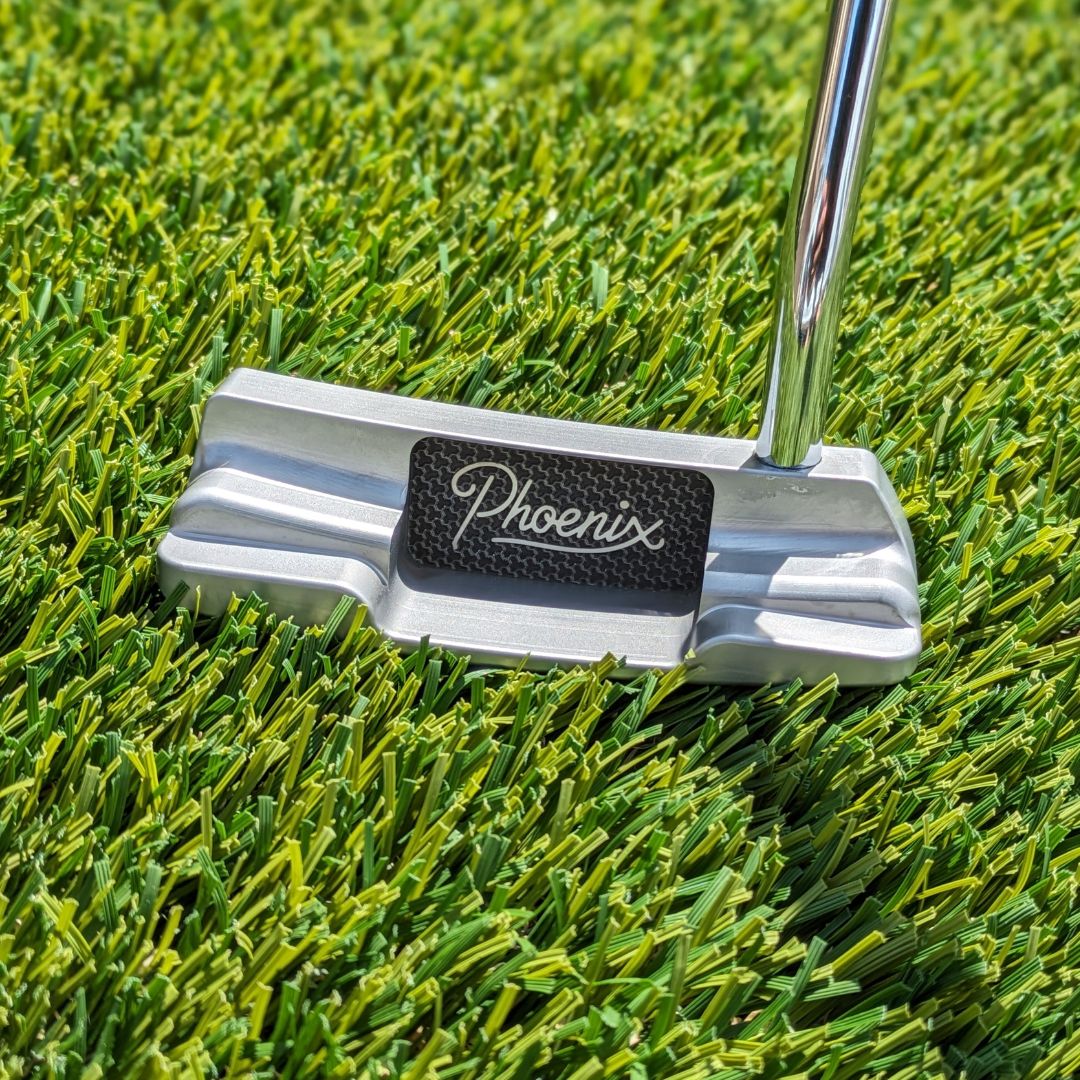
- Why it matters: The sulfur content in 303 (compared to 304 stainless) makes it significantly easier to machine, allowing CNC mills to cut precise face patterns at tight tolerances — typically within 0.001 inches. This is why virtually every premium milled putter brand, including the custom putters at Phoenix Putter Co., uses 303 as its primary material.
The feel is firm but not harsh — detailed enough to tell you whether you caught the ball on the sweet spot or a quarter-inch toward the toe. The sound is a clean, mid-frequency click that most golfers associate with quality.
Carbon Steel (1018/1020)
Carbon steel was the original putter material, and many classic designs — from the original Ping Anser to early Scotty Cameron models — were forged or milled from carbon steel billets.
- Composition: Iron with 0.18–0.20% carbon, minimal alloying elements
- Density: 7.87 g/cm³
- Hardness: Rockwell B 70–80
- Why it matters: Carbon steel's lower hardness produces the soft, muted feel that many golfers describe as "buttery." It absorbs more impact energy, which dampens vibration and creates the sensation that the ball is staying on the face slightly longer. This is not literally true — contact time is roughly 0.5 milliseconds regardless of material — but the sensory experience is distinct and preferred by many feel players.
The trade-off is durability. Carbon steel rusts without protective coatings, and even coated carbon steel putters will develop wear marks and patina faster than stainless. For some, this adds character. For others, it is a maintenance concern.
Aluminum (6061-T6)
Aluminum putters occupy a niche in the market, typically used for mallet designs where the low density allows for larger head shapes without excessive weight.
- Composition: Aluminum with magnesium and silicon
- Density: 2.70 g/cm³ — roughly one-third the density of steel
- Hardness: Rockwell B 60
- Why it matters: The low density means a mallet putter head milled from aluminum can be significantly larger than a steel equivalent at the same total weight (typically 340–360g). This allows for extreme perimeter weighting and very high MOI, which helps stabilize off-center strikes.
The feel is soft and dampened — some golfers find it too muted, lacking the feedback needed to calibrate stroke intensity. Sound is a dull, low-frequency thud. Aluminum putters are less common at the Tour level but can work well for golfers who prioritize forgiveness over feel.
Zinc Alloys (Zamak/Zinc Die-Cast)
Zinc is the workhorse of mass-market putters. If you bought a putter for under $75 at a big-box retailer, it is almost certainly zinc die-cast.
- Composition: Zinc base with aluminum, magnesium, and copper
- Density: 6.60 g/cm³
- Hardness: Rockwell B 80–85
- Why it matters: Zinc's primary advantage is cost. Die-casting zinc is fast and inexpensive, making it ideal for high-volume production. The downside is that zinc cannot be CNC milled to the same tolerances as stainless or carbon steel. Face consistency is lower, weight distribution is less precise, and the material degrades faster.
Feel is inconsistent — some strikes feel firm, others feel hollow, depending on where the casting has minor density variations. Zinc putters serve a purpose for beginners and casual golfers, but serious players outgrow them quickly.
German Stainless Steel (GSS)
GSS is the rarest and most expensive putter material, famously used by Scotty Cameron in limited-edition models and Tour-only putters.
- Composition: A proprietary soft stainless steel with specific chromium and nickel ratios (exact formulation is closely guarded)
- Density: Approximately 7.95 g/cm³
- Hardness: Rockwell B 72–78
- Why it matters: GSS combines the corrosion resistance of stainless steel with the soft feel of carbon steel. It is the best of both worlds — soft at impact but resistant to rust and patina. The catch is cost: GSS billets are expensive, difficult to source, and require careful machining.
Tour putters made from GSS command premium prices on the secondary market ($2,000 to $5,000+), driven by both performance and collector demand. It is the material for purists who want the softest possible feel without sacrificing longevity.
Putter Material Comparison Table
| Property | 303 Stainless Steel | Carbon Steel (1018) | Aluminum (6061) | Zinc Alloy | GSS |
|---|---|---|---|---|---|
| Density (g/cm³) | 8.03 | 7.87 | 2.70 | 6.60 | ~7.95 |
| Hardness (Rockwell B) | 80–90 | 70–80 | ~60 | 80–85 | 72–78 |
| Machinability | Excellent | Good | Good | Poor (cast only) | Good |
| Corrosion Resistance | Excellent | Poor | Excellent | Moderate | Very Good |
| Feel at Impact | Firm, responsive | Soft, muted | Very soft, dampened | Inconsistent | Soft, refined |
| Sound | Clean click | Low thud | Dull thud | Hollow ping | Muted click |
| CNC Milling Precision | ±0.001" | ±0.002" | ±0.002" | Not applicable | ±0.001" |
| Typical Price Range | $200–$500 | $250–$500 | $150–$350 | $30–$100 | $500–$2,000+ |
| Tour Usage | Very High | Moderate | Low | None | Limited (Tour-only) |
| Longevity | 10+ years | 5–10 years (with care) | 7–10 years | 3–5 years | 10+ years |
Feel the difference 303 makes
Every Phoenix putter is CNC-milled in the USA from premium 303 stainless steel — precision face milling, cut to your exact specs, with free shipping and a lifetime warranty.
All three are milled from 303 stainless, the tour-preferred alloy:
How CNC Milling Interacts with Material
The material you start with determines what is possible on the CNC machine. This is why discussions about putter face milling patterns always circle back to material selection.
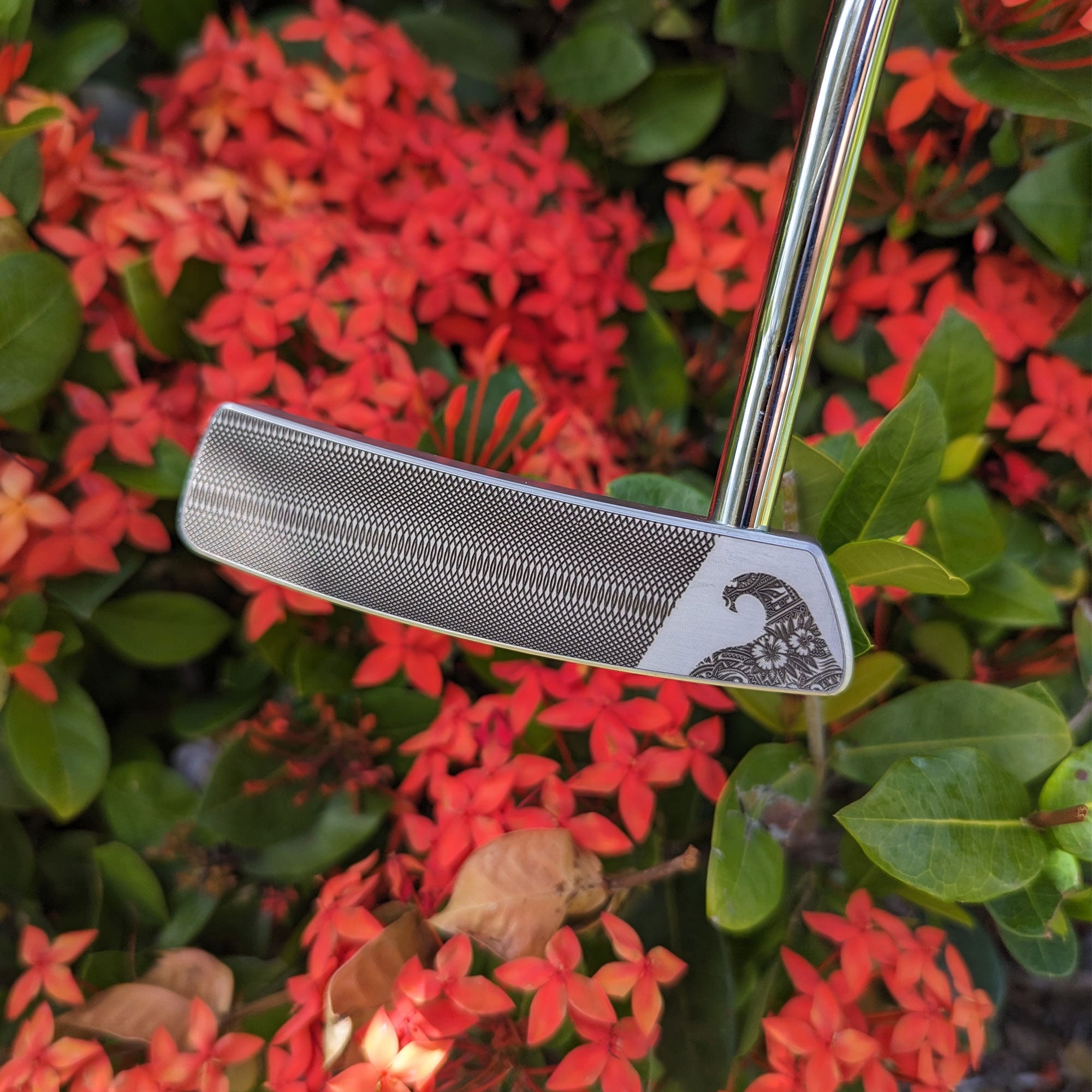
Milling depth and pattern consistency: 303 stainless steel holds milling lines with exceptional sharpness. A face milled with parallel grooves at 0.015-inch depth will maintain those exact dimensions across the entire striking surface. Carbon steel, being softer, can deform slightly under aggressive milling, requiring slower machine speeds and more careful toolpath programming.
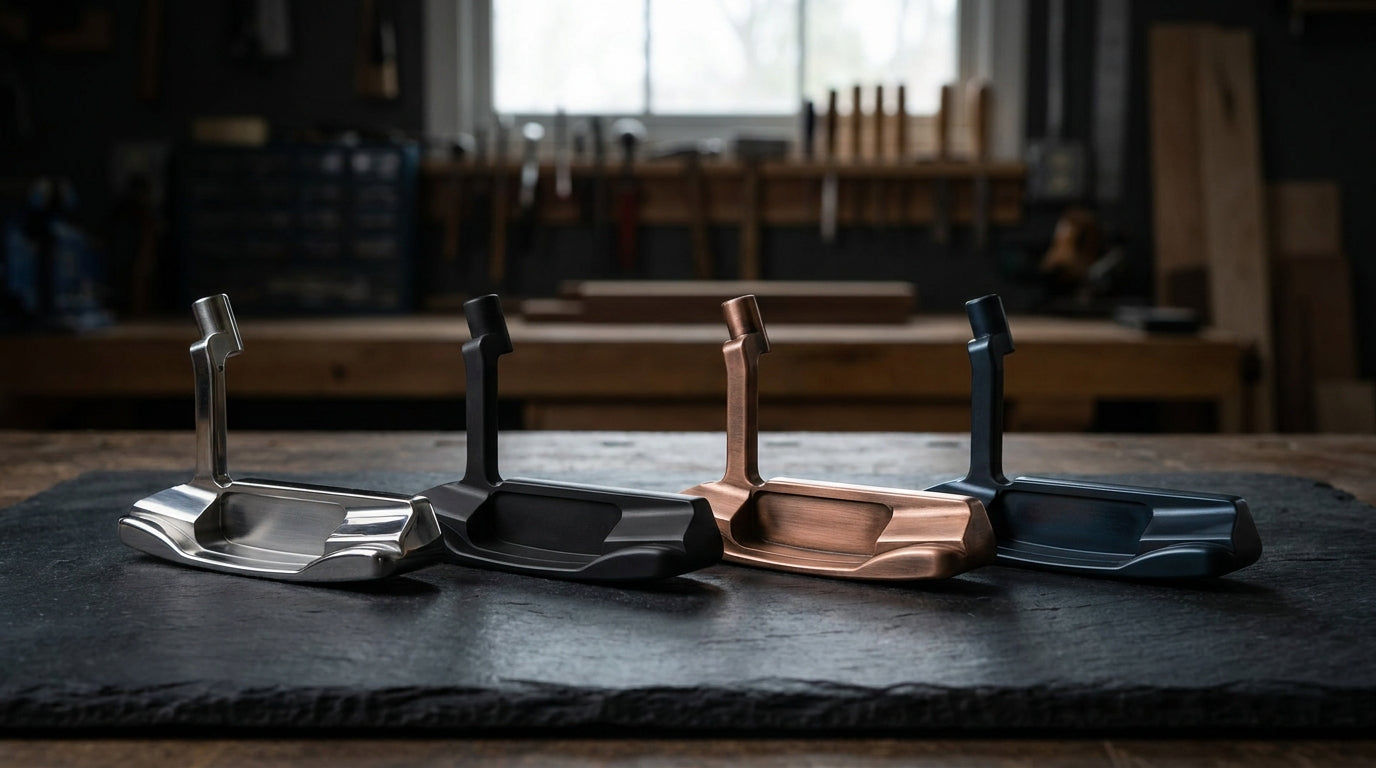
Surface finish options: Stainless steel accepts a wide range of finishes — raw (showing bare milling marks), satin (lightly blasted), brushed, or PVD-coated in black or other colors. Carbon steel is typically treated with oil-quench blackening, raw rust patina, or chrome plating. The material limits the aesthetic possibilities.
Face flatness: This is critical. A putter face that is not perfectly flat — within 0.0005 inches — will impart unintended spin or directional bias. Stainless steel's dimensional stability during and after milling makes it the safest material for achieving and maintaining face flatness. This is one reason why the debate between a milled face versus a putter insert often comes down to material confidence.
Weight precision: CNC milling allows material to be removed from specific locations to achieve target head weights — typically 340g to 360g for standard-length putters. Higher-density materials like stainless steel offer more flexibility here, since less volume needs to be removed to hit a target weight compared to aluminum.
Common Mistakes When Choosing Putter Material
Mistake 1: Equating softness with quality. Soft feel is a preference, not a performance metric. Many Tour players choose firm-feeling 303 stainless steel because the enhanced feedback helps them calibrate distance control. Do not assume softer is always better.
Mistake 2: Ignoring maintenance requirements. Carbon steel putters require regular cleaning and occasional oiling to prevent rust. If you play in humid conditions or rarely clean your clubs, stainless steel is the more practical choice.
Mistake 3: Buying based on material name alone. "Stainless steel" is a broad category. A $50 cast stainless putter has almost nothing in common with a $400 CNC-milled 303 stainless putter. The manufacturing process matters as much as the raw material. Understand what makes a milled putter different before comparing solely on material.
Mistake 4: Overlooking density and weight distribution. A putter's MOI and stability depend on where the weight is placed, which depends on material density. Do not just ask "what metal?" — ask "how is the weight distributed, and what density made that distribution possible?"
Mistake 5: Chasing GSS at any cost. GSS is exceptional, but it is also extraordinarily expensive and difficult to source. A well-milled 303 stainless putter will outperform a poorly made GSS putter. Material is one variable among many — milling quality, design geometry, and proper fitting matter just as much.
Frequently Asked Questions
What is the best material for a putter?
For the majority of golfers, 303 stainless steel offers the best combination of feel, durability, machinability, and value. It is the industry standard for premium milled putters because it performs consistently across all conditions and requires minimal maintenance. Carbon steel is excellent for golfers who specifically prefer a softer feel and are willing to maintain the finish.
Does putter material affect ball speed?
Minimally. The difference in ball speed between materials is less than 1% at typical putting speeds. What material does affect significantly is the perception of speed through feel and sound feedback, which influences how well you calibrate your stroke length to distance. This perceptual difference can indirectly affect your pace control.
Why do Tour pros prefer 303 stainless steel?
Tour professionals value feedback above all else. 303 stainless steel transmits the most detailed impact information to the hands — strike location, face angle, and contact quality. On Tour, where the difference between holing and lipping out is measured in fractions of a degree, that feedback is essential for continuous stroke refinement.
Is a carbon steel putter better than stainless?
Neither is objectively better. Carbon steel offers a softer feel and a classic aesthetic that develops character over time. Stainless steel offers sharper feedback and virtually zero maintenance. The right choice depends on your feel preference and how much care you are willing to give your equipment. Try both before deciding.
How can I tell what material my putter is made from?
Check the manufacturer's specifications. If unavailable, a magnet test can help: stainless steel (303) is weakly magnetic or non-magnetic, carbon steel is strongly magnetic, aluminum is non-magnetic and noticeably lighter, and zinc feels hollow and lightweight relative to its size. For a definitive answer, a putter fitting specialist can identify the material.
Does milling pattern matter more than material?
Both matter, but they serve different functions. Material determines the baseline feel and sound characteristics. The milling pattern — depth, spacing, and direction of grooves — fine-tunes the ball's initial launch conditions and spin. A deep-milled face on 303 stainless will feel softer than a shallow-milled face on the same material. The best putters optimize both variables together.
Choose the Material That Matches Your Game
Putter material is not about marketing labels or price tags. It is about matching the physical properties of a metal — its hardness, density, and machinability — to your feel preferences, maintenance tolerance, and performance expectations.
If you want firm, responsive feedback with zero maintenance, 303 stainless steel is your metal. If you crave soft, muted feel and appreciate a club that ages with character, carbon steel is your metal. And if you want the best of both worlds and the budget allows, GSS delivers at the highest level.
Material is one of several equipment choices that measurably affect your score — our guide to the science of putting breaks down how each one contributes.
Whatever your preference, the material should be paired with precision CNC milling, thoughtful weight distribution, and a proper fitting. Explore the full lineup of custom milled putters at Phoenix Putter Co. — crafted from premium 303 stainless steel and built to feel exactly right in your hands.
Milled from 303 stainless
The soft, tour-preferred alloy from this guide, milled from a solid block and built to your hand and length.
 Origin
Milled blade · classic look and feedback★ 5.0 (18 reviews)$255
Build yours →
Origin
Milled blade · classic look and feedback★ 5.0 (18 reviews)$255
Build yours →
 Saguaro
Face-balanced mallet · for straight-back, straight-through strokes★ 5.0 (3 reviews)$299
Build yours →
Saguaro
Face-balanced mallet · for straight-back, straight-through strokes★ 5.0 (3 reviews)$299
Build yours →
 Hognose
Center-shaft mallet · zero toe hang, most forgiving★ 5.0 (1 review)$375
Build yours →
Hognose
Center-shaft mallet · zero toe hang, most forgiving★ 5.0 (1 review)$375
Build yours →
- Made to order, right or left handed
- Every putter ships free
- Ships 5–7 business days after proof approval
- Handcrafted in USA


Leave a comment
This site is protected by hCaptcha and the hCaptcha Privacy Policy and Terms of Service apply.