
You can read every break perfectly, strike every putt with ideal pace, and still watch the ball miss wide if your putter face is even two degrees offline at impact. Alignment is the invisible foundation of great putting. It connects your read to your stroke, your intention to your execution. Without it, nothing else on the green matters.
Tour professionals spend more practice time on alignment than any other putting fundamental. Jordan Spieth has talked openly about using alignment sticks and string lines during every practice session. Scottie Scheffler's putting resurgence in recent seasons coincided with a renewed focus on getting his eyes directly over the ball and squaring the face at address. These are not coincidences. Alignment is the single highest-leverage skill you can sharpen on the practice green.
This guide breaks down the physics, the setup, and the drills that will help you aim your putter accurately and start the ball on your intended line every single time.
What Is Putting Alignment and Why It Matters
Putting alignment refers to the relationship between your putter face angle, your body lines (feet, hips, shoulders), and your intended target line at the moment of address and impact. When all three elements work together, the ball launches precisely where you want it. When any element drifts offline, the error compounds across the length of the putt.
Consider the math. On a 20-foot putt, a two-degree face angle error at impact pushes the ball roughly 8.4 inches offline by the time it reaches the hole. That is the difference between a made putt and a lip-out that leaves you shaking your head. On a 40-footer, that same two degrees translates to nearly 17 inches of miss. No amount of green-reading skill can compensate for a misaligned face.
This is why alignment separates low-handicap putters from everyone else. Studies from SAM PuttLab, one of the most widely used putting analysis systems on Tour, consistently show that the best putters in the world deliver the face within half a degree of their intended line. Amateurs average three to four degrees of error. Close that gap and you close the gap in your scorecard.
The Physics: Face Angle Accounts for 80%+ of Start Line
For decades, putting instructors told students that the path of the stroke determined where the ball went. That turned out to be wrong. Modern launch monitor data from systems like Quintic and SAM PuttLab has proven that face angle at impact accounts for approximately 83% of the ball's initial start direction on a flat putt. Stroke path contributes the remaining 17% or so.
What does this mean in practical terms? It means that if your face is square at impact, the ball will start on line even if your path is slightly inside-to-outside or outside-to-inside. Conversely, if your face is two degrees open at impact, no amount of perfect path will save you. The ball will start right of your target (for a right-handed golfer) almost every time.
This is why choosing the right putter matters so much. A putter with proper toe hang for your stroke arc naturally wants to return to square at impact. A face-balanced design suits a straight-back, straight-through stroke. Mismatching your putter to your stroke type makes consistent face angle nearly impossible. If you are uncertain about which design fits your stroke, our guide on face-balanced putters explains the differences in detail.
Eye Position: The Foundation of Accurate Aim
Before you worry about alignment aids, training arcs, or laser systems, you need to get one thing right: your eye position relative to the ball. This single setup detail has more influence on your ability to aim accurately than any other variable.
The "Eyes Over the Ball" Standard
The traditional teaching is to position your eyes directly over the ball at address. When your eyes are directly above the target line, what you see matches reality. The line you perceive to the hole is the actual line to the hole. No parallax. No optical distortion.
When your eyes drift inside the ball (closer to your feet), you will perceive the target as being farther left than it actually is (for a right-handed golfer). Your brain compensates by aiming the face right. The reverse happens when your eyes move outside the ball. Studies using eye-tracking technology have confirmed that even one inch of eye displacement from directly over the ball produces measurable aiming errors.
The Coin Drop Drill
Here is the simplest way to check your eye position:
- Take your putting stance with a ball on the ground.
- Hold a second ball (or a coin) at the bridge of your nose, between your eyes.
- Drop it.
- Note where it lands relative to the ball on the ground.
If it lands directly on the ball, your eyes are perfectly over the line. If it lands inside (toward your feet), your eyes are too far inside. If it lands outside (away from you), you are standing too far from the ball.
Adjust your posture, ball position, and distance from the ball until the dropped coin consistently hits the ball on the ground. This is your ideal setup distance, and it should feel natural, not forced. Some elite putters play with their eyes just slightly inside the ball (about half an inch), and that can work. The key is consistency.
How to Set Up Properly: Ball Position, Stance Width, and Eye Line
A repeatable setup is the scaffolding of consistent alignment. Here is the framework Tour putting coaches teach their players.
Ball Position
Place the ball slightly forward of center in your stance, roughly one to two inches ahead of the midpoint between your feet. This forward position ensures that the putter makes contact on a slightly ascending stroke, which imparts a truer roll with less skidding or hopping. Most elite putters position the ball just inside their lead ear.
Stance Width
Your stance should be roughly shoulder-width apart, measured from the insides of your heels. A stance that is too narrow introduces sway and instability. A stance that is too wide restricts your body's ability to rotate smoothly through the stroke. Shoulder width gives you a stable base while allowing free pendulum motion.
Shoulder Alignment
Here is where many golfers go wrong. They spend all their energy aligning the putter face and their feet but completely neglect their shoulders. Your shoulders dictate your stroke path more than your feet do. If your shoulders are open (aimed left for a right-handed golfer), your stroke will naturally travel outside-to-inside, pulling the ball left. If they are closed, you will push the ball right.
At address, your forearms and shoulders should run parallel to your target line. A simple check: lay a club across your chest at address and see where it points. It should point parallel left of the target (for right-handers), just like a full-swing alignment station.
Grip Pressure
While not strictly an alignment issue, death-gripping the putter introduces tension that makes it nearly impossible to deliver the face squarely. On a scale of 1 to 10, your grip pressure should sit around 3 or 4. Light enough that someone could pull the club from your hands with a gentle tug, firm enough that you maintain control. A quality putter grip with the right diameter and texture makes it easier to maintain consistent light pressure without the club feeling loose.
Alignment Aids and How to Use Them
Modern putters and accessories offer several built-in and aftermarket alignment aids. Understanding what works best for your eye depends on how your brain processes visual information.
Sight Lines on the Putter
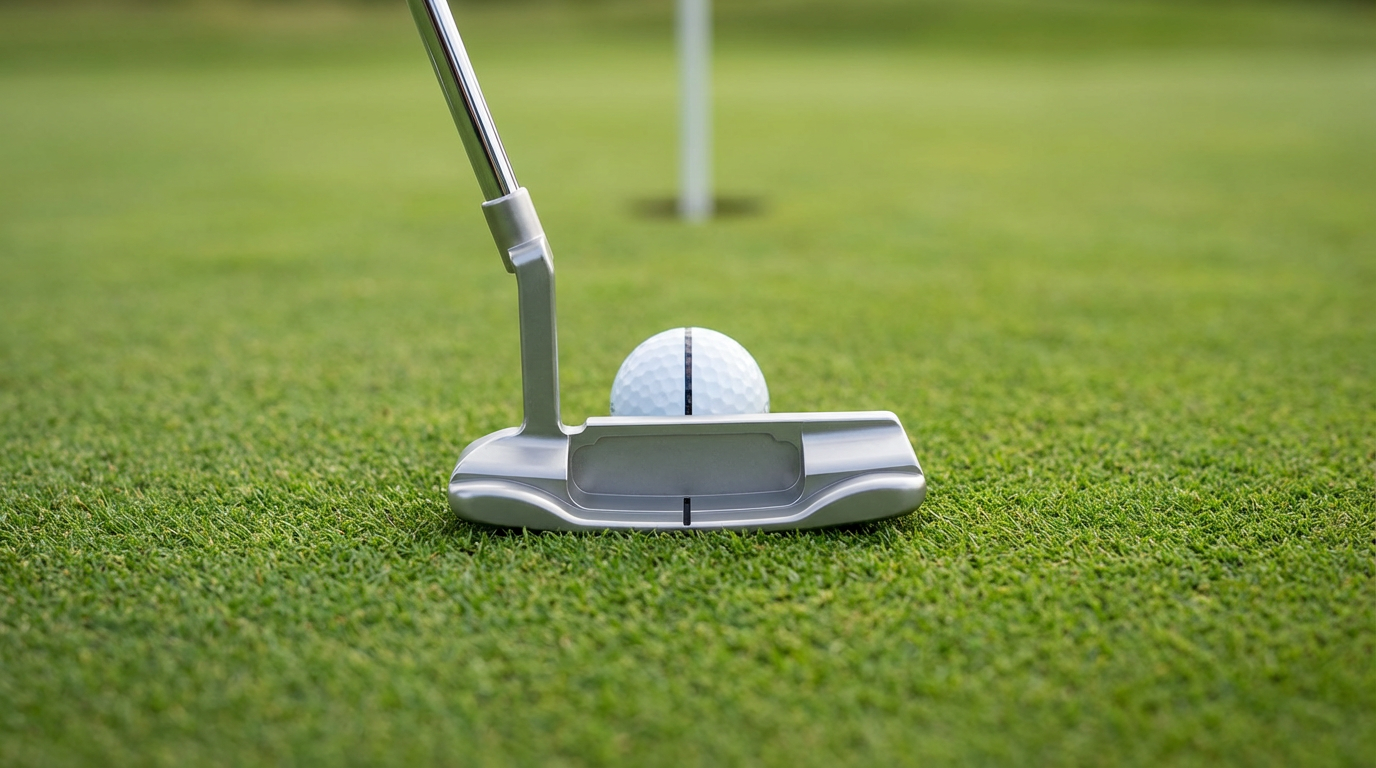
Most putters feature a single line, a triple line, or a dot on the crown or flange. A single long line running perpendicular to the face is the most popular Tour choice. It extends the visual of the face angle and gives your eyes a clear reference point.
Some golfers respond better to a clean, unmarked top line. If you find that alignment lines create visual "noise" rather than clarity, that is perfectly valid. Phil Mickelson famously played for years with minimal alignment markings. The right choice is whatever allows you to consistently aim the face where you intend.
String Line
A string line is exactly what it sounds like: a piece of string stretched along two stakes, running from behind the ball to the hole on a straight putt. Practicing with a string line gives you immediate, objective feedback on whether you are aiming correctly. You can see exactly where your putter face points relative to the string at address and whether the ball starts on the string after impact.
Mirror Drill
A putting mirror is a small reflective surface with alignment lines printed on it. You place the ball on the mirror, take your stance, and look down. The mirror shows you exactly where your eyes are positioned and whether the putter face is square to the printed lines. This tool corrects two alignment fundamentals simultaneously: eye position and face angle.
Laser Systems
Handheld laser devices attach to the shaft or face of your putter and project a line onto the green. They give you real-time feedback during practice about where the face points. These are not legal during competitive play, of course, but they are excellent training tools.
A Step-by-Step Alignment Routine
Building a consistent pre-putt routine is how you transfer practice-green alignment onto the course under pressure. Here is a six-step routine used by several major championship winners.
-
Read the putt from behind the ball. Stand three to four feet behind the ball, directly on the ball-to-target line. Identify your intended start line and pick an intermediate target six to twelve inches in front of the ball on that line. A discolored patch of grass, an old ball mark, or a specific blade of grass all work.
-
Approach from the side. Walk to the ball from the low side (the side the putt will break toward). This gives you a secondary read confirmation and avoids stepping on your line or your playing partner's line.
-
Set the putter face first. Before you take your stance, place the putter behind the ball and aim the face (or the alignment line on the crown) at your intermediate target. This is the most critical moment. Your face angle is your start line.
-
Build your stance around the face. Once the face is aimed, position your feet, knees, hips, and shoulders parallel to your target line. Let the face dictate your body, never the other way around.
-
Final eye check. Look at your intermediate target, then the hole, then back to the ball. Confirm that everything feels aligned. If something looks off, step away and start over. Committing to a misaligned putt is worse than taking five extra seconds to reset.
-
Pull the trigger. Make your stroke within three to four seconds of completing your final look. Dwelling over the ball introduces tension, doubt, and micro-adjustments that destroy alignment.
This routine should take no more than 20 to 25 seconds from the moment you step behind the ball to the moment you stroke the putt. Practice it on the putting green until it becomes automatic. For more on building a complete practice routine, see our guide on lag putting drills that pairs well with alignment work.
Practice Drills for Putting Alignment
The Gate Drill
Place two tees in the ground just wider than the width of your putter head, about two inches in front of the ball. The gap should be roughly half an inch wider than the putter on each side. Stroke putts through the gate. If the putter head clips a tee, your face or path was offline. Start with three-foot putts and extend to six and eight feet as you improve. Aim for 10 consecutive putts through the gate without contact.
The String Line Drill
Set up a string line on a straight, flat section of the practice green. Place the ball directly under the string. Stroke 20 putts, noting how many start directly on the string. Your goal is 18 out of 20. If the ball consistently starts left or right, your face angle is the culprit, not your path. Adjust your face at address and repeat.
The Mirror Drill
Place a putting mirror on the ground. Set the ball on the designated spot (most mirrors have a ball marker). Take your stance and look down into the mirror. Check that your eyes are centered over the indicated line. Check that the putter face is square to the perpendicular guide lines. Stroke the putt while maintaining your eye position. This drill trains eye position and face alignment simultaneously.
The Railroad Track Drill
Lay two alignment sticks on the ground, parallel to each other and aimed at the hole. The sticks should be just wider than the width of your putter head. Place the ball between them. Stroke putts and monitor whether the putter tracks between the "rails" on the backswing and follow-through. This drill reinforces path consistency, which supports your face angle by eliminating compensation moves.
| Drill | What It Trains | Difficulty | Time Needed | Best For |
|---|---|---|---|---|
| Gate Drill | Face angle and path | Beginner | 10 minutes | Quick warmup before rounds |
| String Line | Start line accuracy | Intermediate | 15 minutes | Diagnosing aim errors |
| Mirror Drill | Eye position and face | Intermediate | 15 minutes | Full alignment checkup |
| Railroad Track | Stroke path | Beginner | 10 minutes | Path-dependent misses |
| Laser System | Real-time face angle | Advanced | 20 minutes | Deep practice sessions |
Common Mistakes That Destroy Putting Alignment
Aligning feet instead of face. Many golfers set their feet first and then try to aim the putter. This is backwards. The putter face determines start line. Build your stance around the face.
Ignoring shoulder alignment. Open or closed shoulders override everything else. You can have a perfectly aimed face and perfectly aligned feet, but if your shoulders are three degrees open, your stroke will pull the ball left.
Moving the head during the stroke. Peeking at the hole before impact shifts your shoulders and opens or closes the face. Keep your head still until the ball is well on its way. Listen for the ball to drop instead of watching it.
Using an intermediate target that is too far away. An intermediate spot 12 inches in front of the ball is far easier to aim at accurately than one 3 feet away. The closer the spot, the smaller the margin of error in your aim.
Gripping too tightly. Tension in your hands radiates up through your forearms and shoulders, making it nearly impossible to deliver the face squarely. A properly fitted putter grip in the right diameter can help you maintain a lighter, more consistent hold.
Never practicing alignment specifically. Most golfers practice making putts. They rarely practice aiming. Dedicate at least one-third of your practice putting time to pure alignment work with feedback tools like string lines and mirrors.
Frequently Asked Questions
Should my eyes be directly over the ball when putting?
For most golfers, yes. Having your eyes directly over the ball or just slightly inside (up to half an inch) gives you the most accurate visual perspective of your target line. Use the coin drop drill to verify your position. Some Tour players like Jack Nicklaus played with eyes slightly inside, but they compensated with decades of calibration. Starting with eyes over the ball is the safest approach.
How much does putter alignment aid design matter?
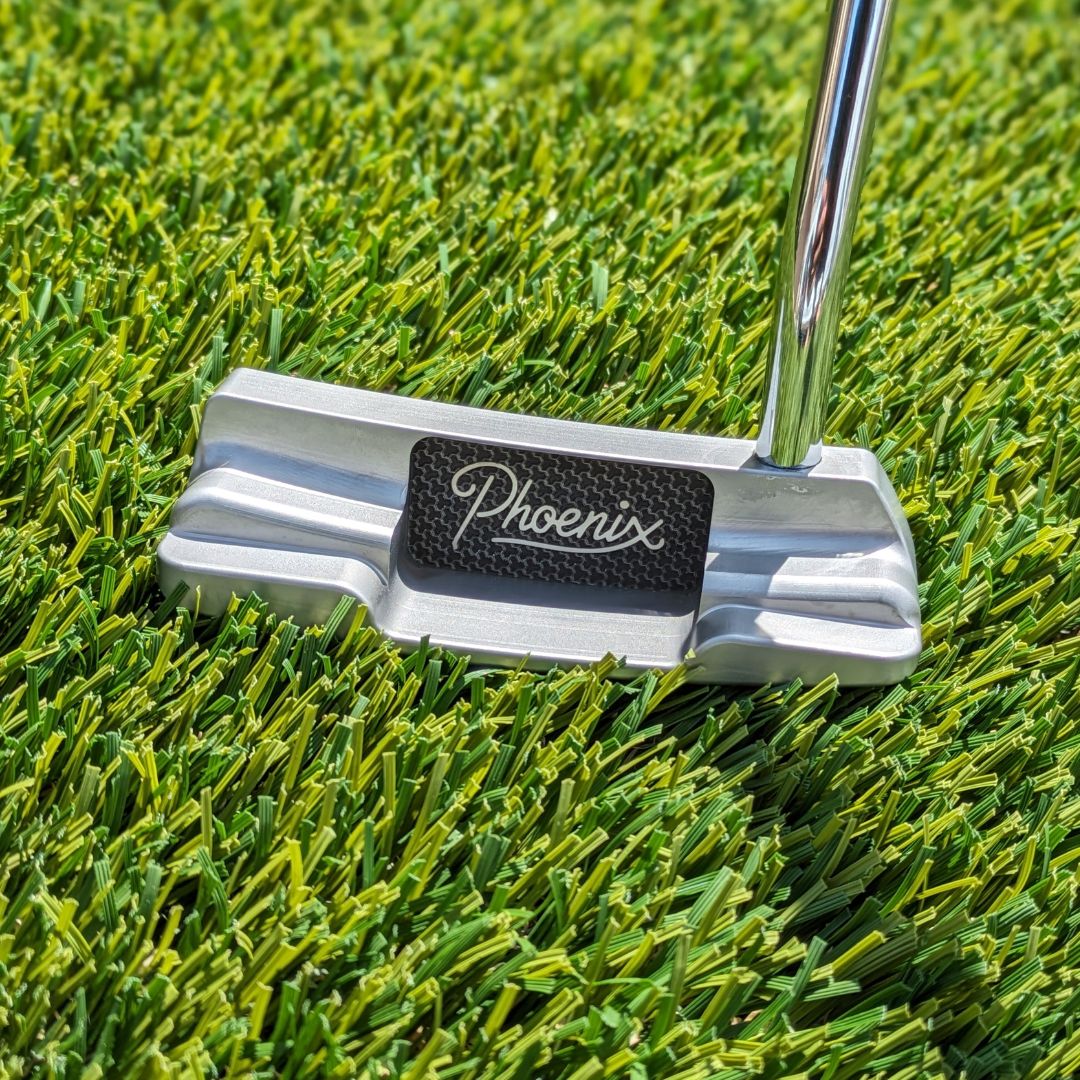
More than most golfers realize. A single sight line, a triple line, and a dot all interact differently with each golfer's visual processing. Some players aim more accurately with a single high-contrast line. Others find that a clean topline with no markings reduces visual clutter and lets them aim by feel. The best approach is to test multiple designs on a string line and see which one produces the most consistent aim. Phoenix Putter Co offers custom putters with alignment options tailored to your preference.
What is an intermediate target in putting?
An intermediate target is a small spot on the green, six to twelve inches ahead of the ball on your intended start line. Instead of aiming at the hole (which may be 20 feet away), you aim at this close spot. It is far easier to align your putter face to a target 10 inches away than one 20 feet away. Bowlers use the same principle when they aim at the arrows rather than the pins.
How do I know if my alignment is off?
The clearest diagnostic is the string line drill. Set up a straight putt under a string. If your ball consistently starts left or right of the string, your alignment is the issue. Another sign: if you miss most putts on the same side (for example, you push almost every putt right), that pattern usually points to a face angle error at address rather than a stroke flaw.
Can a putter's design help with alignment?
Absolutely. Putters with longer sight lines, contrasting crown colors, and angular geometries (like squared-off mallet shapes) all provide stronger visual cues that help your brain aim the face more accurately. A face-balanced putter with a clean sight line is particularly effective for golfers with a straight-back, straight-through stroke who want maximum visual feedback at address.
How long does it take to improve putting alignment?
With focused practice using feedback tools (string line, mirror, or laser), most golfers see measurable improvement in two to three weeks of consistent work, roughly four to five sessions of 20 minutes each. The key is practicing with objective feedback rather than guessing. Without feedback, you can practice for months and simply reinforce bad habits.
Alignment is the unsexy fundamental that separates confident putters from hopeful ones. It is not flashy, it does not trend on social media, and it will never make a highlight reel. But when you stand over a 12-footer and know, with total certainty, that your face is aimed exactly where you intend, the stroke becomes effortless. Confidence flows from precision.
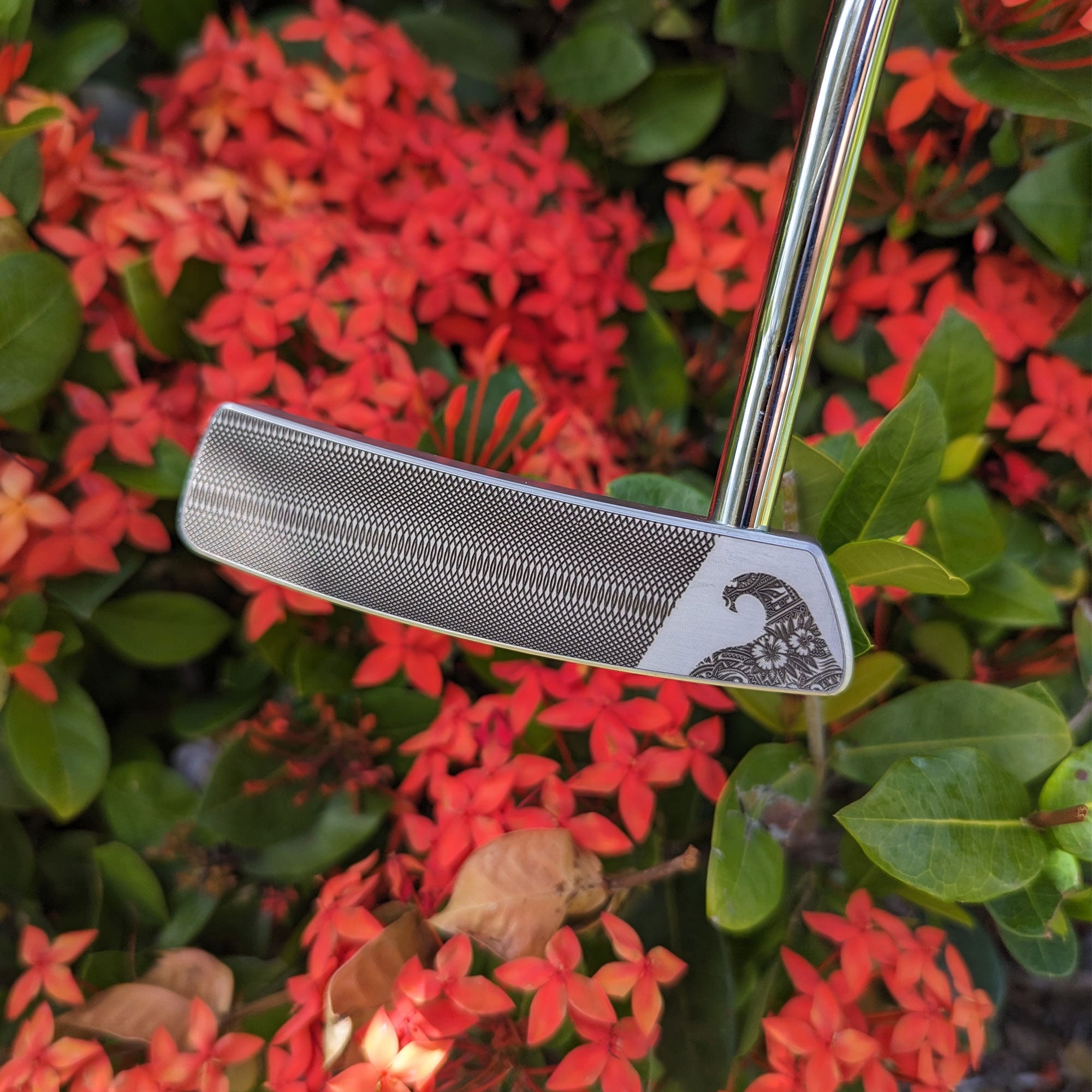
If your current putter is not giving you the visual feedback you need at address, it might be time for an upgrade. Explore the Phoenix Putter Co collection and find a putter with the alignment features, weighting, and craftsmanship that match the way you see the line. Your best putting is on the other side of trusting your aim.


Leave a comment
This site is protected by hCaptcha and the hCaptcha Privacy Policy and Terms of Service apply.