

Here is a stat that should reshape how you spend your practice time: according to Mark Broadie's strokes gained research, the average 15-handicap golfer loses more strokes to three-putts from outside 25 feet than to any other single putting category. Not lip-outs from six feet, not misreads on breaking putts. Three-putts from long range, caused by poor distance control.
Lag putting is the most valuable skill in putting, and it is the most undertrained. Golfers will grind over four-footers on the practice green for an hour but never roll a single putt from 40 feet. The result is predictable: they step onto the course with no calibrated feel for pace on long putts, and the three-putts pile up.
These seven drills change that. Each one targets a specific aspect of distance control, from tempo calibration to uphill and downhill adjustment to pressure management. They are used by PGA Tour coaches, college putting instructors, and top amateurs who understand that lag putting is where scores actually drop. For the foundational principles behind these drills, start with our guide on mastering the lag putt.
What Is Lag Putting and Why It Is the Number One Scoring Skill
A lag putt is any putt long enough that your primary goal is not to make it but to leave it close enough for a stress-free second putt. For most golfers, that threshold starts around 20 to 25 feet, though Tour players push it closer to 30 or 35 feet.
The math behind lag putting's importance is straightforward. On a typical 18-hole round, the average golfer faces 8 to 12 putts from outside 20 feet. If they three-putt just three of those, that is three wasted strokes that no amount of ball-striking improvement can recover. Eliminate those three-putts, replacing them with confident two-putts, and you drop from an 85 to an 82 without changing a single full swing.
Distance control on lag putts depends on three interconnected skills: reading the green's speed and slope, calibrating stroke length to distance, and maintaining consistent tempo under varying conditions. The drills below train all three.
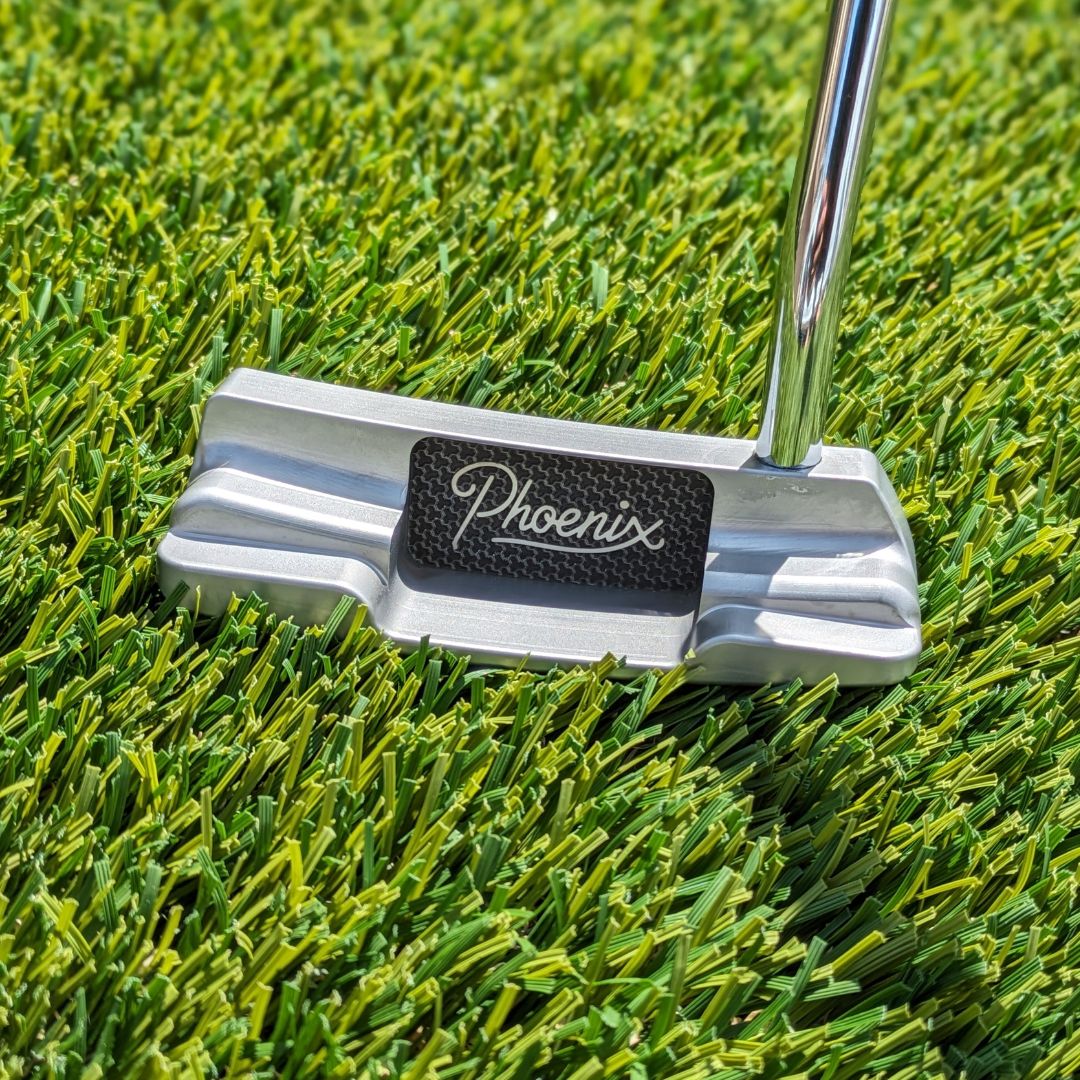
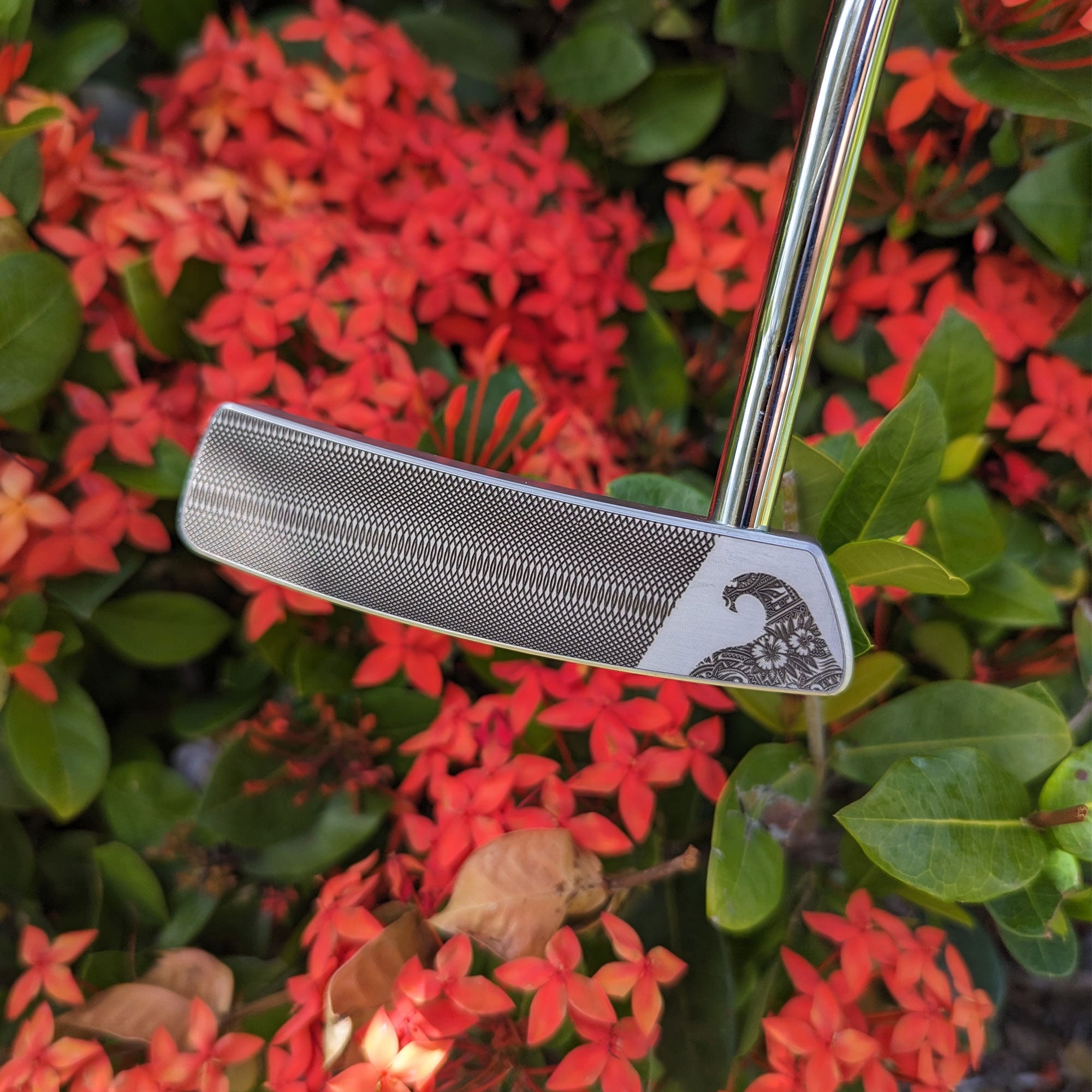
You also need equipment that supports consistent feel. A putter with the right weight, balance, and grip allows your hands to deliver repeatable feedback on every stroke. If your current putter feels inconsistent on long putts, it may be time to explore a custom build designed for your specific stroke.
Drill 1: The Ladder Drill
What it trains: Progressive distance calibration across a range of lengths. Teaches your brain to scale stroke effort incrementally.
Setup
- Find a relatively flat section of the practice green with at least 50 feet of clear space.
- Place a tee or ball marker at 10 feet from your starting position.
- Place additional markers at 20, 30, 40, and 50 feet. You now have five "rungs" on the ladder.
- Take five balls to the starting position.
Execution
Roll the first ball, trying to stop it at the 10-foot marker. Roll the second to the 20-foot marker. Continue through 30, 40, and 50 feet. The key constraint: each ball must finish past the previous one. If your 30-foot putt finishes short of your 20-foot putt, you start over from the beginning.
After completing the ladder going out, reverse it. Start at 50 feet and work back to 10. The descending ladder is harder because it requires controlled deceleration of effort, which is the exact skill you need on fast downhill putts.
Scoring
- Complete the ascending ladder without a restart: 5 points
- Complete the descending ladder without a restart: 5 points
- Each ball that stops within 3 feet of its target marker: 1 bonus point
- Perfect score: 20 points (both ladders completed, all 10 balls within 3 feet)
Target: Consistently score 12 or above before moving on. Most golfers score 6 to 8 on their first attempt.
Drill 2: The Clock Drill
What it trains: Distance control from a single length in all directions, forcing you to adjust for uphill, downhill, sidehill, and combination slopes.
Setup
- Choose a hole on the practice green that sits on a noticeable slope.
- Place four balls at 25 feet from the hole at the 12 o'clock (uphill), 3 o'clock (sidehill), 6 o'clock (downhill), and 9 o'clock (sidehill from the other direction) positions.
- If you want an advanced version, add four more balls at the 1:30, 4:30, 7:30, and 10:30 positions for eight total.
Execution
Putt each ball with the goal of stopping it within a 3-foot circle around the hole. You are not trying to make these putts; you are trying to lag every one of them inside the leather. Pay particular attention to how much your stroke length changes between the uphill and downhill positions. Most golfers underestimate the difference. A 25-foot uphill putt on a moderate slope might play like 30 feet, while the same distance downhill might play like 18 feet.
Before each putt, commit to a specific read. Walk the line, feel the slope under your feet, and decide on a pace before you address the ball. This pre-shot routine is as important as the stroke itself. Our guide on reading breaking putts provides a detailed framework for reading slope and grain.
Scoring
- Each ball that finishes within 3 feet of the hole: 2 points
- Each ball that finishes within 6 feet: 1 point
- Each ball outside 6 feet: 0 points
- Three-putt penalty (if the putt finishes beyond a reasonable second-putt range, roughly 5 feet): -1 point
Four-ball version target: 6 out of 8 possible points. Eight-ball version target: 10 out of 16 possible points.
Drill 3: The Gate Drill for Lag Putts
What it trains: Start line accuracy combined with pace control. Forces you to commit to a line and speed simultaneously on long putts.
Setup
- Choose a 30-foot putt on the practice green, ideally with a subtle break.
- At the 15-foot mark (halfway), place two tees approximately 4 inches wider than your putter head, forming a gate.
- Place a towel or alignment rod 4 feet beyond the hole, creating a "no-fly zone."
Execution
Roll putts through the gate, past the hole, but short of the towel. This creates a 4-foot window beyond the hole. The gate ensures your start line is accurate at the midpoint. The window ensures your pace is controlled at the end point.
If the ball misses the gate, your start line or initial read was off. If the ball goes through the gate but past the towel, you hit it too hard. If it goes through the gate but stops short of the hole, your pace was too cautious. The only successful outcome is through the gate, past the hole, and short of the towel.
This drill is exceptional at training the "dying into the cup" speed that Tour professionals use on mid-range lag putts. It forces you to commit to pace that would topple the ball into the cup with its last revolution rather than charging it two feet past.
Scoring
- Ball goes through the gate and stops between the hole and the towel: 3 points
- Ball goes through the gate but stops within 2 feet short of the hole: 2 points
- Ball goes through the gate but past the towel: 1 point
- Ball misses the gate: 0 points
- Roll 10 balls per set.
Target: 20 out of 30 possible points.
Drill 4: The 30-Footer Challenge
What it trains: Precision under a standardized condition. Reveals your tendencies (long or short, left or right) and tracks improvement over time.
Setup
- Find a 30-foot putt with a moderate left-to-right or right-to-left break (avoid dead straight putts; they do not reflect reality).
- Place a 3-foot string circle or four tees in a square around the hole to define the target zone.
- Take 10 balls.
Execution
This is pure repetition with tracking. Roll all 10 balls from the same spot. After each set of 10, record how many finished inside the 3-foot zone. Also note your miss pattern: how many finished long, short, high side, or low side.
The power of this drill is in the data. After five sessions, you will have a clear picture of your tendencies. Most amateur golfers discover they consistently leave lag putts short, particularly on breaking putts where they underplay the break and the ball dies below the hole. That discovery alone is worth the practice time.
Scoring
- Ball finishes inside the 3-foot zone: 1 point
- Bonus: Ball finishes hole-high on the high side (the professional miss): 0.5 bonus points
- Roll 10 balls per set, three sets per session.
Target: 5 out of 10 inside the zone is solid for a mid-handicapper. Tour players average 7 to 8 out of 10 from 30 feet.
Drill 5: The Pace-of-Putt Drill
What it trains: Isolates pace from line. Removes aiming as a variable so you can focus entirely on how far the ball rolls.
Setup
- Find the flattest section of the practice green you can. You want to eliminate slope as a variable.
- Place a tee at 15 feet, 25 feet, and 35 feet from your starting point.
- At each tee, create a 2-foot zone by placing a tee 1 foot in front and 1 foot behind the target tee. This creates a tight 2-foot window.
Execution
Roll three balls at the 15-foot target, trying to stop each ball within the 2-foot window. Then three at 25 feet. Then three at 35 feet. Cycle through all three distances twice for a total of 18 balls.
The drill eliminates break, slope, and aiming complexity. All you are doing is matching stroke length to distance. This purity of focus trains the kinesthetic link between what your arms feel and how far the ball goes. Over time, your brain builds an unconscious distance library, so on the course, when you read a putt as "about 28 feet of pace," your body knows what that means.
Scoring
- Ball stops within the 2-foot window: 2 points
- Ball stops within 4 feet of target: 1 point
- Ball stops outside 4 feet: 0 points
- Maximum per set of 18 balls: 36 points.
Target: 22 out of 36 points is a strong benchmark.
Drill 6: The Uphill/Downhill Drill
What it trains: Adjustment for slope. Develops the feel for how much to add or subtract from your baseline stroke on elevated greens.
Setup
- Find a section of the practice green with a noticeable slope.
- Mark a spot at the bottom of the slope and another at the top, 30 feet apart.
- Place a target zone (3-foot circle) around each position.
Execution
Alternate between uphill and downhill putts. Roll three balls uphill, then walk to the top and roll three balls downhill. Repeat three times for a total of 18 putts.
The critical learning happens in the contrast. When you roll three uphill putts and then immediately face the same distance downhill, the difference in stroke effort becomes visceral. Most golfers intellectually understand that downhill putts need less force, but until they experience the contrast in rapid succession, they cannot calibrate the adjustment.
Keep track of the ratio between your uphill and downhill stroke lengths. On a green with moderate slope (approximately 2 percent grade), your downhill stroke should be roughly 60 to 70 percent the length of your uphill stroke for the same distance. If you are using a closer ratio, you are hitting downhill putts too hard.
This drill also teaches you the value of a putter with consistent feel across the face. Off-center hits on lag putts are common, and a putter with sufficient MOI minimizes the distance penalty. Your putter grip matters here too: a grip that promotes light, even pressure helps you feel the subtle changes in stroke effort that slope demands.
Scoring
- Ball stops within 3-foot zone: 2 points
- Ball stops within 6 feet: 1 point
- Ball stops outside 6 feet: 0 points
- Bonus: If all three consecutive same-direction putts finish within 3 feet of each other (consistency bonus): 2 points
- Maximum per session of 18 balls with bonuses: 48 points.
Target: 26 out of 48 points.
Drill 7: The Two-Zone Drill
What it trains: Pressure and binary decision-making. Simulates the on-course reality of "just get it in the zone" lag putting with consequences for failure.
Setup
- Pick a 40-foot putt on the practice green.
- Create two zones around the hole: an inner zone (3-foot radius, marked with tees) and an outer zone (6-foot radius, marked with tees or string).
- Take 10 balls.
Execution
Before each putt, declare which zone you are targeting. If you declare "inner zone" and the ball finishes inside the inner zone, you score 3 points. If it finishes in the outer zone, you score 0 (you missed your declared target). If you declare "outer zone" and the ball finishes in the outer zone (but not the inner zone), you score 1 point. If it finishes in the inner zone, you score 3 points (you beat your target).
The strategic layer is what makes this drill powerful. Conservative declarations (outer zone) give you a high floor but a low ceiling. Aggressive declarations (inner zone) carry more risk but more reward. This mirrors the on-course calculus of every lag putt: should you try to cozy it to two feet, or are you better off ensuring you do not three-putt?
After a few sessions, you will learn where your realistic "inner zone" capabilities end. Some golfers can consistently lag to within 3 feet from 40 feet. Most cannot. Knowing your actual capability prevents on-course frustration and supports smarter strategy. Solid alignment fundamentals help ensure you are starting these putts on the right line in the first place, which we detail in our putting alignment guide.
Scoring
- Declare inner, land inner: 3 points
- Declare inner, land outer: 0 points
- Declare inner, miss both zones: -1 point
- Declare outer, land outer: 1 point
- Declare outer, land inner: 3 points
- Declare outer, miss both zones: -1 point
- Maximum per set of 10: 30 points.
Target: 15 out of 30 points. The strategic element means raw putting skill alone does not maximize score. Self-awareness does.
Lag Putting Drills Comparison Table
| Drill | Primary Skill | Difficulty | Time Required | Best For |
|---|---|---|---|---|
| Ladder Drill | Progressive calibration | Moderate | 15 minutes | Building a distance scale |
| Clock Drill | Slope adjustment | Moderate-High | 20 minutes | Reading green speed |
| Gate Drill | Line + pace integration | High | 15 minutes | Committing to a plan |
| 30-Footer Challenge | Consistency tracking | Moderate | 20 minutes | Identifying tendencies |
| Pace-of-Putt Drill | Isolated pace control | Low-Moderate | 15 minutes | Beginners and recalibration |
| Uphill/Downhill Drill | Slope adaptation | High | 20 minutes | Elevation changes |
| Two-Zone Drill | Pressure management | High | 15 minutes | Course strategy simulation |
Common Mistakes in Lag Putting Practice
Mistake 1: Practicing only on flat surfaces. Flat-green practice builds a false sense of distance control that evaporates on real courses where every putt has slope. At minimum, half of your lag practice should involve uphill, downhill, or sidehill putts.
Mistake 2: Focusing on the hole instead of a zone. When you aim at the hole from 40 feet, you create tension because the target feels impossibly small. Aim at a 3-foot circle. Your body relaxes, your stroke smooths out, and paradoxically, you end up closer to the hole more often. The best lag putters on Tour are not trying to make 40-footers. They are trying to make their second putt a tap-in.
Mistake 3: Never practicing from more than 30 feet. Most practice greens have convenient lengths of 10 to 25 feet, and golfers default to those. Force yourself to find 40-foot and 50-foot putts. Those are the distances where three-putts actually happen on the course.
Mistake 4: Ignoring tempo. Distance control is a tempo problem, not a power problem. Your stroke length determines distance, and your tempo determines consistency. A rushed backstroke produces a different ball speed than a smooth one, even at the same stroke length. Work on metronome-like tempo first, then calibrate distances to that tempo.
Mistake 5: Practicing without tracking results. If you do not score your drills, you have no baseline, no trend line, and no evidence of improvement. Track your scores. Write them down. Review them weekly. The golfers who improve fastest are the ones who measure.
Frequently Asked Questions
How often should I practice lag putting?
Three sessions per week, 15 to 20 minutes each, is sufficient for most golfers to see measurable improvement within a month. Dedicate at least 50 percent of your total putting practice time to lag putting, since it has the highest strokes gained return for the time invested.
What is a good lag putting standard for an amateur?
A commonly cited benchmark is the "3-foot rule": from 30 feet, you should be able to get 7 out of 10 putts within a 3-foot circle of the hole. From 40 feet, 5 out of 10 within 3 feet is strong. If you are consistently outside those numbers, these drills will close the gap.
Does putter head weight affect lag putting?
Significantly. A heavier putter head (350 to 370 grams) provides more momentum through the stroke, which many golfers find easier to control on long putts. A lighter head (320 to 340 grams) offers more feel but requires more precise tempo. For lag putting specifically, slightly heavier heads tend to produce more consistent distance control across a range of lengths.
Should I use the same speed on every putt?
No. Professional putters use what they call "dying speed" and "firm speed" depending on the putt. Lag putts generally benefit from dying speed, where the ball approaches the hole with just enough pace to reach it. This maximizes the effective size of the hole because a ball dying at the cup can enter from more angles. Firm speed is reserved for straight, short putts where holding the line is the priority.
Can I practice lag putting indoors?
You can practice stroke tempo and length indoors, but you cannot effectively practice distance control because indoor surfaces do not replicate green speed. If you have a long indoor putting mat (10 feet or more), use it for the Pace-of-Putt Drill with adjusted distances, but understand that your calibration will need resetting when you move to real grass.
How do I adjust for fast versus slow greens?
On fast greens (Stimpmeter reading above 11), shorten your stroke for every distance by approximately 15 to 20 percent compared to your calibration on average-speed greens (Stimpmeter 9 to 10). On slow greens (below 9), lengthen by 10 to 15 percent. The Ladder Drill is the fastest way to recalibrate when you encounter unfamiliar green speeds.
Sharpen Your Distance Control with the Right Equipment
Lag putting is a skill, and like all skills, it improves faster with the right tools. A custom-fitted putter from Phoenix Putter Co. gives you consistent weight, balance, and length that remove equipment variables from the equation. When the putter feels the same on every stroke, your body can focus entirely on calibrating pace. Pair it with a grip that encourages light, even pressure, protect it with a quality headcover, and step onto the green knowing that your equipment is not the limiting factor.
Browse the full collection of custom putters at Phoenix Putter Co. and take your lag putting to the next level.

Leave a comment
This site is protected by hCaptcha and the hCaptcha Privacy Policy and Terms of Service apply.